
Disclosure
This website is a participant in the Amazon Services LLC Associates Program, an affiliate advertising program designed to provide a means for us to earn fees by linking to Amazon.com and affiliated sites.
A 12V battery can run an LED strip for hours or even days, depending on the strip’s wattage and your battery’s capacity. This complete guide shows you exactly how to calculate that runtime with confidence.
You’ll learn the proven formula for runtime calculation, real-world examples, and expert tips to extend battery life. Read on to master the math and never guess your LED strip’s battery needs again.
Key Takeaways
- Formula: Runtime (hours) = Battery Ah × 12V ÷ LED strip watts.
- Example: A 100Ah battery runs a 24W strip for about 50 hours.
- Real-world loss: Inverters and heat cut runtime by 10–20%.
- Best match: LiFePO4 batteries allow deeper discharge than lead-acid.
- Extend life: Lower brightness and use PWM dimmers to save power.
Best 12V Batteries for Running an LED Strip: Detailed Comparison
Battle Born BB10012 – Best Overall Choice
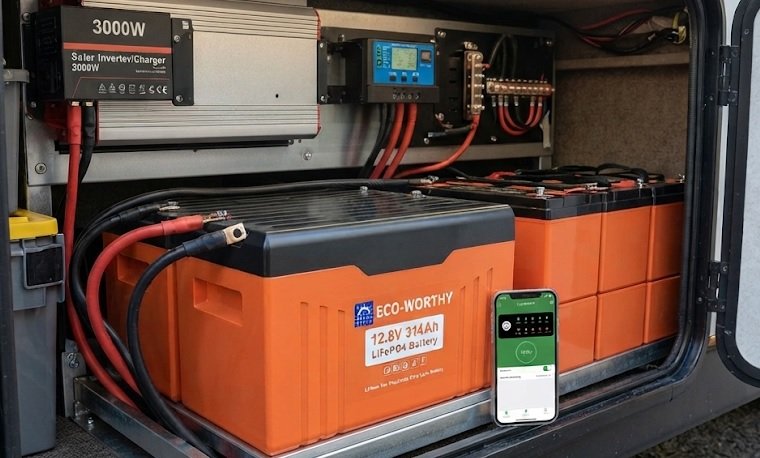
The Battle Born BB10012 is a 100Ah LiFePO4 battery delivering 1,280Wh of usable power. It’s recommended for running LED strips because it allows 100% depth of discharge, unlike lead-acid options. Expect roughly 50 hours powering a 24W strip, with a 10-year lifespan and zero maintenance.
Renogy RBT100LFP12S – Best Value Option
The Renogy RBT100LFP12S offers 100Ah LiFePO4 capacity at a lower price point, making it the best option for budget-conscious buyers. Its built-in BMS protects against overcharge and deep discharge. It’s ideal for indoor LED strip projects where weight and cost matter more than peak output.

Mighty Max ML35-12 – Best Budget SLA Pick
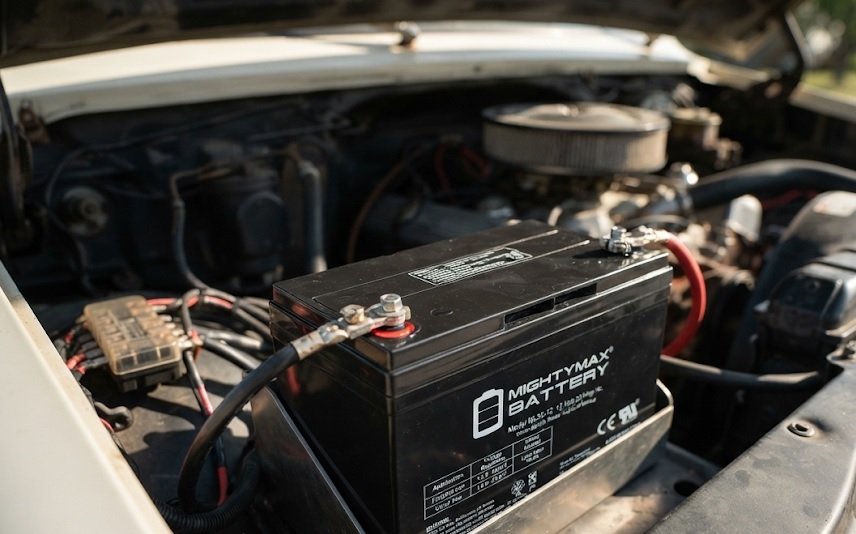
The Mighty Max ML35-12 is a 35Ah sealed lead-acid battery costing a fraction of lithium alternatives. It’s ideal for short LED runs of 15–17 hours on a 24W strip. However, limit discharge to 50% to protect its lifespan.
How to Calculate 12V Battery Runtime for an LED Strip
Calculating runtime requires just three numbers: battery capacity, battery voltage, and LED strip wattage. The formula is simple, but real-world factors like efficiency losses and discharge limits change the final result. Here’s how to get an accurate estimate.
The Basic Runtime Formula Explained
Use this proven equation to estimate how long a 12V battery will power your LED strip:
Runtime (hours) = (Battery Ah × 12V) ÷ LED Strip Watts
- Battery Ah: Amp-hour rating printed on the battery label
- 12V: Nominal voltage of your battery
- LED Strip Watts: Total wattage of the full strip length
For example, a 100Ah battery with a 24W strip gives 1,200Wh ÷ 24W = 50 hours of ideal runtime.
Adjusting for Real-World Efficiency Losses
Theoretical numbers rarely match reality. Inverters, wiring resistance, and heat typically reduce runtime by 10–20%. Always apply a correction factor for accuracy.
- DC-to-DC setups: Subtract about 10% for losses
- Inverter setups: Subtract 15–20% for conversion inefficiency
- Cold temperatures: Reduce capacity by up to 20% below 0°C
Battery Discharge Limits by Chemistry
Not all batteries should be drained fully. Discharge depth dramatically affects both runtime and lifespan.
| Battery Type | Usable Capacity | 100Ah Runtime (24W) |
|---|---|---|
| Lead-Acid | 50% | ~25 hours |
| LiFePO4 | 90–100% | ~45–50 hours |
Lithium batteries deliver nearly double the usable runtime, making them the smarter long-term choice for LED strip projects.
Real-World Examples: How Long Will a 12V Battery Run Your LED Strip?
Numbers on paper only tell half the story. These practical examples show how different batteries and LED strip wattages perform in everyday setups, helping you pick the right combination for your project.
Example 1: 100Ah Lithium Battery with a 24W Strip
A 100Ah LiFePO4 battery paired with a 24W LED strip delivers the longest runtime in this comparison.
- Usable capacity: ~100Ah (90–100% discharge)
- Ideal runtime: 1,200Wh ÷ 24W = 50 hours
- Real-world runtime: ~45 hours after 10% losses
Example 2: 50Ah Lead-Acid Battery with a 12W Strip
Lead-acid batteries can’t be drained fully, so usable capacity is halved. A smaller 12W strip helps stretch runtime.
- Usable capacity: 25Ah (50% discharge limit)
- Ideal runtime: 600Wh ÷ 12W = 50 hours
- Real-world runtime: ~25 hours after losses and 50% limit
Example 3: 20Ah Portable Battery with a 5W Strip
Compact portable power stations work well for short LED strip runs. Lower wattage strips maximize runtime here.
- Usable capacity: ~18Ah (90% discharge)
- Ideal runtime: 240Wh ÷ 5W = 48 hours
- Real-world runtime: ~43 hours after 10% losses
Quick Insight
- Lower wattage strips dramatically extend runtime on any battery.
- Lithium batteries deliver roughly double the usable hours of lead-acid.
Tips to Extend 12V Battery Runtime for LED Strips
Getting the longest runtime from your 12V battery isn’t just about bigger capacity. Smart setup choices and simple habits can add hours of performance without spending extra money.
Reduce LED Strip Power Draw
Lowering wattage is the fastest way to stretch runtime. Small adjustments deliver big gains in total hours.
- Dim the strip: Dropping to 50% brightness cuts power draw roughly in half
- Use PWM dimmers: They waste far less energy than resistor-based dimming
- Shorten the run: Power only the strip length you actually need
- Choose efficient LEDs: High-efficiency chips draw fewer watts per lumen
Optimize Your Battery and Wiring Setup
Poor connections and thin cables waste power as heat before it ever reaches your LEDs.
- Use thick gauge wire: Prevents voltage drop over long distances
- Keep connections tight: Loose terminals increase resistance
- Skip the inverter when possible: Run 12V strips directly on DC power
- Store batteries warm: Cold reduces usable capacity by up to 20%
Match Battery Chemistry to Your Needs
The right battery type determines how much of its rated capacity you can actually use.
| Factor | Lead-Acid | LiFePO4 |
|---|---|---|
| Usable capacity | 50% | 90–100% |
| Weight | Heavy | Light |
| Cycle life | 300–500 | 2,000–5,000 |
Quick Insight
- Dimming and PWM control offer the biggest runtime gains.
- Thick wiring and DC-direct setups prevent hidden power losses.
Common Mistakes When Sizing a 12V Battery for LED Strips
Even experienced DIYers miscalculate battery needs. These four mistakes cause most runtime shortfalls, so check your plan against each one before buying anything.
Mistake 1: Using Rated Capacity Instead of Usable Capacity
A 100Ah lead-acid battery doesn’t deliver 100Ah of usable power. Draining it fully destroys the battery, so you only get about 50Ah safely.
- Lead-acid: Plan for 50% usable capacity
- LiFePO4: Plan for 90–100% usable capacity
- AGM/Gel: Plan for 50–60% usable capacity
Mistake 2: Ignoring LED Strip Wattage Ratings
Strip wattage is usually listed per meter, not for the whole reel. A “24W strip” that’s actually 5 meters long at 24W/m draws 120W total.
Always multiply the per-meter rating by your total strip length. This single error can cut expected runtime by 80%.
Mistake 3: Forgetting Efficiency Losses
Inverters, wiring, and dimmers all consume power before it reaches your LEDs. Ignoring these losses makes your estimate overly optimistic.
- Inverter setups: Add 15–20% to your wattage calculation
- Long wire runs: Add 5–10% for voltage drop
- Cold weather: Reduce capacity by up to 20%
Mistake 4: Overlooking Battery Age and Health
An old battery holds far less charge than its label suggests. A three-year-old lead-acid battery may deliver only 70% of its original capacity.
Test battery health with a load tester before relying on it for a critical LED installation.
Quick Insight
- Always use usable capacity, not rated capacity, in your math.
- Multiply strip wattage per meter by total length before calculating.
Choosing the Right 12V Battery for Your LED Strip Project
Battery chemistry, capacity, and physical size all shape your final runtime. Match these three factors to your project’s priorities: cost, weight, and longevity.
Lead-Acid vs Lithium: Which Wins for LED Strips?
Lithium batteries cost more upfront but deliver nearly double the usable runtime and last 5–10 times longer. Lead-acid suits tight budgets and stationary setups.
| Factor | Lead-Acid | LiFePO4 |
|---|---|---|
| Upfront cost | Low | High |
| Usable capacity | 50% | 90–100% |
| Weight (100Ah) | ~30 kg | ~12 kg |
| Cycle life | 300–500 | 2,000–5,000 |
How to Size Battery Capacity Correctly
Work backward from your desired runtime to find the minimum capacity you need. This prevents both overspending and disappointing performance.
- Determine total strip wattage (per-meter rating × length)
- Decide target runtime in hours
- Calculate required Wh: watts × hours
- Divide by usable voltage and depth of discharge to get Ah
For a 24W strip running 40 hours, you need 960Wh — roughly a 100Ah LiFePO4 or 200Ah lead-acid battery.
Portability and Installation Considerations
Where and how you install the battery affects which type makes sense.
- Portable setups: Lithium wins on weight and size
- Fixed installations: Lead-acid offers lower cost per Ah
- Cold environments: Choose heated lithium or accept reduced capacity
- Indoor use: Sealed batteries prevent ventilation issues
Quick Insight
- Size capacity from your target runtime, not guesswork.
- Lithium costs more upfront but wins on weight and lifespan.
Frequently Searched Questions About 12V Battery LED Strip Runtime
These quick answers address the most common runtime questions people ask before building their LED strip setup. Each answer gives you the number or rule you need in seconds.
How Many Hours Will a 12V Battery Run an LED Strip?
Divide total watt-hours by strip wattage to get hours. A 100Ah lithium battery (1,200Wh) runs a 24W strip for about 50 hours, while a 50Ah lead-acid battery (300Wh usable) runs the same strip for roughly 12 hours.
Can I Run an LED Strip Directly from a 12V Battery?
Yes, if your strip is rated for 12V DC. Most LED strips are 12V or 24V, so direct connection works without an inverter. Always verify the strip’s voltage rating before wiring.
- 12V strip + 12V battery: Direct connection, no inverter needed
- 24V strip + 12V battery: Requires a DC-DC boost converter
- 5V USB strip + 12V battery: Requires a step-down converter
Does Battery Voltage Drop Affect LED Brightness?
Yes, brightness fades as voltage drops. Lead-acid batteries lose output steadily, while LiFePO4 holds voltage stable until nearly empty.
| Battery Type | Voltage Stability | Brightness Consistency |
|---|---|---|
| Lead-Acid | Drops steadily | Fades over time |
| LiFePO4 | Stable until ~10% | Consistent |
What Size Battery Do I Need for All-Night LED Lighting?
For 10 hours of 24W lighting, you need 240Wh. That equals roughly a 20Ah LiFePO4 battery or a 40Ah lead-acid battery with a 50% discharge limit.
Quick Insight
- Match strip voltage to battery voltage for direct DC wiring.
- LiFePO4 keeps LEDs bright until the battery is nearly empty.
Safety and Maintenance Tips for 12V Battery LED Strip Systems
A well-built LED strip system lasts for years, but only with proper safety practices and routine care. These guidelines protect both your battery and your equipment.
Essential Safety Precautions
Batteries store significant energy and demand respect. Follow these rules to prevent shorts, fires, and injury.
- Install a fuse: Place one within 12 inches of the battery’s positive terminal
- Use correct wire gauge: Undersized wire overheats and causes voltage drop
- Ventilate lead-acid batteries: They release explosive hydrogen gas while charging
- Avoid short circuits: Never let bare positive and negative wires touch
Charging Best Practices
Correct charging extends battery life and preserves usable capacity for years. Use a charger matched to your battery’s chemistry.
- Match charger to chemistry: LiFePO4 and lead-acid need different charge profiles
- Avoid deep discharge: Recharge lead-acid batteries at 50% and lithium at 20%
- Store at partial charge: Keep batteries at 50–60% for long-term storage
- Charge in moderate temperatures: Extreme heat or cold damages cells
Routine Maintenance Schedule
Simple checks keep your system running reliably season after season.
| Task | Frequency |
|---|---|
| Inspect terminals for corrosion | Monthly |
| Test battery voltage under load | Every 3 months |
| Clean dust from LED strips | Every 6 months |
| Replace aging batteries | Every 3–10 years |
Quick Insight
- Always fuse the positive wire close to the battery terminal.
- Match your charger to battery chemistry to maximize lifespan.
Conclusion: Master Your 12V Battery LED Strip Runtime
Calculating how long a 12V battery runs an LED strip comes down to one formula: watt-hours divided by strip wattage. Factor in usable capacity and efficiency losses for accurate results.
Choose LiFePO4 for maximum runtime and lifespan, or lead-acid for budget builds. Always fuse your wiring and match your charger to battery chemistry.
Grab your battery specs and strip wattage, then run the numbers today. Test your setup and adjust until runtime meets your needs.
With the right battery and smart power habits, your LED strip will shine reliably for years.
Frequently Asked Questions About 12V Battery LED Strip Runtime
How long will a 12V 100Ah battery run an LED strip?
A 100Ah LiFePO4 battery delivers about 1,200Wh, running a 24W strip for roughly 50 hours. After 10% efficiency losses, expect around 45 hours of real-world runtime.
A 100Ah lead-acid battery only gives about 600Wh usable, cutting runtime to roughly 25 hours. Battery chemistry matters as much as capacity.
Can I connect an LED strip directly to a 12V battery?
Yes, if your LED strip is rated for 12V DC. Most strips run on 12V or 24V, so direct wiring works without an inverter, avoiding conversion losses entirely.
Always add an inline fuse near the positive terminal. If your strip is 5V or 24V, use a DC-DC converter to match voltage safely.
What is the best way to calculate LED strip battery runtime?
Use this formula: Runtime (hours) = (Battery Ah × 12V) ÷ LED strip watts. Multiply strip wattage per meter by total length first.
Then apply a 10–20% correction for inverter losses, wiring resistance, and cold temperatures. Always use usable capacity, not rated capacity, for accuracy.
Which battery is better for LED strips: lithium or lead-acid?
LiFePO4 is the better choice for most LED strip projects. It offers 90–100% usable capacity versus 50% for lead-acid, plus 2,000–5,000 charge cycles.
Lead-acid remains the cheaper option for stationary, budget builds. However, lithium’s lighter weight and longer lifespan often justify the higher upfront cost.
Why does my LED strip dim before the battery is empty?
Voltage drop causes dimming as the battery discharges. Lead-acid batteries lose voltage steadily, so brightness fades gradually throughout the run.
LiFePO4 batteries hold voltage stable until nearly empty, keeping LEDs bright. If dimming happens early, check for undersized wiring or loose connections.
How many watts does a typical LED strip use per meter?
Most LED strips draw 4–15W per meter, depending on LED density and type. High-output strips can exceed 20W per meter.
Always check the label or product listing. Multiply the per-meter rating by your total strip length to get accurate wattage for runtime calculations.
What size battery do I need for 8 hours of LED strip lighting?
Multiply strip wattage by 8 hours to get required watt-hours. A 24W strip needs 192Wh, which equals roughly a 20Ah LiFePO4 battery.
For lead-acid, double that capacity to account for the 50% discharge limit. A 40Ah lead-acid battery safely covers the same 8-hour run.
Can I run multiple LED strips from one 12V battery?
Yes, as long as total wattage stays within your battery’s safe output. Add up every strip’s wattage, then divide battery watt-hours by that total.
Use a fused distribution block for clean wiring. Keep wire runs short and thick to prevent voltage drop across multiple strips.