
Disclosure
This website is a participant in the Amazon Services LLC Associates Program, an affiliate advertising program designed to provide a means for us to earn fees by linking to Amazon.com and affiliated sites.
A fully charged 12V gel battery reads 12.8V to 13.0V at rest, 12.1V is roughly half empty, and 11.8V or lower means it is discharged. Reading your battery’s voltage takes seconds and prevents permanent damage from deep discharge.
This complete guide gives you a quick-reference voltage chart, expert tips on testing under load, and proven methods to keep your gel battery healthy for years. Keep reading to learn exactly where your battery stands right now.
Key Takeaways
- 12.8V–13.0V at rest means fully charged; 12.1V is about 50%.
- 11.8V or below signals discharge — recharge immediately to avoid damage.
- Rest 4–6 hours before testing for accurate readings.
- 12.4V under load often indicates a failing battery.
- Never store a gel battery below 12.4V for long periods.
Best 12V Gel Battery Voltage Testers and Chargers for Accurate Readings
Schumacher SC1281 – Best Overall Choice
The Schumacher SC1281 is the best option for most gel battery owners. It delivers 6V and 12V charging with automatic gel and AGM modes, plus built-in voltage testing. Recommended for anyone who wants one reliable tool for checking and maintaining 12V gel batteries.

NOCO GENIUS2 – Best Smart Charger
The NOCO GENIUS2 charges 6V and 12V batteries with a dedicated gel setting and temperature compensation. Its force-charge mode revives batteries as low as 1V. Ideal for boat, RV, and backup power owners who need safe, hands-off charging.

Ancel BA101 – Best Budget Voltage Tester
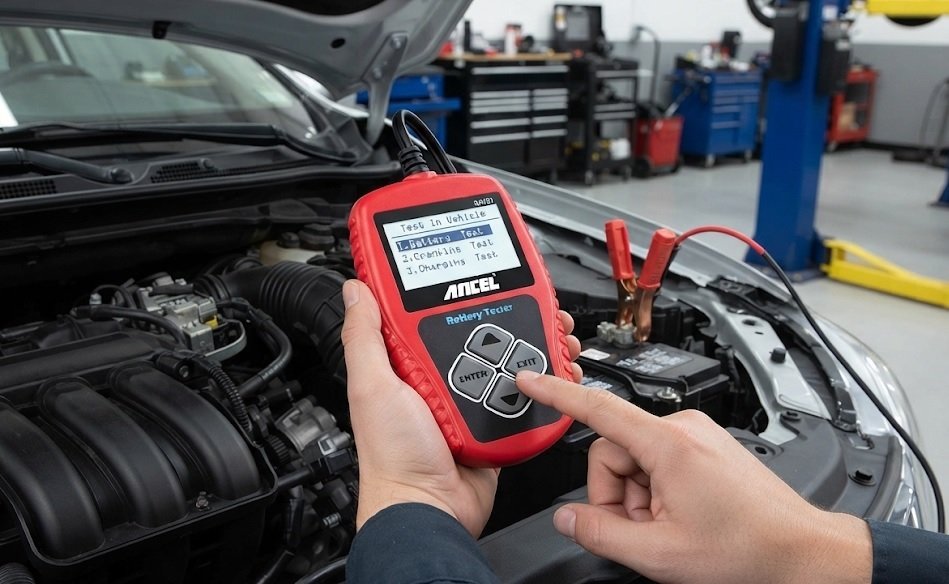
The Ancel BA101 is a 12V digital battery analyzer that displays voltage, cold cranking amps, and charge percentage in seconds. At under $40, it’s the best budget tester for quickly checking whether your gel battery is charged, half full, or empty.
12V Gel Battery Voltage Chart: Charged, Half and Empty Explained
Gel battery voltage directly reflects its state of charge. Unlike flooded batteries, gel cells hold steady readings, making voltage a reliable health indicator.
State of Charge Voltage Chart
Use this reference table to interpret your readings at rest (after 4–6 hours off charge).
| Voltage (at rest) | State of Charge |
|---|---|
| 12.85V – 13.0V | 100% (Fully charged) |
| 12.5V | 75% |
| 12.1V – 12.2V | 50% (Half empty) |
| 11.9V | 25% |
| 11.8V or lower | 0% (Empty) |
Why Resting Voltage Matters
A reading taken immediately after charging is misleading. Surface charge inflates the number, so always let the battery rest first.
- Rest period: Wait 4–6 hours after charging.
- Temperature: Cold lowers voltage slightly; adjust expectations.
- Multimeter: Use a digital meter for accurate decimal readings.
Reading Voltage Under Load
Load testing reveals true battery health. A gel battery that reads 12.8V at rest but drops below 12.0V under load is likely failing.
Quick Summary
- 12.8V+ = full, 12.1V = half, 11.8V = empty
- Always rest the battery before testing
- Load tests expose hidden failures
How to Check 12V Gel Battery Voltage: Step-by-Step Guide
Testing gel battery voltage correctly takes only minutes. Follow these steps to get accurate, repeatable results every time.
What You Need
- Digital multimeter: A basic unit works fine.
- Safety gear: Gloves and eye protection.
- Clean terminals: Remove corrosion first.
Step-by-Step Testing Process
- Disconnect the charger and let the battery rest 4–6 hours.
- Set your multimeter to DC voltage (20V range).
- Connect the red probe to positive and black to negative.
- Record the reading and compare it to the voltage chart.
- Test under load if the resting voltage looks healthy but performance lags.
Common Testing Mistakes to Avoid
Many owners misread gel battery voltage because of simple errors. Avoiding these ensures reliable diagnostics.
- Testing too soon: Surface charge gives false high readings.
- Ignoring temperature: Cold batteries read lower than actual charge.
- Using a cheap meter: Inaccurate tools hide real problems.
When to Recharge Immediately
If your gel battery reads below 12.1V, recharge it promptly. Dropping below 11.8V causes sulfation and permanent capacity loss.
Quick Summary
- Rest battery 4–6 hours before testing
- Use a digital multimeter on DC 20V range
- Recharge below 12.1V to prevent damage
Gel vs AGM vs Flooded: Voltage Differences You Should Know
Not all 12V batteries read the same voltage at full charge. Understanding these differences prevents misdiagnosing a healthy gel battery.
Voltage Comparison at Full Charge
Each battery type has a distinct fully charged voltage. Compare yours against the right baseline.
| Battery Type | Full Charge (at rest) |
|---|---|
| Gel | 12.8V – 13.0V |
| AGM | 12.8V – 12.9V |
| Flooded (Lead-Acid) | 12.6V – 12.7V |
Why Gel Batteries Read Higher
Gel batteries use a silica-thickened electrolyte that resists stratification. This chemistry delivers stable, slightly higher resting voltages than flooded cells.
- Slower self-discharge: Gel holds charge longer in storage.
- Deep-cycle tolerance: Handles 50–80% discharge regularly.
- Sealed design: No water top-ups or acid checks needed.
Charging Voltage Requirements
Gel batteries demand lower charge voltages than AGM or flooded types. Overcharging quickly damages the gel structure.
- Bulk/absorption: 14.1V – 14.4V maximum.
- Float charge: 13.4V – 13.8V.
- Never exceed: 14.4V to avoid permanent damage.
Choosing the Right Charger
Always use a charger with a dedicated gel mode. Standard chargers may push voltage too high and shorten battery life.
Quick Summary
- Gel reads 12.8V–13.0V when full
- Charge gel at 14.1V–14.4V max
- Always use a gel-specific charger mode
Common 12V Gel Battery Voltage Problems and Fixes
Even healthy gel batteries develop voltage issues over time. Recognizing the symptoms early saves you from costly replacements.
Battery Reads Low After Charging
A gel battery that stays below 12.6V after a full charge is often sulfated or worn out. Test it under load to confirm.
- Sulfation: Caused by long periods at low charge.
- Age: Most gel batteries last 4–6 years.
- Charger fault: A weak charger never completes absorption.
Voltage Drops Quickly Under Load
If voltage plunges below 12.0V under load, the battery has lost capacity. This signals internal damage or a dead cell.
Battery Won’t Hold Charge Overnight
Self-discharge above 0.1V per day indicates a problem. Check for parasitic drains or internal shorts before replacing the battery.
Quick Troubleshooting Steps
- Recharge fully and let it rest 4–6 hours.
- Record the resting voltage against the chart.
- Apply a load test to check real capacity.
- Inspect terminals for corrosion or loose connections.
- Replace the battery if voltage stays low.
Preventing Voltage Problems
Simple habits extend gel battery life significantly. Consistency matters more than any single fix.
- Recharge after every use — never store below 12.4V.
- Use a smart charger with a dedicated gel mode.
- Store cool and dry at 50–70% charge.
Quick Summary
- Low voltage after charging = sulfation or age
- Load-test to confirm real capacity
- Store at 50–70% charge, never below 12.4V
Maximizing 12V Gel Battery Lifespan: Expert Maintenance Tips
Proper maintenance can double your gel battery’s lifespan. These proven methods keep voltage stable and capacity strong for years.
Optimal Charging Practices
Charging habits have the biggest impact on gel battery health. Follow these guidelines to avoid premature failure.
- Recharge at 50%: Don’t wait until fully drained.
- Use gel mode: Never charge above 14.4V.
- Avoid overcharging: Disconnect once fully charged.
Correct Storage Voltage
Store gel batteries at 50–70% charge (around 12.4V–12.5V). Full storage accelerates grid corrosion, while empty storage causes sulfation.
Temperature Control Matters
Heat is a gel battery’s worst enemy. Every 15°F above 77°F cuts lifespan in half.
- Ideal range: 50°F – 77°F (10°C – 25°C).
- Avoid direct sunlight: Park vehicles in shade.
- Winter care: Store indoors or insulate.
Monthly Voltage Checks
Quick monthly readings catch problems early. Record each value to spot trends before failure.
- Rest the battery for 4–6 hours.
- Measure voltage with a digital multimeter.
- Log the reading and compare month to month.
- Recharge if below 12.4V.
Signs It’s Time to Replace
Even with perfect care, gel batteries eventually wear out. Watch for these warning signs.
- Voltage won’t reach 12.8V after charging.
- Rapid discharge under light loads.
- Physical swelling or cracked casing.
Quick Summary
- Recharge at 50%, never below 12.4V
- Store cool at 50–70% charge
- Log monthly voltage readings to spot trends
12V Gel Battery Voltage in Real-World Applications
Different applications demand different voltage expectations. Knowing your use case helps you set the right benchmarks.
RV and Campervan House Batteries
Gel batteries are popular for RV house power due to their deep-cycle tolerance. Monitor voltage daily when boondocking.
- Recharge at 12.1V: Never let house batteries drop below 50%.
- Use a battery monitor: Tracks state of charge in real time.
- Solar charging: Set controller to gel profile (14.1V–14.4V).
Marine and Trolling Motor Use
Marine environments stress gel batteries with vibration and moisture. Voltage checks before every trip prevent mid-water failures.
- Full charge: 12.8V+ before launching.
- Post-trip: Recharge immediately, don’t store discharged.
- Corrosion: Clean terminals monthly with baking soda.
Solar and Off-Grid Storage
Gel batteries excel in solar banks because they tolerate partial states of charge better than flooded cells.
- Float voltage: Set controller to 13.4V–13.8V.
- Depth of discharge: Limit to 50% for maximum life.
- Equalization: Never equalize gel batteries.
Mobility Scooters and UPS Systems
These applications rely on consistent voltage for reliability. A weak gel battery causes slowdowns or shutdowns.
- Test monthly: Voltage should stay above 12.5V at rest.
- Replace in pairs: Mismatched batteries reduce performance.
- Watch runtime: Shrinking runtime signals capacity loss.
Quick Summary
- RV/marine: recharge at 12.1V, never below 50%
- Solar: float at 13.4V–13.8V, never equalize
- Replace paired batteries together for balance
Frequently Asked Voltage Questions About 12V Gel Batteries
Owners often have the same pressing questions about gel battery voltage. Here are direct answers to the most common ones.
What Voltage Is 100% Charged?
A fully charged 12V gel battery reads 12.8V to 13.0V at rest. Anything above 13.0V usually indicates surface charge that will settle.
Is 12.2V Bad for a Gel Battery?
Yes, 12.2V represents roughly 50% state of charge. Recharge soon to avoid sulfation and capacity loss.
Can I Test Voltage While Charging?
No, readings during charging are inaccurate. Disconnect the charger and wait 4–6 hours for a true resting voltage.
What Voltage Means Dead?
Below 11.8V the battery is effectively empty. At 10.5V, most gel batteries suffer permanent damage.
Why Does My Gel Battery Read 13.5V?
A reading of 13.5V at rest is unusually high. It often means the battery is still settling after charge or the meter is faulty.
How Often Should I Check Voltage?
Check monthly for stored batteries and before every use for active ones. Consistent monitoring catches problems early.
Does Voltage Drop in Cold Weather?
Yes, cold reduces voltage temporarily. A battery reading 12.5V at 32°F may actually be near full charge.
Quick Summary
- 100% charged = 12.8V–13.0V at rest
- Below 11.8V means empty; 10.5V causes damage
- Cold weather temporarily lowers voltage
Conclusion: Mastering 12V Gel Battery Voltage Checks
Knowing your gel battery’s voltage gives you full control over its health. From 12.8V fully charged to 11.8V empty, these readings tell the whole story.
The key takeaway is simple: test at rest, recharge at 12.1V, and never store below 12.4V. These habits prevent sulfation and extend lifespan.
Grab a digital multimeter today and check your battery. A two-minute test saves hundreds in replacements.
With consistent monitoring, your gel battery will deliver reliable power for years to come.
Frequently Asked Questions About 12V Gel Battery Voltage
What voltage should a fully charged 12V gel battery read?
A fully charged 12V gel battery reads 12.8V to 13.0V at rest. This higher reading reflects the gel chemistry, which holds voltage steadier than flooded lead-acid batteries.
Always measure after resting the battery 4–6 hours. Readings taken immediately after charging are inflated by surface charge and mislead your diagnosis.
How do I know if my 12V gel battery is half empty?
A reading of 12.1V to 12.2V indicates roughly 50% state of charge. This is the ideal recharge point to protect battery lifespan.
Letting a gel battery drop below this level regularly causes sulfation. Sulfation permanently reduces capacity and shortens overall service life.
What voltage is considered empty for a gel battery?
Below 11.8V, a 12V gel battery is effectively empty. At 10.5V, most gel cells suffer irreversible internal damage.
Recharge immediately if you see readings this low. Never leave a discharged gel battery sitting for days or weeks.
Why does my gel battery voltage drop under load?
Voltage naturally drops when current flows. A healthy gel battery stays above 12.0V under moderate load.
If voltage plunges below 12.0V quickly, the battery has lost capacity. This usually signals age, sulfation, or an internal short.
Can I use a regular charger on a 12V gel battery?
No, always use a charger with a dedicated gel mode. Standard chargers push voltage too high and damage the gel electrolyte.
Gel batteries require a maximum absorption voltage of 14.1V–14.4V. Exceeding this causes permanent damage and shortens lifespan dramatically.
What is the best way to store a 12V gel battery?
Store gel batteries at 50–70% charge, roughly 12.4V–12.5V. Keep them cool, dry, and away from direct sunlight.
Check voltage monthly and recharge if it drops below 12.4V. Proper storage preserves capacity and extends battery life by years.
How often should I test my gel battery voltage?
Test monthly for stored batteries and before every use for active ones. Consistent monitoring catches problems before they become expensive.
Log each reading to spot trends. A gradual voltage decline signals aging, while sudden drops indicate a specific fault.
Does temperature affect 12V gel battery voltage readings?
Yes, cold temperatures temporarily lower voltage readings. A battery at 32°F may read 0.2V–0.3V lower than at 77°F.
Test at room temperature whenever possible. If testing cold, adjust expectations and avoid assuming the battery is faulty.