Testing smoke alarm backup battery voltage is the fastest way to confirm your detector will work during a power outage. A healthy reading keeps your family protected day and night.
This complete guide shows you the exact voltage ranges, proven methods, and expert tips for every common battery type. Keep reading to test your alarm with confidence in minutes.
Key Takeaways
- Healthy 9V alkaline batteries read 7.2–9.5 volts; below 7.2V means replace it.
- Test voltage under load, not just at rest, for a true reading.
- Lithium 10-year alarms use sealed cells you cannot test or replace.
- Replace standard backup batteries every 6–12 months, even if voltage looks fine.
- Readings above 9.5V or below 6V signal a faulty meter or wrong battery type.
Best Multimeters for Reading Smoke Alarm Backup Battery Voltage
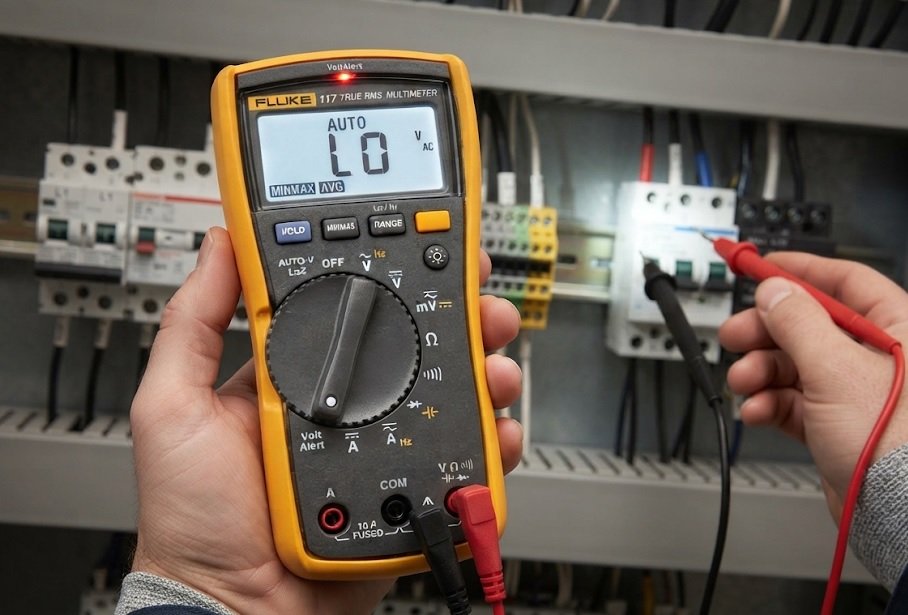
Fluke 117 Digital Multimeter – Best Overall Choice
The Fluke 117 is the recommended pick for testing smoke alarm batteries accurately. Its VoltAlert non-contact detection and true-RMS accuracy deliver reliable readings every time. Ideal for homeowners who want professional-grade results, it includes a built-in continuity tester and auto-ranging for effortless use.
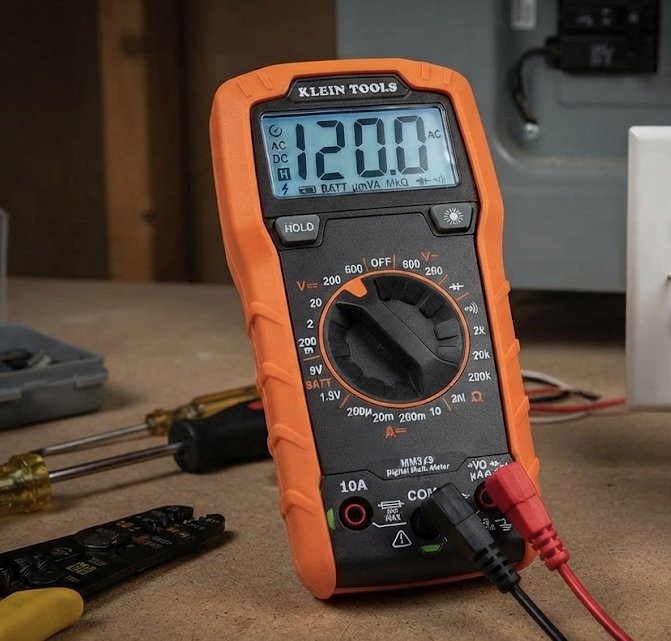
Klein Tools MM325 Digital Multimeter – Best Budget Option
The Klein Tools MM325 is the best option for occasional battery testing on a budget. It measures DC voltage up to 600V with 0.1V resolution, perfect for 9V and AA backup cells. Its rugged drop-proof housing and simple dial make it ideal for quick, no-fuss checks.
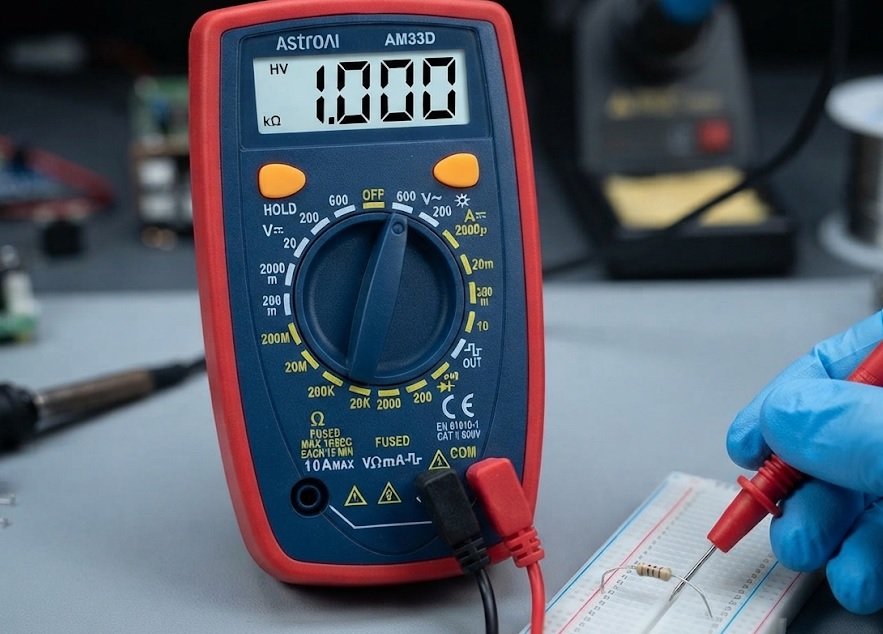
AstroAI AM33D Digital Multimeter – Best Beginner-Friendly Pick
The AstroAI AM33D is ideal for first-time users learning to read battery voltage. It offers auto-ranging DC voltage, a large backlit display, and overload protection for safety. Affordable and easy to operate, it’s a solid starter meter for routine smoke alarm maintenance.
How to Test Smoke Alarm Backup Battery Voltage Step by Step
Testing battery voltage takes under five minutes with the right multimeter. Follow this proven method to get an accurate reading every time.
Step-by-Step Voltage Testing Process
- Remove the battery from the smoke alarm compartment.
- Set your multimeter to DC voltage (typically the 20V range).
- Touch the red probe to the positive terminal and the black probe to the negative terminal.
- Read the display and compare it to the healthy range for your battery type.
- Reinstall or replace the battery based on the reading.
Understanding Healthy Voltage Ranges by Battery Type
Different backup batteries have different healthy voltage thresholds. Knowing these numbers helps you decide instantly whether to keep or replace a cell.
| Battery Type | Healthy Voltage | Replace If Below |
|---|---|---|
| 9V Alkaline | 7.2–9.5V | 7.2V |
| AA Alkaline | 1.5–1.6V | 1.2V |
| Lithium (sealed) | Not testable | Replace alarm |
Why Load Testing Matters More Than Resting Voltage
A battery can show full voltage at rest yet fail under load. Load testing simulates real alarm conditions for a truer result.
- Resting voltage: Measured with no device draw; can appear falsely healthy.
- Load voltage: Measured while the battery powers a load; reveals true capacity.
- Best practice: Use a battery tester with a load function for reliable results.
Common Voltage Reading Problems and How to Troubleshoot Them
Strange readings often point to simple mistakes rather than dead batteries. Here’s how to diagnose the most frequent issues quickly.
Why Your Multimeter Shows Unexpected Voltage Results
Incorrect readings usually trace back to meter settings or probe contact. Check these culprits before assuming the battery is faulty.
- Wrong DC range: A setting too high or low hides accurate values.
- Loose probe contact: Weak touches produce fluctuating numbers.
- Dirty terminals: Corrosion adds resistance and skews results.
- Low meter battery: A weak multimeter battery causes false readings.
Interpreting Voltage Readings: What the Numbers Mean
Your reading tells a clear story once you know the thresholds. Use this quick reference to interpret results instantly.
| Reading | Meaning | Action |
|---|---|---|
| Above 9.5V (9V cell) | Meter error or wrong type | Recheck settings |
| 7.2–9.5V | Healthy | Keep battery |
| 6–7.2V | Weak | Replace soon |
| Below 6V | Dead | Replace now |
When to Replace vs. Keep Your Backup Battery
Voltage alone doesn’t tell the full story. Age and alarm behavior matter just as much as the number on your display.
- Replace immediately if voltage drops below 7.2V or the alarm chirps.
- Replace annually even when readings look healthy, per NFPA guidance.
- Keep the battery only if it’s under a year old and reads in range.
Quick Tip
- Always test under load and log the date for consistent tracking.
Best Practices for Smoke Alarm Battery Maintenance and Safety
Smart maintenance habits keep your detectors reliable year-round. These expert-backed practices go beyond simple voltage checks.
Recommended Battery Replacement Schedule
Stick to a fixed replacement timeline to avoid surprise failures. The NFPA recommends changing standard backup batteries at least once a year.
- Alkaline 9V or AA: Replace every 6–12 months.
- Lithium 10-year alarms: Replace the entire unit when it chirps.
- Hardwired with backup: Swap the backup cell annually.
- Daylight Saving Time: Use the clock change as your reminder.
Safety Tips When Handling and Testing Batteries
Battery testing involves live terminals and delicate electronics. A few precautions prevent damage and injury.
- Never mix brands or ages in multi-battery alarms.
- Avoid touching both probes together to prevent short circuits.
- Dispose of old batteries properly at certified recycling points.
- Keep batteries away from children and pets.
Extending Battery Life and Alarm Longevity
Proper storage and environment dramatically affect how long cells last. Heat and humidity are the biggest enemies of backup batteries.
- Store spares in a cool, dry place away from direct sunlight.
- Keep alarms clean by vacuuming dust monthly.
- Test alarms weekly using the test button.
- Replace the entire alarm every 10 years regardless of battery health.
Safety Reminder
- Annual replacement beats relying on voltage readings alone for protection.
Frequently Confused Voltage Scenarios Explained for Homeowners
Some battery situations confuse even careful testers. These real-world scenarios clarify the trickiest cases you’ll encounter.
New Battery Reading Low Voltage: What It Means
A fresh battery showing low voltage is frustrating but explainable. Several factors can cause this puzzling result.
- Expired stock: Old shelf inventory loses charge before purchase.
- Counterfeit cells: Cheap knockoffs often test below spec.
- Cold storage: Chilly temperatures temporarily reduce voltage output.
- Faulty multimeter: A dying meter battery skews readings low.
Why a Working Alarm Still Shows Weak Voltage
An alarm can chirp or function while its backup cell reads marginal. Voltage sags under load even when the detector seems fine.
- Intermittent chirping signals the low-battery warning threshold.
- Resting voltage may look acceptable while load voltage collapses.
- Age-related decline reduces capacity without dropping open-circuit volts.
Interconnected Alarm Voltage Checks
Interconnected systems share power and signaling across multiple units. Testing one battery rarely reflects the whole system’s health.
- Test each alarm’s backup cell individually.
- Check the main power supply for hardwired units.
- Verify interconnect wiring if one unit fails to trigger others.
- Replace all batteries together in linked systems.
Quick Insight
- Low voltage on a new battery usually means bad stock, not a bad alarm.
Tools and Meters That Make Battery Voltage Testing Easier
The right tool turns a fiddly task into a ten-second check. Choose equipment that matches your testing frequency and budget.
Multimeter vs. Dedicated Battery Tester
Both tools measure voltage, but they serve different users. Your choice depends on how often you test and what else you need.
| Feature | Multimeter | Battery Tester |
|---|---|---|
| Voltage accuracy | High | Moderate |
| Load testing | Manual setup | Built-in |
| Best for | Versatile DIY use | Quick battery checks |
| Price range | $20–$200 | $10–$40 |
Key Features to Look For in a Voltage Meter
Not all meters handle small battery cells equally well. Prioritize these features for accurate, safe readings.
- Auto-ranging DC voltage: Prevents wrong-range errors.
- 0.1V resolution: Essential for detecting marginal cells.
- Load test function: Reveals true capacity under draw.
- Audible continuity beeper: Speeds up terminal checks.
Budget-Friendly Alternatives for Occasional Testing
You don’t need professional gear for a once-a-year task. Several affordable options deliver dependable results.
- Basic digital multimeters under $25 handle 9V and AA cells fine.
- Plug-in battery testers require no probe placement.
- Alarm test buttons offer a free functional check between voltage tests.
Buying Tip
- A $25 auto-ranging multimeter covers all standard smoke alarm battery testing needs.
Battery Types and Their Voltage Characteristics Compared
Not every backup battery behaves the same way under testing. Understanding chemistry differences helps you interpret readings correctly.
Alkaline vs. Lithium vs. Carbon-Zinc Voltage Profiles
Each chemistry has a distinct discharge curve and nominal voltage. This affects both readings and replacement timing.
| Chemistry | Nominal Voltage | Discharge Curve | Lifespan |
|---|---|---|---|
| Alkaline | 1.5V / 9V | Gradual decline | 6–12 months |
| Lithium | 1.5V / 3V | Flat, then sharp drop | 5–10 years |
| Carbon-Zinc | 1.5V / 9V | Steady, lower output | 3–6 months |
Rechargeable Batteries in Smoke Alarms
Rechargeable cells seem economical but often underperform in alarms. Their lower nominal voltage can trigger false low-battery warnings.
- NiMH cells output 1.2V, below the 1.5V alarms expect.
- Voltage sag under alarm load causes premature chirping.
- Manufacturer warnings typically advise against rechargeables.
- Stick with alkalines or manufacturer-approved replacements.
Sealed Lithium Cells in 10-Year Alarms
Modern 10-year alarms use sealed lithium packs designed to outlast the unit. These cannot be tested or replaced individually.
- No accessible terminals means no voltage testing possible.
- End-of-life chirp signals the entire alarm needs replacing.
- Never attempt to open sealed packs for testing.
Key Point
- Match battery chemistry to your alarm’s specifications for reliable voltage readings.
Smoke Alarm Voltage Readings and Home Safety Compliance
Regular voltage checks support compliance with local fire codes and manufacturer warranties. Proper documentation protects both your home and your family.
Fire Code Requirements for Backup Batteries
Most jurisdictions mandate functional backup power in smoke alarms. Testing voltage helps you meet these legal obligations.
- NFPA 72 requires maintained backup power for alarms.
- Local codes often mandate annual battery replacement.
- Rental properties require documented maintenance records.
- New construction typically requires 10-year sealed alarms.
Keeping Maintenance Records for Insurance and Warranties
Documented testing strengthens insurance claims and warranty support. A simple log takes seconds to update.
- Record the date and voltage reading for each test.
- Note battery brand and installation date.
- Store logs digitally for easy access during claims.
- Keep receipts for alarm and battery purchases.
When to Call a Professional Electrician
Some voltage issues exceed typical DIY troubleshooting. Know when to escalate to a licensed professional.
- Hardwired alarms show no power at the unit.
- Repeated low-voltage readings occur despite new batteries.
- Interconnected systems fail to communicate properly.
- Burning smells or discoloration appear near wiring.
Compliance Note
- Documented voltage testing supports both fire code compliance and insurance claims.
Conclusion: Mastering Smoke Alarm Backup Battery Voltage Testing
Reading smoke alarm backup battery voltage is a simple skill that protects your home. With the right multimeter and healthy voltage ranges, you can catch failing batteries early.
Test under load, replace annually, and log every reading. These three habits keep your alarms reliable year-round.
Grab your multimeter today and check every detector in your home. It takes minutes but safeguards lives.
Your family’s safety starts with a single voltage reading. Stay proactive and stay protected.
Frequently Asked Questions About Smoke Alarm Backup Battery Voltage
What voltage should a smoke alarm backup battery read?
A healthy 9V alkaline backup battery should read between 7.2 and 9.5 volts on a multimeter. Readings in this range indicate the cell holds enough charge to power your alarm during an outage.
For AA alkaline cells, expect 1.5 to 1.6 volts per battery. Anything below 1.2V per cell or 7.2V for a 9V battery means it’s time to replace it immediately.
How do I test smoke alarm battery voltage with a multimeter?
Set your multimeter to DC voltage, remove the battery, and touch the red probe to the positive terminal and black probe to the negative. Read the display value.
For accurate results, test under load using a battery tester with a load function. Resting voltage can appear healthy even when the battery lacks real capacity to power your alarm.
Why does my new battery show low voltage?
New batteries can read low due to expired shelf stock, counterfeit manufacturing, or cold storage temperatures. A dying multimeter battery also skews readings lower than actual.
Try a different meter and test another fresh battery from the same pack. If both read low, return the batch and purchase from a reputable retailer with high turnover.
Can I use rechargeable batteries in my smoke alarm?
Most manufacturers advise against rechargeable batteries in smoke alarms. NiMH cells output only 1.2V nominal, which falls below the 1.5V alarms expect.
This lower voltage often triggers false low-battery chirps and reduces reliability during emergencies. Stick with alkaline or manufacturer-approved batteries for guaranteed performance.
How often should I replace smoke alarm backup batteries?
Replace standard alkaline backup batteries every 6 to 12 months, even if voltage readings look healthy. The NFPA recommends annual replacement as a minimum safety standard.
Use daylight saving time changes as your reminder. For 10-year sealed lithium alarms, replace the entire unit when it chirps rather than attempting battery swaps.
What does it mean if my battery reads above 9.5 volts?
Readings above 9.5V on a 9V battery usually indicate a multimeter error or wrong range setting. Recheck your meter’s calibration and DC voltage range.
Occasionally, a freshly charged or high-quality cell may briefly exceed nominal voltage. If readings stay unusually high, test with a second meter to confirm accuracy.
Is load testing better than resting voltage testing?
Yes, load testing provides a far more accurate picture of battery health. Resting voltage measures an idle cell, which can appear healthy while lacking real capacity.
Load testing simulates actual alarm draw, revealing whether the battery can truly power your detector. Dedicated battery testers with built-in load functions make this process quick and reliable.
When should I replace the entire smoke alarm instead of just the battery?
Replace the entire smoke alarm every 10 years from the manufacture date, regardless of battery condition. Sensors degrade over time and lose detection sensitivity.
Also replace units that chirp persistently after battery changes, show physical damage, or fail test button checks. Modern 10-year sealed alarms simplify this by eliminating battery replacements entirely.