No, you should never mix different battery types in one system. Doing so risks capacity loss, overheating, and permanent damage to every battery in the bank. This complete guide explains why mismatched batteries fail and how to power your setup safely.
You’ll learn the science behind battery incompatibility, the dangers of mixing old and new cells, and expert tips for building a safe, long-lasting battery bank. Keep reading to protect your investment and avoid costly mistakes.
Key Takeaways
- Never mix lithium, lead-acid, or NiMH chemistries in one bank.
- Mismatched voltage forces weaker batteries to overwork and overheat.
- Old and new batteries should never be paired, even if identical models.
- Identical batteries — same brand, age, and type — are the only safe setup.
- Mixing risks include fire, leaks, swelling, and voided warranties.
Best Battery Options for Building a Safe, Compatible System
Building a safe battery bank starts with choosing the right batteries. The three products below represent the best options for different needs — from budget-friendly lead-acid to premium lithium. Each is designed to be used in matched sets, so you never have to worry about mixing incompatible types.
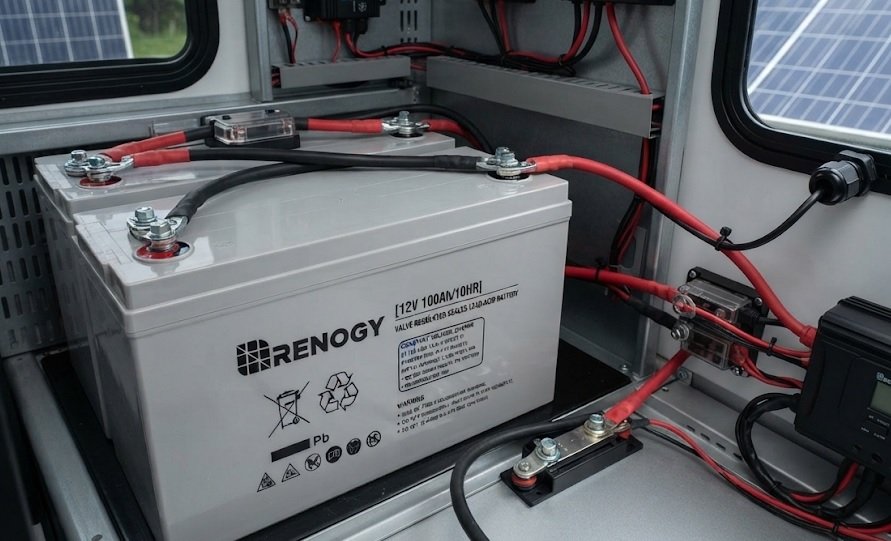
Renogy 100Ah Deep Cycle AGM Battery (Model: RNG-BATT-AGM12-100) – Best Overall Choice
The Renogy 100Ah AGM is a sealed, maintenance-free lead-acid battery ideal for solar and RV systems. Its 100Ah capacity and 12V output deliver reliable, consistent power. Buy identical units together for best results. This is the recommended pick for most off-grid beginners seeking proven performance at a fair price.
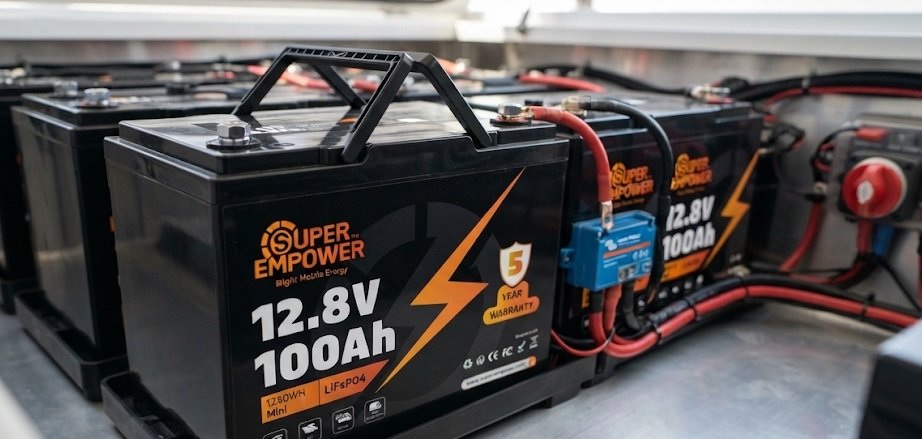
Battle Born 100Ah 12V LiFePO4 Battery (Model: BB10012) – Best Premium Option
The Battle Born BB10012 uses LiFePO4 chemistry for a 10-year lifespan and 3,000–5,000 charge cycles. It’s lighter, safer, and more efficient than lead-acid. This is the best option for serious off-grid users who want maximum longevity and are willing to invest in top-tier quality.
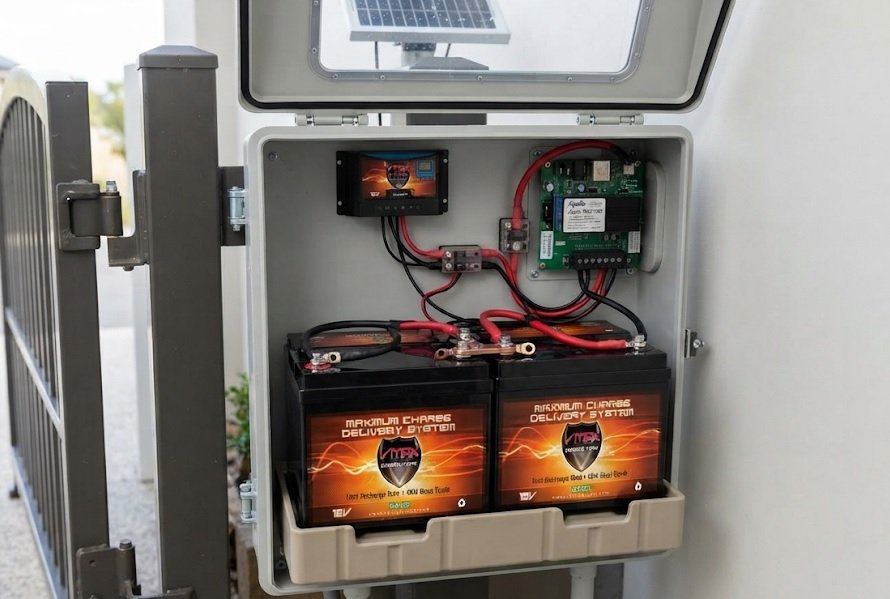
VMAXTanks 125Ah AGM Battery (Model: SLR125) – Best High-Capacity Value
The VMAXTanks SLR125 offers 125Ah of deep-cycle power at a mid-range price. Its heavy-duty AGM construction handles deep discharges well, making it ideal for trolling motors and backup power. Pair it only with identical SLR125 units for safe, balanced performance.
Why Mixing Different Battery Types in One System Is Dangerous
Mixing battery types creates an unbalanced system where weaker cells work harder than stronger ones. This imbalance causes overcharging, overheating, and premature failure. Understanding the science helps you avoid these costly risks.
How Voltage and Chemistry Mismatches Cause Damage
Every battery chemistry has a unique voltage curve and charging profile. When you connect mismatched types, the charger cannot satisfy all batteries at once. Lithium, for example, charges at a different rate than lead-acid.
- Voltage conflict: A 12V lithium and 12V lead-acid hold different resting voltages, forcing constant current flow between them.
- Charging mismatch: One battery overcharges while the other stays undercharged, damaging both over time.
- Thermal runaway risk: Excess heat in lithium cells can trigger fire or explosion.
Real-World Example: Why Old and New Batteries Fail Together
Imagine pairing a new 100Ah battery with a three-year-old one. The older battery has higher internal resistance and accepts less charge. The newer battery compensates, overheating and aging faster.
Within months, the entire bank underperforms. This is why experts insist on identical batteries bought at the same time.
Quick Summary
- Different chemistries charge at different rates, causing imbalance.
- Old and new batteries of the same model still mismatch.
- Mismatched banks fail faster and pose fire risks.
Which Battery Types Can Safely Be Mixed (and Which Cannot)
Some battery combinations are riskier than others. The table below shows which pairings work, which fail, and why. Use it as a quick compatibility reference before wiring any bank.
| Combination | Safe? | Reason |
|---|---|---|
| Same type, brand, age | Yes | Matched voltage and internal resistance |
| Old + new, same model | No | Uneven resistance causes imbalance |
| Lithium + lead-acid | No | Different charging profiles |
| AGM + flooded lead-acid | No | Different charge voltages |
| Different Ah, same type | No | Capacity mismatch drains weaker cell |
The Only Safe Way to Combine Batteries
If you must combine batteries, follow these proven methods to reduce risk:
- Match everything: Same brand, model, chemistry, capacity, and purchase date.
- Buy in sets: Purchase all batteries at once from the same production batch.
- Use separate banks: If mixing is unavoidable, isolate types with separate chargers and controllers.
- Add a battery balancer: Balancers equalize voltage across series-connected cells.
Can You Mix Different Battery Types Temporarily?
Even short-term mixing causes damage. A single discharge cycle can permanently reduce capacity in the weaker battery. Never treat mixing as a temporary fix.
Quick Summary
- Only identical batteries — same brand, age, and type — are safe together.
- AGM and flooded lead-acid should never be combined.
- Separate banks or a balancer are the only workarounds.
How to Build a Safe Battery Bank with Matching Batteries
Building a safe battery system starts with proper planning. Follow these steps to ensure every battery works in harmony and delivers maximum lifespan.
Step-by-Step Guide to Matching Batteries Correctly
- Choose one chemistry: Decide on lithium, AGM, or flooded lead-acid before buying anything.
- Match voltage and capacity: All batteries must share identical voltage and Ah ratings.
- Buy from the same batch: Order all units together so they share similar manufacturing dates.
- Wire correctly: Use equal-length cables in parallel setups to balance resistance.
- Test before installing: Check each battery’s voltage and internal resistance with a multimeter.
Maintenance Tips to Keep Batteries Balanced
Even matched batteries drift over time. Regular maintenance keeps your bank healthy and prevents one cell from dragging down the rest.
- Equalize monthly: Use a balancing charger to sync voltage across all cells.
- Monitor temperature: Heat accelerates aging and imbalance.
- Check connections: Loose terminals create resistance and uneven draw.
- Replace as a set: If one battery fails, swap the entire bank — never just one unit.
When to Replace Your Battery Bank
Replace all batteries together when capacity drops below 80% of original rating. Mixing a fresh battery with worn ones restarts the imbalance cycle. Signs include shorter runtime, slow charging, and swelling.
Quick Summary
- Match chemistry, voltage, capacity, and purchase date.
- Equalize and monitor regularly to prevent drift.
- Always replace the full bank, never a single battery.
Common Mistakes People Make When Mixing Batteries
Many battery failures trace back to avoidable errors. Recognizing these common mistakes helps you protect your system and your wallet.
Top Errors That Damage Battery Systems
- Assuming “12V means compatible”: Voltage alone doesn’t guarantee safe pairing — chemistry and charge profiles matter too.
- Buying one battery at a time: Adding a new battery to an older bank creates instant imbalance.
- Ignoring capacity differences: A 50Ah and 100Ah battery in parallel will never charge evenly.
- Using the wrong charger: A lead-acid charger will ruin lithium batteries and vice versa.
- Skipping the balancer: Series-connected batteries drift without active balancing.
Why “It Works Fine” Is a Dangerous Assumption
Mismatched batteries may seem to work at first. But hidden damage accumulates with every charge cycle. By the time symptoms appear, capacity loss is often irreversible.
Overheating, swelling, and reduced runtime are late-stage warning signs. Address imbalance early or replace the bank entirely.
Safety Precautions When Handling Batteries
- Wear eye protection and insulated gloves during installation.
- Ventilate the area — flooded batteries release explosive hydrogen gas.
- Disconnect the negative terminal first to reduce spark risk.
- Never short terminals with tools or jewelry.
Quick Summary
- Voltage matching alone doesn’t make batteries compatible.
- Mismatched banks fail silently before showing symptoms.
- Always follow safety precautions during installation.
Battery Chemistry Comparison: Which Type Should You Choose?
Choosing the right battery chemistry prevents compatibility headaches later. Each type offers distinct advantages for specific applications and budgets.
| Chemistry | Lifespan | Cost | Best For |
|---|---|---|---|
| Flooded Lead-Acid | 3-5 years | Low | Budget solar, backup |
| AGM | 4-6 years | Medium | RV, marine, off-grid |
| Gel | 5-7 years | Medium-High | Deep-cycle, harsh climates |
| LiFePO4 | 8-10 years | High | Premium off-grid, EV |
Lithium vs Lead-Acid: Key Differences
Lithium batteries offer deeper discharge, lighter weight, and longer life. Lead-acid costs less upfront but requires more maintenance and replacement.
- Depth of discharge: Lithium safely discharges to 80-90%; lead-acid only 50%.
- Weight: Lithium weighs roughly half as much for the same capacity.
- Maintenance: Lithium is maintenance-free; flooded lead-acid needs water checks.
Which Chemistry Fits Your System Best?
Match your chemistry to your use case and budget. Solar beginners often start with AGM for simplicity. Long-term off-grid users benefit most from LiFePO4 despite higher upfront cost.
Whatever you choose, commit to one chemistry across your entire bank. Consistency is the foundation of a safe, efficient system.
Quick Summary
- Lithium lasts longer and discharges deeper than lead-acid.
- AGM suits beginners; LiFePO4 suits long-term users.
- Pick one chemistry and stick with it system-wide.
What Happens When You Mix Battery Types: Real Risks Explained
Understanding the actual consequences of mixing batteries makes the warning concrete. These outcomes range from minor inconvenience to serious safety hazards.
Short-Term vs Long-Term Effects
Short-term effects appear within days or weeks. Long-term damage compounds silently until the entire bank fails.
- Short-term: Uneven charging, reduced runtime, and warm battery casings.
- Long-term: Permanent capacity loss, cell swelling, and premature bank replacement.
- Worst-case: Thermal runaway, fire, acid leaks, and toxic gas release.
Financial Cost of Mixing Batteries
Mixing batteries rarely saves money. A mismatched bank may fail a year earlier than expected, forcing full replacement. That erases any short-term savings from reusing old batteries.
Warranty claims are also typically voided when manufacturers detect mismatched installations. You pay twice — once for the mistake and again for the fix.
Signs Your Battery Bank Is Imbalanced
- Uneven voltage across batteries after a full charge.
- One battery feels warmer than others during charging.
- Runtime drops suddenly despite normal charging.
- Visible swelling or leakage on any unit.
If you notice these signs, disconnect the bank immediately and test each battery individually.
Quick Summary
- Mixing causes both immediate and compounding damage.
- Warranties are voided by mismatched installations.
- Uneven voltage and heat are early warning signs.
Alternatives to Mixing Batteries in One System
If your goal is to expand capacity or combine power sources, safer alternatives exist. These proven methods let you scale your system without risking damage.
Use Separate Battery Banks with Isolators
A battery isolator lets you run two independent banks in one vehicle or system. Each bank charges separately and never interacts directly, eliminating mismatch risk.
- Dual-battery setups: Keep a starter battery and a deep-cycle house battery fully isolated.
- Automatic charging relays: Charge both banks from one alternator without connecting them.
- DC-DC chargers: Safely charge a lithium house battery from a lead-acid starting system.
Add a Battery Balancer for Series Connections
Balancers equalize voltage across batteries wired in series. They prevent one battery from overcharging while another lags behind.
Balancers work best with identical batteries of the same age. They correct minor drift, not fundamental mismatches.
Upgrade the Entire Bank Instead
- Calculate your total capacity needs before purchasing.
- Choose one chemistry that fits your budget and application.
- Buy all batteries at once from the same batch.
- Install a compatible charger matched to your chemistry.
Upgrading the whole bank upfront costs more initially but saves money through longer lifespan and zero compatibility issues.
Quick Summary
- Isolators and DC-DC chargers keep banks independent.
- Balancers fix minor drift, not major mismatches.
- Upgrading the full bank is the safest long-term choice.
Conclusion: Never Mix Different Battery Types in One System
Mixing different battery types in one system leads to imbalance, overheating, and early failure. The safest path is always matched batteries — same chemistry, brand, age, and capacity.
Follow the proven methods in this guide: buy in sets, use isolators for separate banks, and replace the entire bank at once. Your batteries will last longer and perform reliably.
Ready to build a safe battery system? Start by choosing one chemistry and purchasing all units together.
Consistency today prevents costly failures tomorrow.
Frequently Asked Questions About Mixing Different Battery Types
Can you mix different battery types in one system?
No, you should never mix different battery types in one system. Different chemistries have unique voltage curves and charging profiles that cannot be safely combined.
Mixing lithium with lead-acid, or AGM with flooded, causes uneven charging, overheating, and permanent damage. Always use identical batteries across your entire bank.
What happens if you mix old and new batteries of the same model?
Mixing old and new batteries of the same model still causes imbalance. The older battery has higher internal resistance and accepts less charge than the new one.
The newer battery compensates by overworking, which accelerates its aging. Within months, the entire bank underperforms and may need full replacement.
Can you mix AGM and flooded lead-acid batteries together?
No, AGM and flooded lead-acid batteries require different charging voltages. Flooded batteries need equalization cycles that damage sealed AGM units.
Combining them causes chronic undercharging in one and overcharging in the other. Use one type exclusively for safe, balanced performance.
Is it safe to mix batteries with different Ah ratings?
No, batteries with different amp-hour ratings should never be combined. The lower-capacity battery discharges faster and recharges slower than its partner.
This mismatch forces the larger battery to constantly compensate, leading to overheating and reduced lifespan for both units. Always match Ah ratings exactly.
What is the best way to add capacity to an existing battery bank?
The best way is to replace the entire bank with new, matched batteries. Adding a single new battery to an older bank creates instant imbalance.
If replacement isn’t possible, use a separate bank with an isolator or DC-DC charger. This keeps old and new batteries electrically independent and safe.
Why do mismatched batteries overheat during charging?
Mismatched batteries overheat because the charger cannot satisfy all units simultaneously. One battery absorbs excess current while another receives too little.
The overcharged unit generates heat through internal resistance. In lithium cells, this heat can trigger thermal runaway — a serious fire hazard.
Can a battery balancer fix mismatched batteries?
No, a battery balancer cannot fix fundamentally mismatched batteries. Balancers only correct minor voltage drift between identical, same-age units.
They cannot reconcile different chemistries, capacities, or significantly aged cells. Balancers are a maintenance tool, not a compatibility solution.
How often should you replace batteries in a bank?
Replace all batteries together when capacity drops below 80% of the original rating. Typical lifespans range from 3-5 years for lead-acid and 8-10 years for lithium.
Watch for shorter runtime, slow charging, and swelling as replacement signals. Always swap the full bank — never just one battery.