Choosing between 12V vs 24V vs 48V systems shapes the performance of every solar, RV, or off-grid setup. Higher voltage means smaller cables, fewer losses, and greater efficiency for larger power demands.
This complete guide breaks down the pros, cons, and ideal use cases for each voltage. Read on for expert tips that make your power system decision simple and confident.
Key Takeaways
- 12V suits small setups under 1,000W; 48V wins for homes above 3,000W.
- Doubling voltage halves current, cutting cable size and energy losses.
- 24V is the sweet spot for most RVs, boats, and mid-size solar arrays.
- 48V systems need fewer charge controllers but require series-connected batteries.
- Match voltage to your inverter and battery bank before buying components.
Best Voltage Converters and Inverters for 12V vs 24V vs 48V Systems
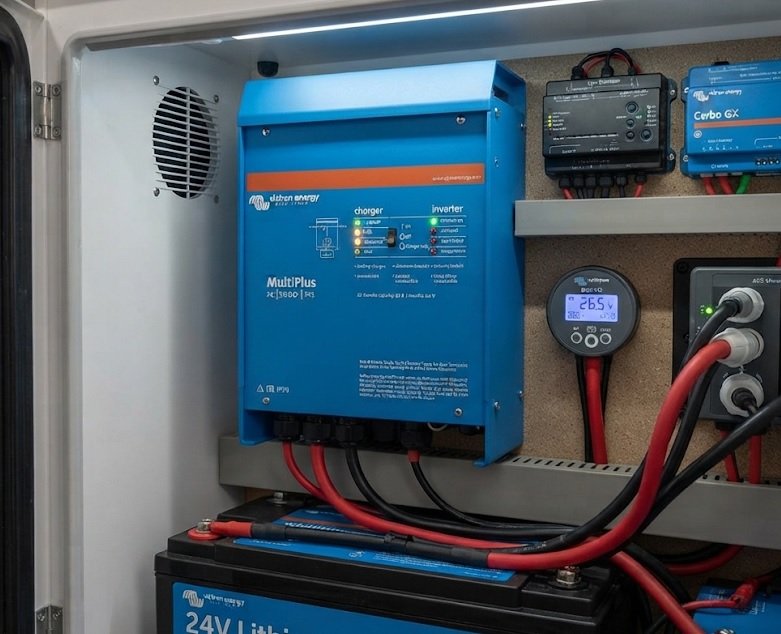
Victron Energy MultiPlus 24/3000/70-50 – Best Overall Choice
The Victron MultiPlus 24/3000/70-50 is the recommended inverter-charger for 24V systems needing 3,000VA continuous power. Its built-in 70A charger, pure sine wave output, and seamless grid or generator switching make it ideal for RVs, boats, and off-grid cabins. Proven reliability and remote monitoring seal the deal.
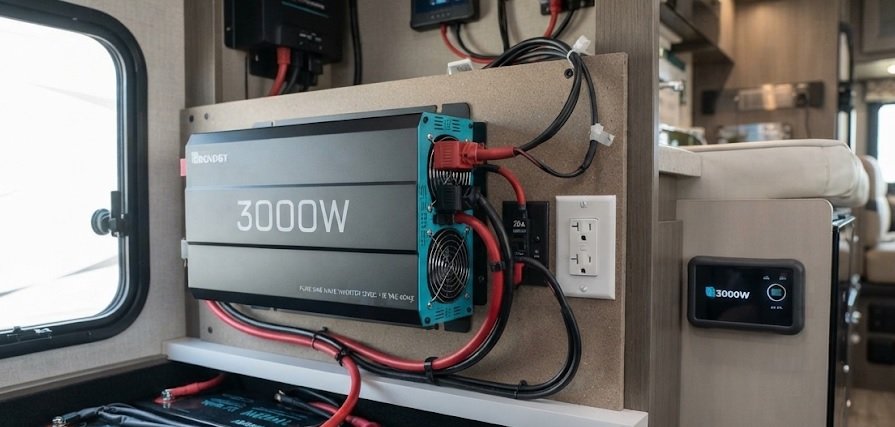
Renogy 3000W 12V Pure Sine Wave Inverter – Best for Small 12V Setups
The Renogy 3000W 12V Pure Sine Wave Inverter is the best option for compact 12V builds under 3,000W. It delivers clean 120V AC power, runs quiet, and pairs easily with lithium or AGM batteries. Affordable and beginner-friendly, it suits van conversions and small solar arrays perfectly.
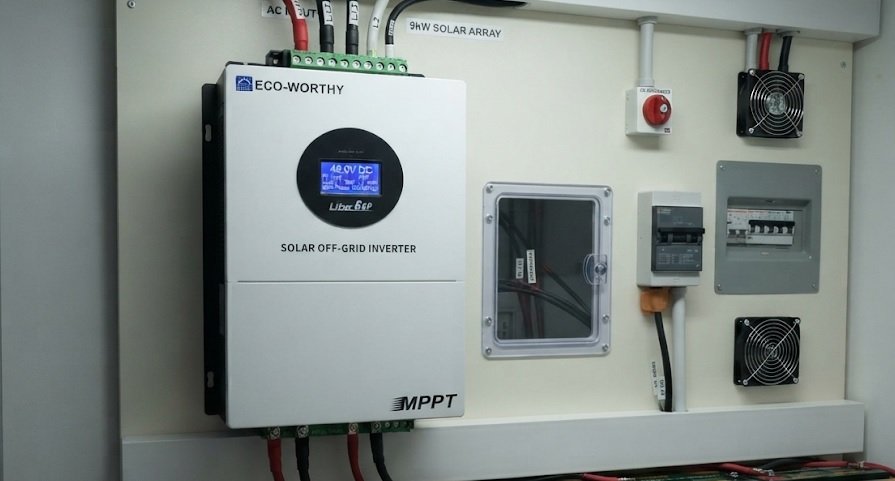
EG4 6000XP 48V Off-Grid Inverter – Best for Large 48V Systems
The EG4 6000XP is ideal for whole-home 48V systems demanding 6,000W output. It supports dual MPPT solar inputs, generator pass-through, and parallel stacking for expansion. High efficiency and low idle draw make it a top pick for serious off-grid installations.
How Voltage Affects Current, Cable Size, and Power Loss
Voltage determines how much current flows through your wiring. Higher voltage means lower current for the same wattage, which directly reduces heat, cable thickness, and energy waste.
The Ohm’s Law Relationship Explained
Power equals voltage multiplied by current (P = V × I). So a 1,000W load draws roughly 83A at 12V but only 21A at 48V. That difference reshapes your entire system design.
Cable Size and Voltage Drop Compared
Lower current allows thinner, cheaper cables and minimizes voltage drop over distance. Here’s how the three voltages compare for a 1,000W load:
| System Voltage | Current Draw | Typical Cable Size | Voltage Drop (10 ft) |
|---|---|---|---|
| 12V | ~83A | 4/0 AWG | High |
| 24V | ~42A | 2 AWG | Moderate |
| 48V | ~21A | 6 AWG | Low |
Why This Matters for Real Installations
- Cost savings: Thinner copper cables cut material expenses significantly.
- Efficiency gains: Less current means fewer resistive losses and cooler wiring.
- Longer runs: 48V systems tolerate greater distances between panels and batteries.
- Safety: Reduced amperage lowers fire risk and stress on connectors.
Quick Summary
- Higher voltage = lower current = thinner cables and less loss.
- 48V systems handle long cable runs far better than 12V.
- Always size cables for your voltage before buying components.
Battery Bank Configuration for 12V, 24V, and 48V Systems
Battery wiring changes completely depending on your target voltage. Series connections raise voltage, while parallel connections raise capacity in amp-hours.
How to Wire Batteries for Each Voltage
Most batteries are 12V, so reaching higher voltages requires series strings. Here’s the standard approach:
- 12V system: Wire all batteries in parallel to keep 12V and add capacity.
- 24V system: Connect two 12V batteries in series, then parallel those pairs.
- 48V system: Connect four 12V batteries in series, then parallel the strings.
Battery Management and Balancing
Higher-voltage banks demand careful balancing to prevent weak cells from dragging performance. A BMS (Battery Management System) is essential for lithium setups.
- 12V: Simple balancing, ideal for beginners.
- 24V: Moderate complexity, needs matched pairs.
- 48V: Requires a robust BMS and matched series strings.
Choosing the Right Battery Chemistry
Lithium (LiFePO4) batteries handle higher voltages better than lead-acid. They offer deeper discharge, longer lifespan, and lighter weight.
| Chemistry | Best Voltage | Lifespan |
|---|---|---|
| Lead-Acid | 12V / 24V | 3-5 years |
| AGM | 12V / 24V | 4-6 years |
| LiFePO4 | 24V / 48V | 8-15 years |
Quick Summary
- Series raises voltage; parallel raises capacity.
- 48V banks need a quality BMS for safe balancing.
- LiFePO4 is the top choice for 24V and 48V builds.
Which Voltage Should You Choose for Your Application?
The right voltage depends on your power needs, budget, and installation size. Matching voltage to your load prevents costly upgrades later.
Best Voltage by Use Case
Different applications demand different voltages. Use this breakdown to find your ideal match:
- 12V: Small cabins, van conversions, boats, and systems under 1,000W.
- 24V: Mid-size RVs, boats, and solar arrays between 1,000W and 3,000W.
- 48V: Whole homes, large off-grid setups, and systems above 3,000W.
How to Size Your System Step by Step
Follow these steps to pick the correct voltage with confidence:
- Calculate your total daily watt-hours.
- Add up peak simultaneous loads in watts.
- Divide peak watts by voltage to estimate current.
- Choose the voltage keeping current under 100-200A.
Cost and Efficiency Trade-Offs
Higher voltage systems cost more upfront but save money through thinner cables and fewer losses. Lower voltage systems stay cheaper for small, short-run builds.
| Factor | 12V | 24V | 48V |
|---|---|---|---|
| Upfront Cost | Low | Medium | High |
| Efficiency | Low | Medium | High |
| Max Practical Load | ~1,000W | ~3,000W | 10,000W+ |
Quick Summary
- Keep current under 100-200A when sizing voltage.
- 12V for small builds, 24V for mid-size, 48V for large.
- Higher voltage costs more upfront but saves long-term.
Common Mistakes to Avoid When Choosing System Voltage
Many builders pick voltage by habit instead of calculation. These errors lead to overheating wires, failed inverters, and expensive rework.
Undersizing Voltage for Large Loads
Running big appliances on 12V forces massive current through cables. This causes dangerous heat, voltage sag, and tripped breakers.
- Mistake: Powering a 3,000W inverter on 12V (250A draw).
- Fix: Step up to 24V or 48V to halve or quarter the current.
Mixing Voltages in One System
Components must match your bank voltage exactly. A 24V inverter on a 12V battery bank simply won’t run.
- Confirm inverter input voltage matches your bank.
- Match charge controllers to system voltage.
- Verify solar panel strings stay within controller limits.
Ignoring Future Expansion
Planning only for today’s needs traps you later. Upgrading from 12V to 48V often means replacing the inverter, cables, and controllers.
- Tip: Choose 48V if you expect to grow past 3,000W.
- Tip: Buy MPPT controllers rated for higher voltages.
- Tip: Leave room in your battery bank for added strings.
| Mistake | Consequence | Solution |
|---|---|---|
| Undersized voltage | Overheating cables | Raise system voltage |
| Mixed voltages | Components won’t run | Match all devices |
| No expansion plan | Costly upgrades | Plan for higher voltage |
Quick Summary
- Never run large loads on undersized voltage.
- All components must share the same voltage.
- Plan for expansion before buying equipment.
Safety, Wiring, and Code Considerations for Higher Voltages
Higher voltage systems deliver greater efficiency but demand stricter safety practices. Proper fusing, grounding, and insulation keep your installation code-compliant and hazard-free.
Fusing and Circuit Protection by Voltage
Every positive cable needs a fuse rated for your system’s current. Higher voltage reduces current, but DC arcs are harder to extinguish than AC.
- 12V: Use ANL or MEGA fuses near the battery.
- 24V: Class T fuses handle high fault currents safely.
- 48V: DC-rated breakers and Class T fuses are essential.
Wire Gauge and Insulation Ratings
Choose cables rated for your voltage and expected current. Undersized wire overheats, while underrated insulation risks breakdown at 48V.
- Calculate continuous current from your peak load.
- Select gauge using a voltage drop chart (keep drop under 3%).
- Confirm insulation is rated for at least 1.25× system voltage.
Grounding and Code Compliance
NEC and local codes treat 48V DC systems differently than 12V. Proper grounding prevents shock hazards and equipment damage.
- Ground the negative bus to a common earth point.
- Use DC-rated disconnects for maintenance safety.
- Label all circuits clearly for future servicing.
| Voltage | Fuse Type | Insulation Min. |
|---|---|---|
| 12V | ANL / MEGA | 60V |
| 24V | Class T | 60V |
| 48V | Class T / DC Breaker | 100V |
Quick Summary
- Always fuse the positive cable near the battery.
- Keep voltage drop under 3% with correct wire gauge.
- 48V systems need DC-rated breakers and proper grounding.
Solar Panel and Charge Controller Compatibility by Voltage
Your charge controller must match both your battery bank voltage and your solar array’s output. Mismatched components waste power or fail entirely.
Choosing MPPT vs PWM Controllers
MPPT controllers convert excess panel voltage into usable charging current, boosting efficiency by up to 30%. PWM controllers are cheaper but only work well with small 12V arrays.
- 12V systems: PWM works for small panels; MPPT for larger ones.
- 24V systems: MPPT is strongly recommended.
- 48V systems: MPPT is mandatory for proper charging.
Matching Solar Array Voltage to Your Bank
Panel strings must exceed battery voltage to charge effectively. Higher-voltage arrays let MPPT controllers step down efficiently.
- Check your controller’s maximum PV input voltage.
- Wire panels in series to raise array voltage.
- Confirm array voltage stays below the controller limit in cold weather.
Real-World Sizing Example
A 48V bank charging from 400W of panels needs roughly 10A at 48V. A 12V bank would need 33A for the same wattage, requiring thicker cables and a larger controller.
| Bank Voltage | 400W Array Current | Controller Type |
|---|---|---|
| 12V | ~33A | MPPT (60A) |
| 24V | ~17A | MPPT (30A) |
| 48V | ~10A | MPPT (20A) |
Quick Summary
- MPPT controllers boost efficiency at every voltage.
- Higher bank voltage needs lower charging current.
- Always verify PV input limits before wiring panels.
Cost Comparison: Is Upgrading to 24V or 48V Worth It?
Higher voltage systems cost more upfront but often pay for themselves through cheaper wiring and greater efficiency. The break-even point depends on your load size and cable runs.
Upfront Component Costs
Inverters and charge controllers cost slightly more at higher voltages. However, thinner cables and smaller fuses offset much of that difference.
- 12V: Cheapest components, but expensive heavy-gauge cable.
- 24V: Moderate prices with balanced cable costs.
- 48V: Pricier inverters, but lowest wiring expenses.
Long-Term Savings and Efficiency
Lower current means less resistive loss, so more of your harvested energy reaches the load. Over years, that efficiency compounds into real savings.
- Estimate annual energy production.
- Apply a 5-10% efficiency gain for higher voltage.
- Compare savings against the higher upfront cost.
When Upgrading Makes Financial Sense
If your system exceeds 1,000W or runs cables over 10 feet, upgrading voltage usually pays off. Small, short-run setups rarely justify the switch.
| System Size | Best Value Voltage | Why |
|---|---|---|
| Under 1,000W | 12V | Lowest upfront cost |
| 1,000-3,000W | 24V | Balanced cost and efficiency |
| Over 3,000W | 48V | Major cable and loss savings |
Quick Summary
- Higher voltage cuts long-term cable and efficiency costs.
- Upgrading pays off above 1,000W or long cable runs.
- Small setups rarely benefit from switching voltage.
Conclusion: Choosing the Right Voltage for Your System
Picking between 12V, 24V, and 48V systems comes down to your load size and cable runs. Higher voltage cuts current, saves copper, and boosts efficiency.
Remember the golden rule: keep current under 100-200A and match every component to your bank voltage.
Ready to build? Calculate your daily watt-hours, then size your voltage with confidence.
With the right voltage, your system will run cooler, safer, and more efficiently for years.
Frequently Asked Questions About 12V vs 24V vs 48V Systems
What is the difference between 12V, 24V, and 48V systems?
These voltages describe how much electrical pressure your battery bank delivers. Higher voltage moves the same power with less current, which reduces heat and cable size.
Think of it as water pressure: 48V pushes energy more forcefully than 12V. That efficiency makes higher voltages ideal for larger loads and longer cable runs.
Which voltage is best for a solar system?
There’s no single winner—it depends on system size. Use 12V for arrays under 1,000W, 24V for 1,000-3,000W, and 48V for anything above 3,000W.
Most whole-home off-grid setups choose 48V for its efficiency and thinner wiring. Small cabins and vans typically stick with 12V or 24V to save money.
Can I mix 12V and 24V components in one system?
No—mismatched voltages cause components to fail or refuse to run. A 24V inverter needs a 24V battery bank and a 24V-rated charge controller.
If you must combine devices, use a DC-DC converter to step voltage up or down. Always verify every component matches your bank voltage before wiring.
How do I convert a 12V system to 24V or 48V?
You’ll need to reconfigure your battery bank into series strings and replace incompatible components. Most inverters and controllers aren’t voltage-flexible.
Follow these steps: rewire batteries in series, install a matching inverter, upgrade your charge controller, and replace undersized fuses. Expect to swap several core parts.
Why does higher voltage reduce cable size?
Higher voltage lowers current for the same wattage, following Ohm’s Law. Less current means less heat, so thinner cables safely carry the load.
For example, a 1,000W load draws 83A at 12V but only 21A at 48V. That drop lets you use much smaller, cheaper copper wire.
Is 48V safe for DIY installations?
48V DC is generally safe to touch but still requires respect and proper protection. DC arcs are harder to extinguish than AC, so use DC-rated breakers.
Always fuse the positive cable, ground the negative bus, and label circuits clearly. When in doubt, consult a licensed electrician for high-voltage DC work.
What is the best way to size my system voltage?
Calculate your total daily watt-hours and peak load first. Then divide peak watts by voltage to estimate current, keeping it under 100-200A.
If current exceeds that range, step up to the next voltage. Planning for future expansion also favors choosing 48V early to avoid costly upgrades later.
Do 24V and 48V systems charge faster than 12V?
Not inherently—charging speed depends on current, not voltage alone. However, higher voltage lets chargers deliver more wattage through the same cable.
This means a 48V system can accept more solar power without overheating wires. The result is often faster, more efficient charging overall.