
Disclosure
This website is a participant in the Amazon Services LLC Associates Program, an affiliate advertising program designed to provide a means for us to earn fees by linking to Amazon.com and affiliated sites.
You can safely discharge a deep cycle battery to 50% of its capacity for regular use, though most models tolerate 80% depth of discharge occasionally. Going deeper shortens battery life dramatically, so understanding these limits protects your investment.
This complete guide reveals expert tips on depth of discharge, voltage thresholds, and proven methods to maximize cycle life. Keep reading to learn exactly how deep you can go without damaging your battery.
Key Takeaways
- 50% is the sweet spot for daily discharges to maximize cycle life
- 80% depth of discharge is acceptable occasionally, but not routinely
- Below 10.5V, most batteries suffer permanent capacity damage
- Lithium batteries tolerate 80–90% discharge far better than lead-acid
- Shallower discharges deliver exponentially more total cycles
Best Deep Cycle Batteries for Safe Deep Discharge – Detailed Comparison
Renogy Deep Cycle AGM Battery 12V 100Ah – Best Overall Choice
The Renogy 12V 100Ah AGM is recommended for campers and solar setups needing reliable 50% discharges. Its maintenance-free design and 1,100+ cycles at 50% DoD make it an ideal balance of price and performance for weekend adventurers.

Battle Born LiFePO4 100Ah 12V – Best Lithium Option
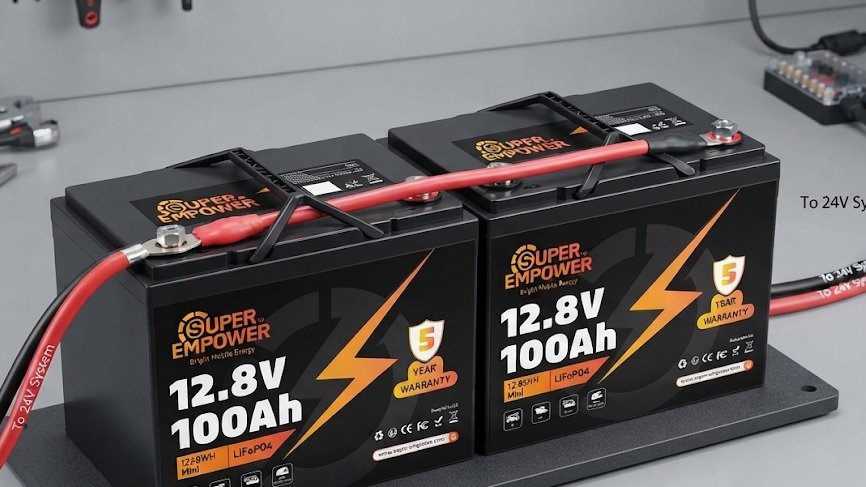
The Battle Born 100Ah LiFePO4 handles 80–90% depth of discharge without damage, delivering 3,000–5,000 cycles. This best option suits full-time RVers and off-grid users who need maximum usable capacity from every charge.
Trojan T-105 6V 225Ah – Best Flooded Lead-Acid Pick
The Trojan T-105 remains a proven choice for golf carts and large solar banks, offering 1,200 cycles at 50% DoD. Its thick plates tolerate deeper discharges than standard flooded batteries, ideal for budget-conscious deep-cycle applications.

Understanding Depth of Discharge for Deep Cycle Batteries
Depth of discharge (DoD) measures how much battery capacity you’ve used before recharging. Unlike starter batteries, deep cycle batteries are engineered to handle repeated discharges. However, going too deep still causes irreversible damage.
What Is Depth of Discharge (DoD)?
DoD is expressed as a percentage of total capacity. Discharging a 100Ah battery by 50Ah equals 50% DoD. The deeper you discharge, the fewer total cycles the battery delivers over its lifespan.
Recommended Depth of Discharge by Battery Type
Each chemistry tolerates discharge differently. Use this comparison to choose safe limits:
| Battery Type | Safe DoD | Max Occasional DoD |
|---|---|---|
| Flooded Lead-Acid | 50% | 80% |
| AGM | 50% | 80% |
| Gel | 50% | 70% |
| Lithium (LiFePO4) | 80% | 90–100% |
Why Discharging Too Deep Causes Damage
Deep discharges trigger sulfation in lead-acid batteries, where sulfate crystals harden on plates and reduce capacity permanently. Lithium batteries resist sulfation but still degrade faster below 10% state of charge.
- 50% DoD: Delivers roughly 2x the cycles of 80% DoD
- 80% DoD: Acceptable occasionally, but accelerates wear
- 100% DoD: Causes immediate, lasting capacity loss in lead-acid
Quick Rule:
- Lead-acid: stop at 50% DoD for daily use
- Lithium: 80% DoD is safe for routine cycling
Next, let’s examine the exact voltage thresholds that signal when to stop discharging.
Voltage Limits: How Low Can You Safely Discharge?
Voltage is your real-time gauge for depth of discharge. Monitoring it prevents over-discharge damage and tells you exactly when to recharge. Here are the critical thresholds for each battery type.
12V Battery Voltage Chart by State of Charge
Use these resting voltage readings to estimate how deep you’ve discharged:
| State of Charge | 12V Lead-Acid | 12V LiFePO4 |
|---|---|---|
| 100% | 12.7V | 13.6V |
| 75% | 12.4V | 13.3V |
| 50% | 12.2V | 13.1V |
| 25% | 12.0V | 12.9V |
| 0% (empty) | 10.5V | 10.0V |
The 50% Rule Explained
Most lead-acid manufacturers recommend stopping at 12.2V for regular cycling. This 50% limit delivers roughly double the total cycles compared to deeper discharges. Occasional trips to 11.8V are tolerable but should stay rare.
How to Monitor Depth of Discharge
Follow these steps to track discharge accurately:
- Install a battery monitor with shunt-based current tracking
- Check resting voltage after 2–4 hours off load
- Log amp-hours used against rated capacity
- Recharge at 50% DoD for lead-acid, 80% for lithium
- Under load: Voltage sags temporarily—don’t panic
- Resting voltage: The true indicator of state of charge
- Temperature: Cold weather lowers voltage readings slightly
Critical Numbers:
- 12.2V = 50% DoD for lead-acid (stop here daily)
- 10.5V = absolute floor before permanent damage
Now let’s explore how discharge depth directly impacts your battery’s total lifespan.
How Discharge Depth Affects Battery Cycle Life
Every discharge cycle slightly wears your battery. Shallower discharges dramatically extend total lifespan, while deep discharges trade longevity for short-term capacity. This trade-off defines your true cost per cycle.
Cycle Life vs. Depth of Discharge Comparison
Notice how cycle counts multiply as discharge depth decreases:
| Depth of Discharge | Lead-Acid Cycles | LiFePO4 Cycles |
|---|---|---|
| 30% | ~1,500 | ~7,000 |
| 50% | ~1,000 | ~5,000 |
| 80% | ~500 | ~3,000 |
| 100% | ~200 | ~2,000 |
Calculating Total Energy Throughput
Cycle count alone misleads—multiply cycles by usable capacity. A 100Ah battery at 50% DoD delivers about 50,000Ah total. The same battery at 80% DoD yields only 40,000Ah despite deeper individual draws.
- 50% DoD: 1,000 cycles × 50Ah = 50,000Ah lifetime
- 80% DoD: 500 cycles × 80Ah = 40,000Ah lifetime
- Result: Shallower cycling wins on total energy delivered
Real-World Example: Solar Cabin Setup
A cabin using 40Ah nightly from a 100Ah bank sits at 40% DoD, potentially lasting 5+ years. Drawing 80Ah nightly doubles daily capacity but may kill the same battery in under two years.
Bottom Line:
- Shallow discharges = more total energy over battery life
- Doubling DoD can cut lifespan by half or more
Let’s look at practical strategies to protect your battery while meeting daily power needs.
Practical Tips to Prevent Over-Discharging Your Battery
Protecting your battery from excessive discharge requires smart habits and the right equipment. These proven strategies help you stay within safe limits while meeting your power demands reliably.
Set a Low-Voltage Cutoff
A low-voltage disconnect (LVD) automatically cuts power before damage occurs. Set it to 11.8V–12.0V for lead-acid or 10.5V for lithium. This single device prevents accidental deep discharges from forgotten loads.
Follow These Daily Best Practices
- Recharge promptly after each discharge—don’t leave batteries at low charge
- Size your bank larger than daily needs to keep DoD shallow
- Avoid high loads when state of charge drops below 50%
- Equalize flooded batteries monthly to reverse mild sulfation
- Store at full charge during idle periods
Common Mistakes That Shorten Battery Life
- Running to 0% regularly: The fastest way to destroy lead-acid capacity
- Ignoring resting voltage: Load readings mislead you into over-discharging
- Deep cycling lithium below 10%: Accelerates degradation despite BMS protection
- Mixing old and new batteries: Weak cells drag healthy ones into deeper discharge
Protection Essentials:
- Install an LVD to prevent accidental over-discharge
- Recharge immediately after use—never store discharged
With these safeguards in place, your deep cycle battery will deliver years of dependable service.
Lead-Acid vs. Lithium: How Deep Can Each Discharge?
Battery chemistry determines your safe discharge limit more than any other factor. Understanding these differences helps you choose the right battery and set realistic expectations for depth of discharge.
Lead-Acid Batteries: The 50% Rule
Flooded, AGM, and gel batteries all share the same 50% DoD recommendation for daily cycling. Pushing to 80% occasionally is acceptable, but routine deep discharges cause sulfation and permanent capacity loss. These batteries cost less upfront but demand disciplined discharge management.
Lithium (LiFePO4): Built for Deeper Discharge
LiFePO4 batteries safely handle 80–90% depth of discharge without significant damage. Their chemistry resists sulfation entirely, and a built-in battery management system (BMS) prevents over-discharge automatically. This makes lithium ideal for applications needing maximum usable capacity.
Direct Comparison: Which Handles Deep Discharge Better?
| Factor | Lead-Acid | LiFePO4 |
|---|---|---|
| Daily safe DoD | 50% | 80% |
| Usable capacity (100Ah) | 50Ah | 80Ah |
| Cycle life at safe DoD | ~1,000 | ~5,000 |
| Over-discharge protection | Manual | Built-in BMS |
- Lead-acid wins on: Lower upfront cost, simple charging
- Lithium wins on: Usable capacity, cycle life, deeper discharge tolerance
- Cost per cycle: Lithium often cheaper long-term despite higher price
Chemistry Cheat Sheet:
- Lead-acid: stop at 50% DoD to protect lifespan
- Lithium: 80% DoD is safe and routine
Understanding these chemistry differences lets you match the right battery to your application.
Real-World Discharge Scenarios by Application
How deep you discharge depends heavily on your specific use case. Different applications demand different trade-offs between usable capacity and battery longevity.
RV and Campervan House Batteries
Most RVers target 50% DoD with lead-acid banks, recharging via solar or shore power daily. Boondockers often upgrade to lithium to access 80% DoD, effectively doubling usable capacity without adding weight. A 200Ah lithium bank delivers 160Ah usable versus just 100Ah from equivalent lead-acid.
Solar Power Storage Systems
Off-grid solar banks cycle daily, making depth of discharge critical for longevity. Design your bank so nightly draws stay under 30–40% DoD, reserving deeper discharges for cloudy stretches. Oversizing the bank by 2–3x your daily needs dramatically extends cycle life.
Golf Carts and Electric Vehicles
Golf carts typically discharge to 60–80% DoD per round, then recharge overnight. This aggressive cycling is why golf cart batteries use thicker plates. Lithium conversions now allow 90% DoD with 5x the cycle life.
Marine and Trolling Motor Applications
- Trolling motors: Draw 50–80% DoD per trip—size banks generously
- House loads: Keep discharges under 50% for refrigeration and electronics
- Starting batteries: Never discharge deeply—use separate deep cycle banks
| Application | Typical Daily DoD | Recommended Limit |
|---|---|---|
| RV house bank | 40–60% | 50% |
| Off-grid solar | 30–50% | 40% |
| Golf cart | 60–80% | 80% |
| Trolling motor | 50–80% | 70% |
Application Insight:
- Oversize your bank to keep daily DoD shallow
- Match chemistry to your cycling demands
These real-world patterns show why battery sizing matters as much as discharge limits.
Recovery and Maintenance After Deep Discharges
Even careful users occasionally discharge batteries deeper than intended. Knowing how to recover properly minimizes permanent damage and restores lost capacity.
Immediate Steps After Over-Discharge
Act quickly once you notice a battery below safe voltage. Delayed recovery allows sulfation to harden, making capacity loss permanent.
- Disconnect all loads immediately to stop further draining
- Let the battery rest 2–4 hours, then check resting voltage
- Recharge with a low-current charge (10% of capacity) to avoid overheating
- Use a smart charger with desulfation mode for lead-acid recovery
- Test capacity afterward to confirm recovered performance
Reconditioning Flooded Lead-Acid Batteries
Equalization charging can reverse mild sulfation by applying controlled overcharge. This process remixes electrolyte and dissolves soft sulfate crystals. Perform equalization monthly or after any accidental deep discharge.
- Check water levels before equalizing—never expose plates
- Ventilate the area—equalization releases hydrogen gas
- Monitor temperature—stop if battery exceeds 120°F (49°C)
- Skip for AGM/gel—these sealed types don’t tolerate equalization
When Recovery Isn’t Possible
Batteries left discharged for weeks often suffer irreversible sulfation. Signs include voltage that won’t rise above 12V or capacity under 50% of rated. In these cases, replacement is the only safe option.
Recovery Rules:
- Recharge immediately—never let batteries sit discharged
- Equalize flooded batteries to reverse mild sulfation
Proper recovery extends battery life even after occasional over-discharge mistakes.
Conclusion: How Deep Can You Discharge a Deep Cycle Battery Safely?
You now know the answer: 50% for lead-acid and 80% for lithium. Staying within these limits maximizes cycle life and protects your investment.
Shallower discharges always deliver more total energy over time. Size your battery bank generously to keep daily depth of discharge low.
Install a low-voltage cutoff, monitor resting voltage, and recharge promptly after every use.
Treat your deep cycle battery well, and it will power your adventures reliably for years.
Frequently Asked Questions About Deep Cycle Battery Discharge
What happens if I discharge my deep cycle battery to 0%?
Discharging to 0% causes severe sulfation in lead-acid batteries, often permanently destroying capacity. Most batteries won’t recover fully even with reconditioning attempts. Lithium batteries have BMS protection but still degrade faster when drained completely.
Occasional accidental deep discharge may be recoverable with prompt recharging. However, repeated 0% discharges will kill any battery within months. Always install a low-voltage cutoff to prevent this scenario entirely.
How do I know when my battery has reached 50% depth of discharge?
Check resting voltage after letting the battery sit 2–4 hours without load. For 12V lead-acid, 12.2V indicates 50% DoD. Lithium reads approximately 13.1V at the same state of charge.
A shunt-based battery monitor provides the most accurate reading by tracking amp-hours in and out. Voltage charts work well but become less reliable under load or in extreme temperatures.
Can I discharge a lithium battery to 100% safely?
LiFePO4 batteries tolerate near-100% discharge without immediate damage, thanks to built-in BMS protection. However, routinely draining below 10% accelerates degradation and reduces total cycle life significantly.
For maximum longevity, treat 80% DoD as your daily limit. Reserve deeper discharges for emergencies when you genuinely need every available amp-hour.
Does temperature affect how deep I can discharge my battery?
Yes—cold temperatures reduce usable capacity and lower voltage readings. A battery at 32°F (0°C) delivers roughly 80% of its rated capacity. Avoid deep discharges in freezing conditions to prevent electrolyte freezing.
Heat accelerates chemical reactions and self-discharge, increasing sulfation risk. Keep batteries in moderate temperatures whenever possible for optimal performance and lifespan.
What is the best way to extend deep cycle battery life?
Keep discharges shallow, recharge immediately after use, and store batteries fully charged. Oversizing your battery bank reduces daily depth of discharge dramatically. This single step delivers the biggest lifespan gains.
Perform regular maintenance including water checks for flooded types and terminal cleaning. Use smart chargers matched to your battery chemistry to prevent overcharging and undercharging damage.
Why does my battery voltage drop quickly under load?
Voltage sag under load is normal and doesn’t indicate true state of charge. High-current draws temporarily depress voltage, which recovers once the load disconnects. Check resting voltage for accurate readings.
Excessive sag may signal aging, sulfation, or undersized cables. If voltage plummets below 10.5V under moderate loads, have the battery capacity-tested.
How many cycles can I expect at 50% depth of discharge?
Lead-acid batteries typically deliver 1,000–1,500 cycles at 50% DoD. LiFePO4 batteries achieve 3,000–5,000 cycles at 80% DoD, making lithium far more cost-effective long-term.
Actual cycle life depends on temperature, charging quality, and maintenance. Following best practices helps you reach the upper end of these ranges.