
Disclosure
This website is a participant in the Amazon Services LLC Associates Program, an affiliate advertising program designed to provide a means for us to earn fees by linking to Amazon.com and affiliated sites.
You should drive for at least 20 to 30 minutes to recharge a car battery. This drive time restores the energy your starter drained and keeps your vehicle running reliably.
This complete guide reveals exactly how long to drive, what affects charging speed, and expert tips to maximize battery life. Keep reading to learn proven methods that prevent a dead battery for good.
Key Takeaways
- 20-30 minutes of driving is the minimum to recharge a healthy battery.
- Idling won’t cut it—alternators charge faster at higher RPMs.
- Cold weather, short trips, and old batteries all extend required drive time.
- Highway driving beats stop-and-go traffic for faster recharging.
- Repeated dead batteries often signal a failing alternator or battery.
Best Battery Chargers for Recharging a Car Battery – Detailed Comparison
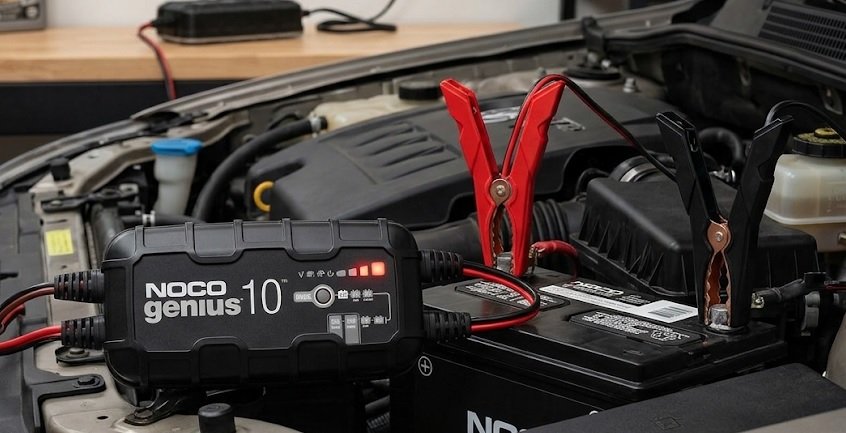
NOCO GENIUS10 – Best Overall Choice
The NOCO GENIUS10 is the recommended pick for most drivers. This 10-amp smart charger safely recharges and maintains batteries, with spark-proof and reverse-polarity protection built in. Its multi-chemistry support handles lead-acid, AGM, and lithium batteries. Ideal for anyone wanting a fast, worry-free charge at home.
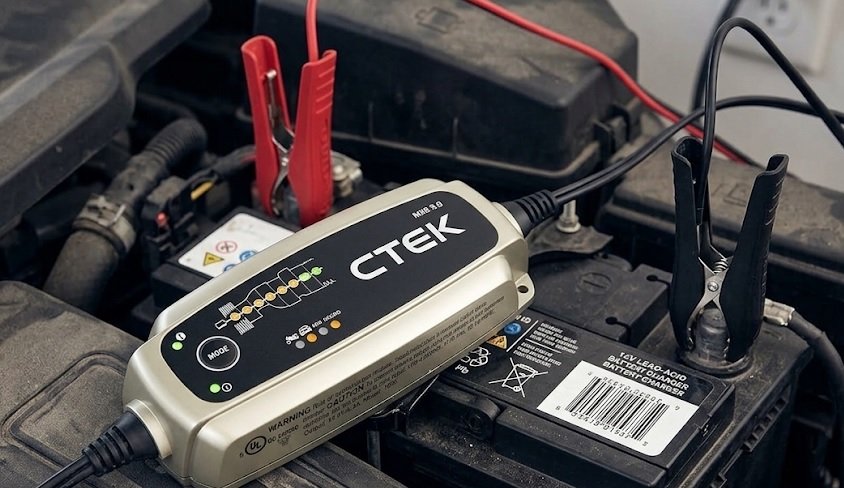
CTEK MXS 5.0 – Best Option for Maintenance
The CTEK MXS 5.0 excels at long-term battery care. Its eight-step charging cycle reconditions sulfated batteries and keeps stored vehicles topped up. The compact, weather-resistant design suits garages and RVs alike. This is the best option if your car sits for weeks between drives.
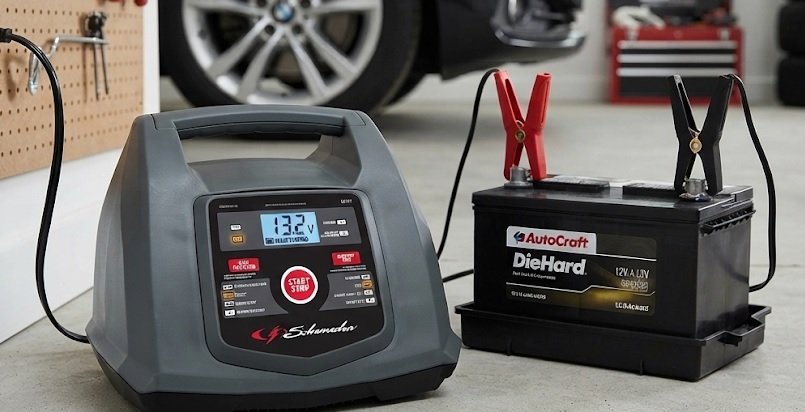
Schumacher SC1281 – Best for Fast Jump-Starting
The Schumacher SC1281 combines a 100-amp engine start with a 30-amp boost mode. It revives deeply discharged batteries in minutes and includes automatic voltage detection. Ideal for cold mornings or emergencies when you need power fast. A dependable backup for any driveway.
How Long to Drive to Recharge a Car Battery: Exact Timeframes
The time needed to recharge a car battery depends on its charge level, the alternator output, and driving conditions. Most healthy batteries recover fully after a steady drive. Here are the exact timeframes to expect.
Recharge Times Based on Battery Condition
Use this table as a quick reference for how long you should drive:
| Battery State | Drive Time Needed |
|---|---|
| Light drain (left lights on) | 20-30 minutes |
| Moderate drain | 30-60 minutes |
| Deeply discharged | Several hours or a charger |
Why Idling Doesn’t Work
Idling your engine will not effectively recharge a depleted battery. Alternators produce maximum output only above roughly 1,500 RPM. At idle, output drops too low to overcome the drain from lights, fans, and electronics.
Step-by-Step: Charging Your Battery by Driving
- Jump-start the car safely and let it run briefly.
- Drive steadily for at least 20-30 minutes.
- Avoid stop-and-go traffic and keep RPMs moderate.
- Take the highway for faster, more consistent charging.
Quick Answer
- Minimum: 20-30 minutes of driving
- Deeply drained: use a trickle charger overnight
- Idling alone won’t recharge your battery
Next, let’s look at the factors that change these numbers.
Factors That Affect How Long You Need to Drive to Recharge a Car Battery
Not every battery recharges at the same speed. Several key factors determine how long you should drive to restore a full charge. Understanding these helps you plan smarter trips.
Alternator Output and Engine RPM
Your alternator is the charging source while driving. Higher RPMs generate more amperage, so highway driving charges faster than city driving. A weak or failing alternator will never fully recharge your battery, no matter how far you drive.
Battery Age, Type, and Health
Older batteries accept charge more slowly and hold less of it. A battery past 3-5 years may need longer drives or replacement.
- Lead-acid: Standard charging speed
- AGM: Accepts charge faster, tolerates deep drains
- Lithium: Fast charging but needs compatible systems
Weather and Electrical Load
Cold weather reduces battery capacity and slows recharging. Meanwhile, heavy electrical loads drain power as you drive.
- Cold temperatures: Can double required drive time
- Headlights, AC, and defrosters: Add constant drain
- Short trips: Never let the battery fully recover
Key Factors
- Higher RPMs = faster charging
- Old or cold batteries need more time
- Heavy electrical loads slow the process
Now let’s explore the warning signs that your battery isn’t charging properly.
Signs Your Car Battery Isn’t Recharging Properly While Driving
Sometimes a long drive still leaves you with a dead battery. That’s a red flag worth investigating. Watch for these warning signs before you get stranded.
Common Symptoms of a Charging Problem
These indicators suggest your battery or alternator isn’t working correctly:
- Slow engine cranking: The starter struggles even after a long drive
- Dim headlights: Lights brighten only when you rev the engine
- Battery warning light: The dashboard icon stays illuminated
- Frequent jump-starts: You need help starting every few days
Battery vs. Alternator: Which Is Failing?
Both can cause identical symptoms, so testing matters. Use this quick comparison:
| Symptom | Likely Culprit |
|---|---|
| Dies overnight | Battery |
| Dies while driving | Alternator |
| Slow crank when cold | Battery |
| Dim lights at idle | Alternator |
How to Test Your Charging System
- Use a multimeter: A healthy battery reads 12.6V at rest.
- Check running voltage: Expect 13.7-14.7V with the engine on.
- Visit a mechanic: Get a free load test at most auto parts stores.
Warning Signs
- Slow cranking and dim lights mean trouble
- Dies while driving = alternator issue
- Test voltage to confirm the cause
Next, let’s cover tips to extend your battery’s life and avoid repeat problems.
Tips to Recharge Your Car Battery Faster and Extend Its Life
Smart habits keep your battery healthy and reduce how often you need a long recharge drive. These proven methods save time and money. Start applying them today.
Best Driving Habits for Battery Health
How you drive directly affects how well your battery holds a charge.
- Drive longer trips: Aim for 20+ minutes at highway speeds weekly
- Limit short errands: Frequent 5-minute trips drain more than they restore
- Turn off accessories: Shut off AC and lights before shutting the engine
- Drive regularly: Don’t let your car sit for weeks at a time
When to Use a Trickle Charger Instead
Driving isn’t always practical for a full recharge. A battery maintainer keeps your battery topped up during storage. This is ideal for seasonal vehicles or cars driven rarely.
- Winter storage: Prevent discharge over cold months
- Classic or weekend cars: Maintain charge between drives
- Deeply drained batteries: Recover safely overnight
Simple Maintenance Steps
- Clean terminals: Remove corrosion with a wire brush.
- Check connections: Tighten loose cables to ensure good contact.
- Test annually: A load test reveals battery health early.
- Replace on time: Swap batteries every 3-5 years.
Pro Tips
- Weekly 20-minute highway drives keep batteries charged
- Trickle chargers protect stored vehicles
- Clean terminals and test annually
Finally, let’s answer the most common question: how long can a car sit before the battery dies?
How Long Can a Car Sit Before the Battery Dies?
A parked car slowly loses its charge, even with everything turned off. Understanding this timeline helps you avoid a dead battery after storage. Here’s what to expect.
Typical Discharge Timelines
Most healthy batteries drain at different rates depending on age and conditions:
| Battery Condition | Time Before Dead |
|---|---|
| New, healthy battery | 2-3 months |
| Average battery (2-3 years old) | 4-6 weeks |
| Old or weak battery | 1-2 weeks |
What Causes a Parked Battery to Drain?
Even when your car is off, small electronics keep drawing power. This is called parasitic drain.
- Clock and alarm system: Constant low-level draw
- ECU memory: Keeps settings and codes stored
- Aftermarket accessories: Dash cams and trackers add drain
- Cold weather: Speeds up charge loss significantly
How to Prevent a Dead Battery During Storage
- Drive weekly: A 20-30 minute trip keeps it charged.
- Use a battery maintainer: Best option for long storage.
- Disconnect the negative cable: Stops parasitic drain.
- Park indoors: Warmer temps slow discharge.
Storage Facts
- Healthy batteries last 2-3 months parked
- Weak batteries die in 1-2 weeks
- Battery maintainers prevent storage drain
With these timelines in mind, you can plan storage and driving schedules that protect your battery year-round.
How to Recharge a Completely Dead Car Battery Safely
A fully dead battery needs more than a short drive. Jump-starting gets you moving, but proper recharging requires the right approach. Follow these steps to restore it safely.
Jump-Starting vs. Driving vs. Charging
Each method serves a different purpose depending on how drained your battery is.
| Method | Best For | Time Needed |
|---|---|---|
| Jump-start | Getting moving now | 5 minutes |
| Driving | Light to moderate drain | 20-60 minutes |
| Battery charger | Deep discharge | Several hours |
Step-by-Step: Recharging a Dead Battery
- Jump-start safely: Connect red to positive, black to negative.
- Let it run: Idle briefly, then drive steadily for 30+ minutes.
- Use a charger: For deep drains, connect a smart charger overnight.
- Verify the fix: Check voltage with a multimeter after charging.
Safety Precautions to Follow
Batteries contain acid and produce flammable hydrogen gas. Always prioritize safety.
- Wear eye protection: Shield against acid splashes
- Work in ventilated areas: Avoid gas buildup
- Never reverse polarity: It damages electronics
- Don’t smoke nearby: Sparks can ignite hydrogen
Safe Recharging
- Jump-start to move, then drive 30+ minutes
- Deep drains need an overnight charger
- Always wear eye protection and ventilate
Now let’s compare driving versus using a dedicated charger in more detail.
Driving vs. Using a Battery Charger: Which Recharges Faster?
Both methods recharge your battery, but they suit different situations. Choosing the right one saves time and protects your battery’s lifespan. Here’s how they compare.
Head-to-Head Comparison
This table breaks down the key differences at a glance:
| Factor | Driving | Battery Charger |
|---|---|---|
| Speed | Moderate | Controlled, can be faster |
| Convenience | Requires fuel and time | Plug in at home |
| Best for | Light drains | Deep discharges |
| Battery health | Gentle charge | Reconditions cells |
When Driving Is the Better Choice
Driving works well for everyday, minor battery drains.
- Light drain: Left a dome light on overnight
- Regular top-ups: Keeping a daily driver charged
- No equipment: You don’t own a charger
When a Charger Wins
A dedicated charger handles situations driving can’t fix.
- Deep discharge: Battery drained below safe levels
- Stored vehicles: Cars sitting for weeks or months
- Battery reconditioning: Desulfation restores capacity
- No fuel waste: Charges without running the engine
Quick Verdict
- Drive for light, everyday drains
- Use a charger for deep discharges and storage
- Chargers recondition; driving only tops up
Understanding this difference helps you pick the fastest, safest option every time.
Conclusion: How Long to Drive to Recharge a Car Battery
You now know that 20-30 minutes of steady driving recharges most car batteries. Deep drains demand longer trips or a dedicated charger. Cold weather and old batteries need extra time.
Make highway driving a weekly habit to keep your battery strong. Use a trickle charger for stored vehicles.
Test your battery annually and replace it every 3-5 years. Don’t wait for a dead battery—take action today.
A little preventive care keeps you confidently on the road.
Frequently Asked Questions about Recharging a Car Battery
How long should you drive to recharge a car battery?
Drive for at least 20-30 minutes to recharge a healthy car battery. This restores the energy used during starting. Longer drives of 30-60 minutes work better for moderate drains.
Keep engine RPMs moderate and avoid stop-and-go traffic. Highway driving charges faster than city driving because the alternator produces more output at higher speeds.
Can idling recharge a car battery?
Idling does not effectively recharge a car battery. Alternators need roughly 1,500 RPM to produce meaningful charging output. At idle, the engine spins too slowly to overcome the drain from lights and electronics.
If you must charge without driving, raise RPMs slightly or use a dedicated battery charger. Idling for hours wastes fuel and still leaves your battery undercharged.
How long does it take to recharge a completely dead battery?
A completely dead battery needs several hours on a charger. Driving alone won’t fully restore a deeply discharged battery. A 10-amp smart charger typically takes 4-8 hours.
For faster results, use a higher-amp charger, but avoid overheating. If the battery won’t hold a charge after charging, it likely needs replacement.
Is highway driving better than city driving for charging?
Yes, highway driving is the best way to recharge a car battery. Steady speeds keep RPMs high, maximizing alternator output. City driving with frequent stops produces lower, inconsistent charging.
Aim for 20-30 minutes of continuous highway driving weekly. This keeps your battery topped up and extends its overall lifespan.
Why does my battery die even after driving?
If your battery dies after driving, the alternator may be failing. A weak alternator can’t recharge the battery properly, no matter how far you drive. Parasitic drain from accessories can also be the culprit.
Test your charging system with a multimeter. Running voltage should read 13.7-14.7V. If it’s lower, visit a mechanic for a professional diagnosis.
Does cold weather affect how long you need to drive?
Yes, cold weather significantly extends required drive time. Low temperatures reduce battery capacity and slow chemical reactions. You may need double the drive time in freezing conditions.
Cold also increases electrical load from defrosters and heated seats. Park indoors when possible and consider a battery maintainer during winter months.
How do I know if my battery needs replacing?
Replace your battery every 3-5 years or sooner if problems appear. Slow cranking, dim lights, and frequent jump-starts signal a failing battery. Swollen cases or a rotten egg smell confirm it.
Most auto parts stores offer free battery testing. A load test reveals remaining capacity in minutes, helping you replace it before you get stranded.
What is the best way to maintain a car battery?
Drive weekly for at least 20 minutes and keep terminals clean. Use a trickle charger for vehicles that sit unused for long periods. This prevents discharge during storage.
Test your battery annually and check charging voltage regularly. These simple habits maximize battery life and prevent inconvenient breakdowns year-round.