
Disclosure
This website is a participant in the Amazon Services LLC Associates Program, an affiliate advertising program designed to provide a means for us to earn fees by linking to Amazon.com and affiliated sites.
After a jump start, drive your car for at least 20–30 minutes or use a trickle charger to restore the battery. Proper recharging prevents repeat breakdowns and extends battery life.
This complete guide covers proven methods for charging a car battery after a jump start, warning signs of a failing battery, and expert tips to avoid getting stranded again. Keep reading to protect your vehicle and your peace of mind.
Key Takeaways
- Drive 20–30 minutes after a jump start to let the alternator recharge the battery.
- Use a trickle charger for faster, deeper charging if short trips won’t suffice.
- Test the battery if it dies again within days — it may need replacement.
- Never rely on idling alone; it charges too slowly to restore a dead battery.
- Check terminals, alternator, and parasitic drains to find the root cause.
Best Battery Chargers for Charging a Car Battery After a Jump Start
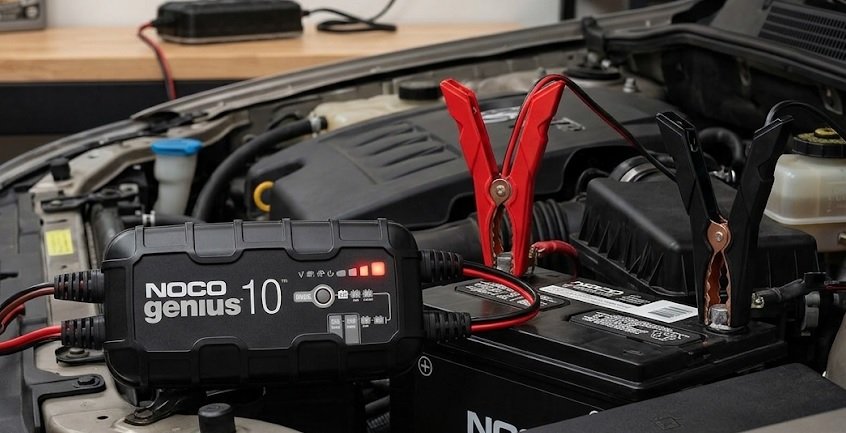
NOCO GENIUS10 (G10) – Best Overall Choice
The NOCO GENIUS10 is a 10-amp smart charger recommended for fully recharging a depleted battery overnight. It automatically detects battery type, repairs sulfation, and switches to maintenance mode. Ideal for cars, trucks, and SUVs, it’s the best option for drivers who want a set-and-forget solution.
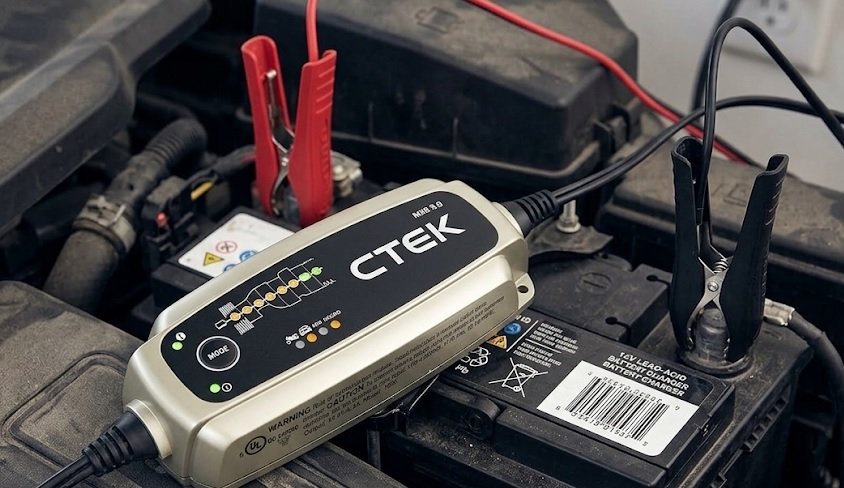
CTEK MXS 5.0 – Best Trickle Charger
The CTEK MXS 5.0 delivers a gentle 5-amp charge with eight stages, including desulfation and float mode. It’s ideal for maintaining batteries during storage or short-trip driving. Compact and weather-resistant, it’s a proven favorite among enthusiasts who value battery longevity over speed.
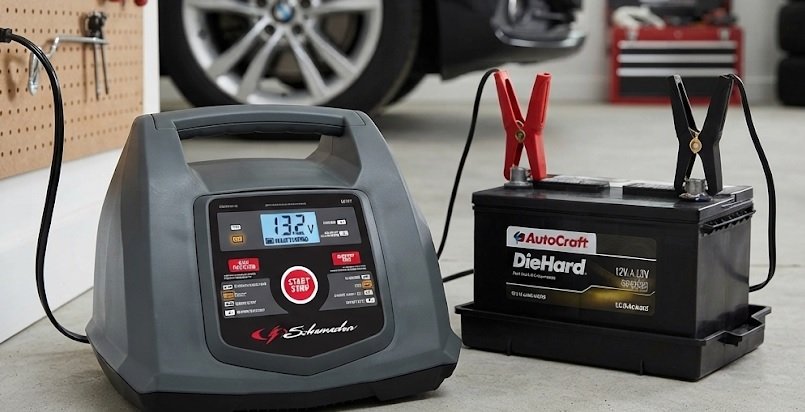
Schumacher SC1281 – Best Jump Starter and Charger Combo
The Schumacher SC1281 combines a 100-amp engine starter with a 30-amp boost charger and 6-amp maintainer. It’s the best option for garages needing one tool for dead batteries and routine charging. Built-in diagnostics and reverse-polarity protection make it safe for beginners.
How to Recharge a Car Battery After a Jump Start
Jump starting gets you moving, but it doesn’t restore your battery’s charge. You must recharge it properly to avoid another breakdown. Here’s how.
Method 1: Drive Your Car for 20–30 Minutes
Driving is the simplest way to recharge a car battery after a jump start. The alternator generates power while the engine runs, gradually restoring the charge.
- Highway driving works best — steady RPMs charge faster than stop-and-go traffic.
- Avoid short trips under 10 minutes; they drain more than they recharge.
- Turn off accessories like AC, radio, and headlights to speed up charging.
Method 2: Use a Trickle or Smart Charger
A trickle charger delivers a slow, steady charge and is ideal when driving isn’t practical. Smart chargers automatically stop when the battery is full, preventing overcharging.
- Connect the positive (red) clamp to the positive terminal.
- Connect the negative (black) clamp to the negative terminal.
- Plug in the charger and let it run 6–12 hours or overnight.
Method 3: Idling (Not Recommended)
Idling for 30 minutes only partially recharges a dead battery. The alternator produces minimal output at low RPMs, so this method is slow and inefficient.
Quick Recap
- Driving 20–30 minutes is fastest for most drivers.
- Trickle chargers give the deepest, safest recharge.
- Idling alone rarely restores a dead battery.
How Long Does It Take to Charge a Car Battery After a Jump Start?
Recharge time depends on your method, battery size, and alternator output. Most batteries need 20 minutes to 12 hours to reach a full charge.
Charging Time by Method
| Method | Time to Full Charge | Best For |
|---|---|---|
| Highway driving | 20–30 minutes | Quick top-ups |
| Trickle charger (2A) | 12–24 hours | Deep, safe charging |
| Smart charger (10A) | 4–8 hours | Fast, efficient charging |
| Idling | 60+ minutes | Emergency only |
Factors That Affect Charging Speed
- Battery age and health: Older batteries accept charge more slowly.
- Alternator output: Higher-amp alternators recharge faster.
- Temperature: Cold weather slows chemical reactions inside the battery.
- Depth of discharge: A deeply drained battery takes much longer to recover.
Signs Your Battery Isn’t Holding a Charge
If your battery dies again within a few days, charging isn’t the real problem. Watch for these warning signs:
- Slow engine cranking or clicking sounds when starting.
- Dim headlights or flickering interior lights.
- Swollen case or sulfur smell near the battery.
- Battery older than 3–5 years — likely near end of life.
Quick Recap
- Highway driving recharges fastest; trickle chargers recharge deepest.
- Cold weather, age, and deep discharge all slow charging.
- Repeated dead batteries usually mean replacement, not recharging.
Common Mistakes to Avoid When Charging a Car Battery After a Jump Start
Even experienced drivers make errors that shorten battery life or damage electrical components. Avoiding these mistakes saves money and prevents repeat breakdowns.
Charging Mistakes That Damage Your Battery
- Relying on idling: Idling for 10 minutes won’t restore a dead battery — it barely replaces the energy used to start the car.
- Overcharging: Leaving a basic charger connected too long can boil the electrolyte and permanently ruin the battery.
- Ignoring parasitic drains: A faulty module or glovebox light can drain a new battery overnight.
- Skipping terminal cleaning: Corroded terminals block current flow and mimic a dead battery.
Safety Precautions When Recharging
Batteries release hydrogen gas, which is highly flammable. Always work in a ventilated area and keep sparks, flames, and cigarettes away.
- Wear safety glasses and gloves to protect against acid splashes.
- Connect the positive clamp first, then the negative, to reduce spark risk.
- Unplug the charger before disconnecting the clamps.
- Never charge a frozen or swollen battery — replace it instead.
When to Replace Instead of Recharge
Charging won’t fix a battery that’s physically failing. Consider replacement if:
- The battery is over 4 years old and struggles in cold weather.
- It dies within 24–48 hours of a full charge.
- Voltage drops below 12.4V after resting.
- The case is cracked, swollen, or leaking.
Quick Recap
- Idling and overcharging are the most common recharging errors.
- Always charge in a ventilated area and connect positive first.
- Batteries over 4 years old with repeated failures need replacement.
How to Maintain Your Car Battery and Prevent Future Jump Starts
Prevention beats recharging every time. A few simple habits keep your battery healthy and reduce the odds of another dead start.
Routine Battery Maintenance Tips
- Test voltage monthly: A healthy resting battery reads 12.6V; below 12.4V signals a weak charge.
- Clean terminals: Scrub corrosion with a wire brush and apply dielectric grease.
- Secure the hold-down: Vibration from a loose battery damages internal plates.
- Drive regularly: Short trips don’t fully recharge — take a 20-minute highway drive weekly.
Seasonal Care for Longer Battery Life
Extreme temperatures are the biggest battery killers. Cold slows chemical reactions, while heat accelerates internal corrosion.
- Winter: Park in a garage and use a maintainer if you drive infrequently.
- Summer: Check water levels in serviceable batteries and keep terminals tight.
- Storage: Disconnect the negative cable or use a trickle charger for long park periods.
Quick Diagnostic Checklist
| Check | Healthy Reading | Action Needed |
|---|---|---|
| Resting voltage | 12.6V+ | Recharge if below 12.4V |
| Charging voltage | 13.7–14.7V | Test alternator if lower |
| Age | Under 4 years | Plan replacement after 4–5 years |
Quick Recap
- Monthly voltage checks catch weak batteries early.
- Cold and heat both shorten battery life — adjust care seasonally.
- Regular highway driving keeps your battery fully charged.
What to Do If Your Car Battery Dies Again After a Jump Start
A battery that dies shortly after recharging points to a deeper issue. Diagnosing the root cause prevents an endless cycle of jump starts.
Step-by-Step Troubleshooting
- Test the battery: Use a multimeter or visit an auto parts store for a free load test.
- Check the alternator: With the engine running, voltage should read 13.7–14.7V. Lower readings mean a failing alternator.
- Inspect for parasitic drain: A module staying awake can drain the battery overnight.
- Examine cables and terminals: Loose or corroded connections mimic a dead battery.
Common Causes of Repeat Battery Failure
- Worn alternator: Can’t recharge the battery while driving.
- Parasitic draw: Faulty relays, trunk lights, or infotainment systems drain power.
- Old battery: Cells lose capacity after 4–5 years and won’t hold a charge.
- Loose belt: A slipping serpentine belt reduces alternator output.
When to Call a Professional
Some problems require expert diagnostics. Seek a mechanic if:
- Voltage readings stay abnormal after charging.
- The battery warning light stays illuminated.
- You smell burning or see smoke near wiring.
- Multiple electrical systems act erratically.
Quick Recap
- Repeat failures usually trace to the alternator, a parasitic drain, or an old battery.
- Test battery and charging voltage before replacing parts.
- Persistent electrical issues warrant professional diagnostics.
Tools and Equipment for Charging a Car Battery After a Jump Start
Having the right tools makes recharging faster and safer. A few inexpensive items turn a stressful breakdown into a quick fix.
Essential Charging Tools
- Smart battery charger: Automatically adjusts amperage and prevents overcharging.
- Trickle charger or maintainer: Ideal for slow, deep recharges and long-term storage.
- Jumper cables: At least 6-gauge for reliable power transfer.
- Portable jump starter: Lithium models fit in a glovebox and work without a second vehicle.
Testing and Diagnostic Tools
Diagnostics confirm whether charging solved the problem or masked a failing component.
- Digital multimeter: Measures resting and charging voltage in seconds.
- Battery load tester: Simulates starting demand to reveal weak cells.
- OBD-II scanner: Detects charging system codes on modern vehicles.
Quick Tool Comparison
| Tool | Typical Cost | Best Use |
|---|---|---|
| Smart charger (10A) | $60–$120 | Fast, safe recharging |
| Trickle charger | $25–$60 | Maintenance and storage |
| Portable jump starter | $50–$150 | Emergency roadside use |
| Digital multimeter | $15–$40 | Voltage testing |
Quick Recap
- A smart charger is the safest, fastest recharging tool.
- Multimeters and load testers confirm battery health.
- Portable jump starters provide backup for emergencies.
Frequently Asked Questions About Charging a Car Battery After a Jump Start
Drivers often have the same pressing questions after a jump start. These direct answers cover the most common concerns.
Can I Just Drive to Recharge My Battery?
Yes, driving is the easiest method. A 20–30 minute highway drive typically restores enough charge for normal use. Short city trips won’t fully recharge a depleted battery.
How Do I Know When the Battery Is Fully Charged?
A fully charged battery reads 12.6V or higher at rest. With the engine running, charging voltage should stay between 13.7V and 14.7V.
Is It Safe to Charge a Battery Overnight?
Only with a smart or trickle charger. These shut off automatically when the battery is full. Basic chargers can overcharge and damage the battery if left unattended.
Why Does My Battery Die Overnight After a Jump Start?
- Parasitic drain: A faulty module or light pulls power continuously.
- Failing alternator: The battery never fully recharges while driving.
- Old battery: Worn cells can’t hold a charge anymore.
Can a Dead Battery Be Revived?
Sometimes. A deeply discharged battery may recover with a slow trickle charge. Batteries with sulfation, cracked cases, or 4+ years of age usually can’t be saved.
Quick Recap
- Driving 20–30 minutes recharges most batteries.
- 12.6V at rest confirms a full charge.
- Overnight charging is safe only with smart chargers.
Conclusion: Charging a Car Battery After a Jump Start
Charging a car battery after a jump start is simple when you follow the right steps. Drive 20–30 minutes, or use a smart charger for a deeper recharge.
Test your battery and alternator if problems return. Quick diagnostics prevent repeat breakdowns.
Grab a multimeter and smart charger today. They’re affordable tools every driver should own.
With proper care, your battery will deliver reliable starts for years.
Frequently Asked Questions About Charging a Car Battery After a Jump Start
How long should I drive to charge my car battery after a jump start?
Drive for at least 20–30 minutes at highway speeds to let the alternator recharge the battery. Steady RPMs generate more current than stop-and-go traffic.
If your battery was deeply drained, drive longer or use a trickle charger overnight. Short trips under 10 minutes won’t restore a full charge.
Can I charge my car battery by idling the engine?
Idling does recharge the battery, but very slowly. Thirty minutes of idling may only restore a small fraction of the charge lost from a jump start.
For a reliable recharge, drive the vehicle or connect a smart charger. Idling should only be used in emergencies when nothing else is available.
What voltage should a car battery read after charging?
A fully charged battery reads 12.6V or higher at rest, with the engine off. While running, charging voltage should stay between 13.7V and 14.7V.
If resting voltage stays below 12.4V after charging, your battery is weak or failing. Test it with a load tester or replace it.
Is it better to drive or use a trickle charger?
Both work, but a trickle charger delivers a deeper, safer recharge without putting strain on the alternator. Driving is faster and more convenient for most drivers.
Use a trickle charger for deeply drained or stored batteries. Drive if you need a quick top-up before your next trip.
Why does my battery keep dying after a jump start?
Repeat failures usually point to a failing alternator, a parasitic drain, or an old battery that no longer holds a charge. Charging alone won’t fix these problems.
Test your charging voltage and inspect for drains. If the battery is over four years old, replacement is often the best solution.
Can I overcharge my car battery by driving too long?
No. The alternator’s voltage regulator prevents overcharging during normal driving. Your battery only accepts the charge it needs.
Overcharging is a risk with basic chargers left connected too long. Smart chargers automatically stop when the battery reaches full capacity.
What should I do if my battery won’t hold a charge at all?
If the battery won’t hold a charge after recharging, it likely has sulfation or dead cells. This is common in batteries over four years old.
Have it load-tested at an auto parts store. If it fails, replace it and check the alternator to prevent damaging the new battery.
Do I need to disconnect the battery before charging it?
You don’t need to disconnect the battery for most charging methods. Modern smart chargers are safe to use with the battery connected in the vehicle.
However, disconnecting the negative terminal is recommended for long storage. This prevents parasitic drains from slowly depleting the battery.