
Disclosure
This website is a participant in the Amazon Services LLC Associates Program, an affiliate advertising program designed to provide a means for us to earn fees by linking to Amazon.com and affiliated sites.
A healthy electric fence battery reads 12.6 to 12.8 volts when fully charged, 12.0 to 12.4 volts at half charge, and below 11.8 volts when empty. This quick reference helps you test, diagnose, and maintain your fence energizer battery with confidence.
This complete guide covers voltage charts for 12V, 6V, and 9V batteries, expert tips for accurate testing, and proven methods to extend battery life. Keep reading to keep your fence powered and your livestock secure.
Key Takeaways
- 12.6V or higher means a fully charged 12V battery; below 11.8V means it’s empty.
- Test voltage 24 hours after charging for accurate readings, not immediately.
- 50% charge sits near 12.1V — recharge before dropping lower to avoid damage.
- Lead-acid batteries lose roughly 1% charge per day in storage.
- Voltage below 10.5V usually signals permanent battery damage.
Best Electric Fence Batteries for Reliable Voltage – Detailed Comparison
Optima 8014-045 D34/78 YellowTop Deep Cycle Battery – Best Overall Choice
The Optima 8014-045 D34/78 YellowTop is the recommended pick for fence energizers needing dependable deep-cycle power. Its 55Ah capacity and 750 CCA handle constant draining and recharging without voltage sag. Ideal for remote pastures, it resists vibration and holds charge longer between top-ups than standard lead-acid options.

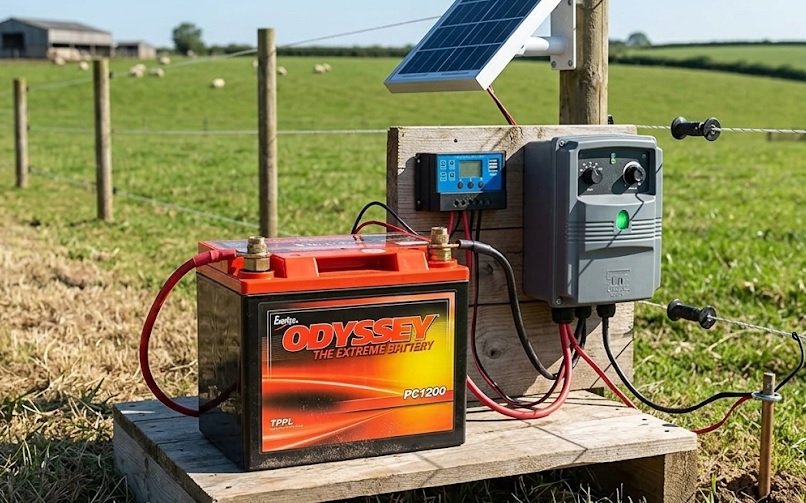
Odyssey PC1200MJT AGM Battery – Best Premium Option
The Odyssey PC1200MJT is the best option for harsh climates and heavy-duty setups. Its absorbent glass mat (AGM) design delivers 1,200 cranking amps and lasts up to 400 charge cycles at 80% depth of discharge. Perfect for solar-powered fences, it recovers fast and resists freezing in winter conditions.
Mighty Max ML35-12 SLA Battery – Best Budget Pick
The Mighty Max ML35-12 offers reliable performance at an affordable price. Its 12V 35Ah sealed lead-acid build suits small to medium fence lines and pairs well with trickle chargers. Ideal for beginners, it ships ready to install and maintains stable voltage for consistent energizer output.

Electric Fence Battery Voltage Chart: What Each Reading Means
Voltage readings tell you exactly how much charge remains in your battery. Use this reference chart to interpret your multimeter results at a glance.
12V Battery Voltage Chart (Most Common)
| Voltage | Charge Level | Action Needed |
|---|---|---|
| 12.6V – 12.8V | 100% Charged | None |
| 12.4V | 75% | Monitor |
| 12.2V | 50% Half | Recharge soon |
| 12.0V | 25% | Recharge now |
| 11.8V or less | Empty | Recharge immediately |
6V and 9V Battery Voltage Reference
Smaller energizer batteries follow the same percentage pattern at half the voltage. A 6V battery reads 6.3V when full and 5.9V when empty. A 9V battery reads 9.5V charged and 8.8V empty.
- 6V battery: 6.3V full, 6.0V half, 5.9V empty
- 9V battery: 9.5V full, 9.0V half, 8.8V empty
- 12V battery: 12.7V full, 12.2V half, 11.8V empty
Why Voltage Drops Under Load
A battery can show full voltage at rest yet fail under load. Energizers draw heavy current pulses, causing temporary voltage dips. Always test with a load tester for accurate results.
Quick Rule:
- Above 12.4V = healthy
- 12.0V-12.4V = recharge soon
- Below 11.8V = empty, recharge now
How to Test Electric Fence Battery Voltage Accurately
Accurate testing prevents false readings and premature battery replacement. Follow these steps for reliable results every time.
Step-by-Step Voltage Testing Process
- Disconnect the battery from the energizer and charger.
- Wait 24 hours after charging for surface charge to dissipate.
- Set your multimeter to DC volts (20V range).
- Touch the red probe to the positive terminal.
- Touch the black probe to the negative terminal.
- Record the reading and compare it to the chart above.
Common Testing Mistakes to Avoid
Many users test batteries immediately after charging, which gives inflated readings. Surface charge can add 1-2 volts temporarily, masking the true state of charge.
- Testing too soon: Wait 24 hours post-charge for accuracy
- Dirty terminals: Clean corrosion first to avoid false low readings
- Wrong meter setting: Use DC volts, not AC
- No load test: A resting voltage test misses weak cells
Testing Battery Voltage Under Load
A load tester reveals how the battery performs under real energizer demand. Connect the tester and watch the voltage drop. A healthy battery stays above 11.5V under load.
If voltage plummets below 10.5V instantly, the battery has a failing cell. Replace it rather than risk a dead fence line.
Pro Tip:
- Always test 24 hours after charging for true readings
- Load test to catch weak cells that resting tests miss
Charging and Maintaining Electric Fence Batteries for Long Life
Proper charging habits dramatically extend battery lifespan. Follow these guidelines to get maximum cycles from every battery.
When and How to Recharge
Recharge your battery when voltage drops to 12.2V (50% charge). Waiting until empty causes sulfation, which permanently reduces capacity.
- Recharge at 50%: Never let lead-acid batteries drop below 11.8V
- Use the right charger: Match charger voltage and amperage to battery specs
- Avoid overcharging: Disconnect when voltage reaches 12.8V
- Charge in ventilated areas: Lead-acid batteries release hydrogen gas
Battery Type Comparison for Fence Energizers
| Battery Type | Voltage Range | Best Use |
|---|---|---|
| Flooded Lead-Acid | 12.6V full | Budget setups |
| AGM | 12.8V full | Cold climates |
| Lithium (LiFePO4) | 13.3V full | Solar fences |
| Gel | 12.8V full | Deep-cycle use |
Seasonal Storage and Maintenance Tips
Batteries self-discharge roughly 1% per day in storage. Store them fully charged in cool, dry locations above freezing.
- Clean terminals with a wire brush every three months
- Top up flooded cells with distilled water only
- Recharge monthly during off-season storage
- Check voltage before reinstalling each season
Maintenance Rule:
- Recharge at 50% to double battery lifespan
- Store charged and recharge monthly during off-season
Troubleshooting Low Electric Fence Battery Voltage Problems
Low voltage readings often point to fixable issues rather than a dead battery. Diagnose these common problems before spending money on replacements.
Why Your Battery Reads Low Voltage
Several factors cause unexpectedly low readings. Identifying the root cause saves time and money.
- Parasitic drain: Faulty energizer or wiring draws current 24/7
- Sulfation: Long periods at low charge crystallize battery plates
- Age: Most lead-acid batteries last only 3-5 years
- Extreme cold: Freezing temperatures cut effective capacity by 20-50%
- Bad connections: Corroded terminals create voltage drops
Diagnosing a Battery That Won’t Hold Charge
Charge the battery fully, then recheck voltage after 24 hours. If it drops below 12.4V without any load, internal damage is likely.
- Disconnect everything and charge to full
- Let it rest for 24 hours undisturbed
- Measure voltage — below 12.4V indicates a bad cell
- Load test to confirm the diagnosis
When to Replace vs. Recharge
| Symptom | Verdict |
|---|---|
| Reads 12.4V+ after resting | Recharge and reuse |
| Drops below 10.5V under load | Replace battery |
| Won’t charge past 12.0V | Replace battery |
| Swollen case or leaks | Replace immediately |
Diagnosis Shortcut:
- Won’t hold 12.4V after resting = replace it
- Drops below 10.5V under load = dead cell
Solar-Powered Electric Fence Battery Voltage Considerations
Solar fences rely on consistent voltage to charge batteries daily. Understanding their unique voltage behavior keeps your fence running through cloudy stretches.
How Solar Charging Affects Battery Voltage
Solar panels charge batteries gradually throughout the day. Voltage climbs slowly from morning lows to afternoon peaks.
- Morning readings: Lowest voltage after overnight energizer draw
- Afternoon peaks: Highest voltage during peak sunlight hours
- Cloudy days: Panels may produce only 10-25% of rated output
- Winter sun: Shorter days mean less charging time
Sizing Your Solar Setup for Stable Voltage
Undersized panels cause chronic undercharging and voltage decline. Match panel wattage to your battery capacity and daily energizer draw.
- Calculate daily draw: Multiply energizer amps by 24 hours
- Add 30% buffer for cloudy days and inefficiency
- Choose panel wattage that replaces draw in 4-5 sun hours
- Use a charge controller to prevent overcharging
Voltage Targets for Solar Fence Systems
| Time of Day | Expected Voltage |
|---|---|
| Early morning | 12.2V – 12.4V |
| Midday (charging) | 13.5V – 14.4V |
| Evening (resting) | 12.6V – 12.8V |
| Persistent below 12.0V | Panel or battery issue |
Solar Voltage Rule:
- Expect 12.2V-12.4V at dawn, 13.5V+ while charging midday
- Persistent readings below 12.0V mean undersized panels or a failing battery
Electric Fence Battery Voltage Quick Reference Summary
This quick reference condenses everything you need to know about fence battery voltage into one scannable resource. Bookmark it for fast checks.
Voltage Cheat Sheet by Battery Status
| Status | 12V Reading | Action |
|---|---|---|
| Charged | 12.6V – 12.8V | Good to go |
| Half | 12.0V – 12.4V | Recharge soon |
| Empty | Below 11.8V | Recharge now |
| Damaged | Below 10.5V under load | Replace |
Key Voltage Milestones to Remember
- 12.7V: Ideal resting voltage for a healthy 12V battery
- 12.2V: The 50% mark — recharge before dropping lower
- 11.8V: Effectively empty; avoid reaching this point
- 10.5V: Under-load failure threshold signaling a bad cell
Fast Diagnosis Flowchart
- Test voltage 24 hours after charging
- Above 12.4V? Battery is healthy — monitor normally
- 12.0V – 12.4V? Recharge at your next opportunity
- Below 12.0V? Recharge immediately and retest
- Won’t hold charge? Replace the battery
Remember:
- Charged = 12.6V+, Half = 12.2V, Empty = below 11.8V
- Test after 24 hours rest, and load test for hidden failures
Frequently Asked Voltage Questions About Electric Fence Batteries
These are the most common voltage questions fence owners ask. Each answer gives you a direct, actionable response.
What Voltage Should a Fully Charged Fence Battery Read?
A fully charged 12V battery reads 12.6V to 12.8V after resting 24 hours. Readings above 13V indicate surface charge, not true capacity.
Can a Battery Show Full Voltage but Still Be Bad?
Yes, this is common with aged batteries. A battery can read 12.6V at rest yet collapse under load due to a weak or dead cell.
- Resting voltage looks fine but energizer fails quickly
- Voltage plummets below 10.5V when load is applied
- Solution: Always perform a load test, not just a resting test
How Often Should I Check Battery Voltage?
Check voltage every two to four weeks during active use. Increase frequency in winter or during heavy energizer demand.
- Weekly: Solar setups and high-drain energizers
- Biweekly: Standard fence systems in mild weather
- Monthly: Stored or lightly used batteries
Does Cold Weather Lower Battery Voltage?
Cold temperatures reduce effective capacity by 20-50%. Voltage may read normal at rest but drop fast under load in freezing conditions.
Quick Answers:
- Full charge = 12.6V-12.8V after 24 hours rest
- Good resting voltage can still hide a bad cell — always load test
Conclusion: Mastering Electric Fence Battery Voltage Checks
Knowing your electric fence battery voltage keeps livestock secure and prevents costly downtime. Charged means 12.6V or higher, half sits near 12.2V, and empty falls below 11.8V.
Test after 24 hours of rest and always load test for hidden failures. These habits double battery life.
Grab your multimeter and check your fence battery today. A two-minute test protects your entire fence line.
With this quick reference, you’re now equipped to keep your energizer running strong year-round.
Frequently Asked Questions About Electric Fence Battery Voltage
What voltage should a 12V electric fence battery read when fully charged?
A fully charged 12V electric fence battery reads 12.6V to 12.8V after resting for 24 hours. This resting voltage reflects true state of charge without surface charge interference.
Readings above 13V right after charging are temporary and misleading. Always wait a full day before trusting your voltage reading for accurate assessment.
How do I know if my electric fence battery is half empty?
A half-empty 12V battery reads approximately 12.2V. This represents 50% depth of discharge, the ideal point to begin recharging.
Letting voltage drop below 12.0V accelerates sulfation and shortens battery lifespan. Recharge at 12.2V for maximum cycles and reliable fence performance.
Why does my fence battery voltage drop so quickly?
Rapid voltage drops usually indicate parasitic drain, a failing cell, or an undersized battery for your energizer’s demand. Cold weather can also reduce capacity by up to 50%.
Disconnect the battery and charge it fully, then retest after 24 hours. If voltage falls below 12.4V without any load, internal damage is likely and replacement is needed.
What is the best way to test an electric fence battery under load?
Use a dedicated load tester or apply a known load while measuring voltage with a multimeter. A healthy 12V battery should stay above 11.5V under load.
If voltage collapses below 10.5V instantly, the battery has a dead cell. Resting voltage tests alone miss these failures, so load testing is essential for accurate diagnosis.
Can I use a car battery for my electric fence energizer?
Yes, a 12V car battery can power fence energizers, but deep-cycle batteries are the better option. Car batteries deliver high cranking amps but tolerate deep discharge poorly.
For solar setups and frequent draining, choose AGM or lithium deep-cycle batteries. They handle repeated discharge cycles and maintain stable voltage far longer.
How often should I recharge my electric fence battery?
Recharge whenever voltage drops to 12.2V (50% charge), typically every one to three weeks depending on energizer draw. Solar setups recharge daily during sunlight.
During winter or heavy use, check voltage weekly. Consistent monitoring prevents deep discharge and extends battery life significantly.
Does battery voltage affect electric fence shock strength?
Yes, lower battery voltage directly reduces energizer output and fence shock strength. A battery below 11.8V may cause weak pulses that livestock ignore.
Maintaining proper voltage ensures consistent, powerful pulses across your entire fence line. Test both battery voltage and fence output regularly for optimal performance.
What voltage means my electric fence battery needs replacing?
Replace your battery if it won’t hold above 12.4V after a full charge and 24-hour rest. Voltage below 10.5V under load also confirms a dead cell.
Physical signs like swelling, leaks, or corrosion around terminals also signal replacement time. A new battery restores reliable fence performance immediately.