
Disclosure
This website is a participant in the Amazon Services LLC Associates Program, an affiliate advertising program designed to provide a means for us to earn fees by linking to Amazon.com and affiliated sites.
Rechargeable AA batteries typically last 3 to 5 years or 500 to 1,000 charge cycles before needing replacement. However, real-world lifespan depends on battery chemistry, usage habits, and proper maintenance.
This complete guide reveals expert tips on maximizing battery life, spotting replacement signs, and choosing the best rechargeable AA batteries for your devices. Keep reading to get proven methods that save money and reduce waste.
Key Takeaways
- 500–1,000 cycles is the typical lifespan of quality rechargeable AA batteries.
- NiMH batteries outperform older NiCd cells in both capacity and longevity.
- 3–5 years is average real-world life, even with light use.
- Heat and over-discharging are the top lifespan killers.
- Replace when runtime drops below 80% of original capacity.
Best Rechargeable AA Batteries for Long-Lasting Performance – Detailed Comparison
Panasonic Eneloop Pro BK-3HCCA – Best Overall Choice
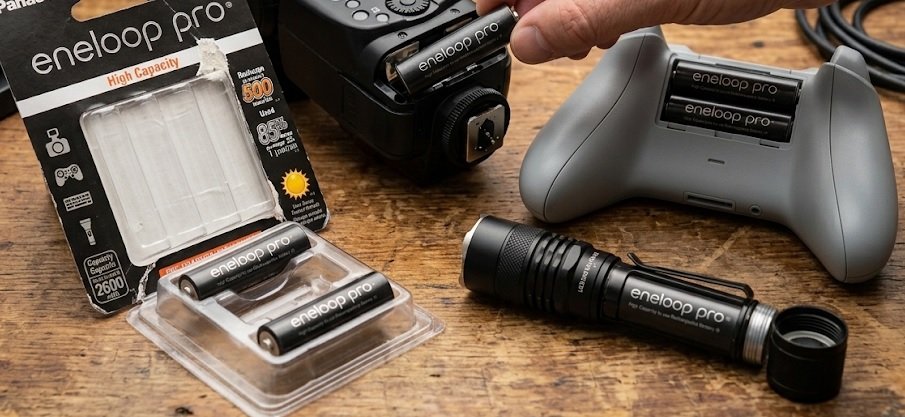
The Panasonic Eneloop Pro BK-3HCCA is the recommended pick for high-drain devices like cameras and gaming controllers. It delivers 2,500mAh capacity and holds 85% charge after one year of storage. Ideal for users who want maximum power and minimal self-discharge.
Duracell Optimum Rechargeable DX1500 – Best for Everyday Devices
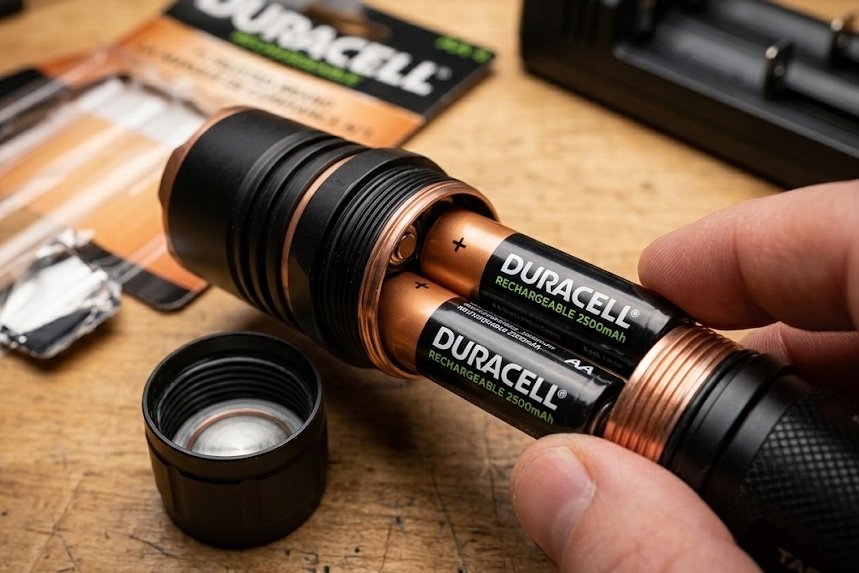
The Duracell Optimum DX1500 offers a reliable 1,300mAh capacity with up to 400 recharge cycles. It’s the best option for remotes, clocks, and toys where consistent performance matters more than peak power. Affordable and widely available.
Amazon Basics 2000mAh AA (B00CWNMV4G) – Best Budget Pick
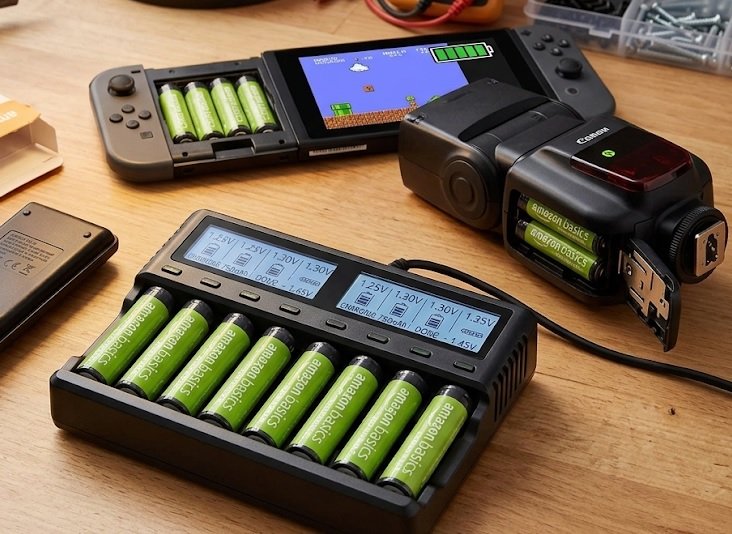
The Amazon Basics B00CWNMV4G provides solid 2,000mAh performance at roughly half the price of premium brands. It handles 1,000 recharge cycles and works well for moderate-drain electronics. A smart choice for households replacing batteries frequently.
How Long Do Rechargeable AA Batteries Last? Understanding the Real Numbers
Rechargeable AA battery lifespan depends on two factors: charge cycles and calendar age. Most quality NiMH cells deliver 500–1,000 cycles, but real-world performance often falls short of lab results.
Charge Cycles vs. Actual Years of Use
A “cycle” means one full discharge and recharge. Heavy users may exhaust 1,000 cycles in under three years, while light users stretch the same battery to five or more years.
- Daily use: 1–2 years before capacity drops noticeably
- Weekly use: 3–4 years of reliable service
- Occasional use: 5+ years, but self-discharge becomes the bigger issue
Battery Chemistry: NiMH vs. NiCd vs. Lithium
Chemistry determines both lifespan and performance. Modern NiMH (Nickel-Metal Hydride) batteries dominate the market for good reason.
| Type | Typical Cycles | Best For |
|---|---|---|
| NiMH | 500–1,000 | Most household devices |
| NiCd | 1,000–1,500 | Power tools (legacy) |
| Lithium-ion | 300–500 | High-drain electronics |
What Causes Rechargeable AA Batteries to Degrade?
Capacity loss is inevitable, but certain habits accelerate it. Understanding these culprits helps you protect your investment.
- Heat exposure: Storing batteries in hot cars or direct sunlight permanently damages cells
- Over-discharging: Draining below 0.9V can reverse polarity and kill the battery
- Frequent partial charging: Shallow cycles add up and reduce total lifespan
- Cheap chargers: Unregulated charging causes overheating and cell stress
Now that you know what shortens battery life, let’s explore how to maximize every single cycle.
How to Make Rechargeable AA Batteries Last Longer: Proven Methods
Proper care can double your battery’s useful life. These expert-backed habits protect capacity and delay replacement.
Smart Charging Habits That Extend Battery Life
How you charge matters as much as how often. Follow these steps for optimal results:
- Use a smart charger with individual cell monitoring and automatic shutoff
- Charge at room temperature — avoid hot garages or cold basements
- Remove batteries promptly once fully charged to prevent trickle-damage
- Avoid charging partially drained cells unless your charger supports it
Proper Storage for Rechargeable AA Batteries
Storage conditions directly impact self-discharge rates and long-term health.
- Store at 40–60% charge for long-term storage, never fully drained
- Keep in a cool, dry place around 15°C (59°F) for best results
- Use a battery case to prevent short circuits and terminal contact
- Avoid metal containers that can cause accidental discharge
Quick Tip
Low self-discharge (LSD) batteries like Eneloop retain 70–85% charge after 12 months — ideal for rarely used devices.
When to Replace Rechargeable AA Batteries
Even well-maintained cells eventually fail. Watch for these clear warning signs:
- Runtime drops below 80% of original capacity
- Batteries feel hot during normal use or charging
- Visible damage: corrosion, swelling, or leaking
- Inconsistent performance between matched cells
Spotting these signs early prevents device damage. Next, let’s compare how top brands actually perform.
Rechargeable AA Battery Comparison: How Top Brands Actually Perform
Not all rechargeable AA batteries are equal. Real-world testing reveals significant differences in capacity retention, cycle life, and value.
Capacity and Cycle Life Compared
Higher capacity doesn’t always mean longer life. Standard cells often outlast high-capacity versions over time.
| Brand/Model | Capacity | Cycles | Self-Discharge |
|---|---|---|---|
| Eneloop Pro BK-3HCCA | 2,500mAh | 500 | 15%/year |
| Duracell Optimum DX1500 | 1,300mAh | 400 | 20%/year |
| Amazon Basics B00CWNMV4G | 2,000mAh | 1,000 | 25%/year |
Which Rechargeable AA Batteries Last the Longest?
Cycle count and capacity retention determine true longevity. Here’s how the leaders stack up:
- Panasonic Eneloop Pro: Best for high-drain devices, but fewer cycles due to higher capacity
- Amazon Basics: Wins on total cycle life and cost-per-use, ideal for everyday electronics
- Duracell Optimum: Solid mid-tier choice with excellent availability and reliability
Cost Per Use: The Real Value Metric
Purchase price means little without factoring in lifespan. Calculate cost-per-cycle for honest comparisons.
- Eneloop Pro: ~$0.008 per cycle (higher upfront, premium performance)
- Amazon Basics: ~$0.003 per cycle (best long-term value)
- Duracell Optimum: ~$0.006 per cycle (balanced middle ground)
Key Insight
Budget batteries with higher cycle counts often beat premium cells on cost-per-use — unless you need maximum power for cameras or gaming gear.
Understanding these performance differences helps you match the right battery to each device. Here’s how to choose wisely.
Choosing the Right Rechargeable AA Batteries for Your Devices
Matching battery type to device dramatically improves both performance and lifespan. High-drain gadgets demand different cells than low-power household items.
Match Battery Capacity to Device Drain
Device power requirements should guide your purchase decision. Using the wrong battery wastes money and shortens lifespan.
- High-drain devices (cameras, flash units, gaming controllers): Choose 2,400–2,500mAh cells like Eneloop Pro
- Medium-drain devices (toys, wireless mice, flashlights): 2,000mAh batteries offer the best balance
- Low-drain devices (remotes, clocks, thermometers): Low self-discharge (LSD) cells prevent frequent recharging
Low Self-Discharge vs. Standard Rechargeable AA Batteries
Self-discharge determines how long batteries hold power while idle. This matters enormously for occasional-use devices.
| Feature | Standard NiMH | Low Self-Discharge (LSD) |
|---|---|---|
| Charge retention (1 year) | ~50% | 70–85% |
| Pre-charged | No | Yes |
| Best for | Frequent use | Occasional use |
Step-by-Step: Picking the Best Rechargeable AA Batteries
Follow this simple process to make the right choice every time:
- Identify device drain — check the manual or test runtime with standard cells
- Check self-discharge needs — choose LSD if the device sits unused for weeks
- Compare cost-per-cycle — not just upfront price
- Buy a quality smart charger — it protects every battery you own
Quick Rule
High-drain = high capacity. Low-drain = low self-discharge. Never mix old and new cells in the same device.
With the right batteries selected, proper disposal and recycling become the final responsibility.
Disposal and Recycling: What to Do With Dead Rechargeable AA Batteries
Rechargeable AA batteries should never go in the trash. They contain metals and chemicals that require proper recycling to protect the environment.
Why Recycling Rechargeable Batteries Matters
NiMH cells contain nickel, cobalt, and other recoverable materials. Recycling keeps toxic substances out of landfills and recovers valuable metals.
- Prevents toxic leaching into soil and groundwater
- Recovers reusable metals like nickel and steel
- Reduces mining demand for virgin materials
- Often required by law in many states and countries
Where to Recycle Rechargeable AA Batteries
Free recycling options exist in most communities. Here’s where to take your dead cells:
- Retail drop-off programs — Best Buy, Home Depot, and Lowe’s accept rechargeable batteries
- Call2Recycle locations — a free national program with thousands of drop-off sites
- Local household hazardous waste facilities — check your city’s website
- Battery specialty stores — Batteries Plus accepts most rechargeable types
Safety First
Tape the terminals with clear tape before recycling to prevent short circuits and fire risk during transport.
Environmental Impact: Rechargeable vs. Disposable
One rechargeable AA battery replaces hundreds of single-use alkalines. The environmental savings add up quickly.
| Metric | Rechargeable (per 500 uses) | Disposable (500 batteries) |
|---|---|---|
| Batteries needed | 2–4 | 500 |
| Landfill waste | Minimal | Significant |
| Cost | ~$40 total | ~$250 total |
Recycling extends the sustainability story beyond your home. Proper disposal closes the loop on every battery you use.
Rechargeable AA Battery Lifespan: Common Myths Debunked
Misinformation about rechargeable batteries leads to poor habits and premature replacements. Let’s separate fact from fiction.
Myth 1: Rechargeable Batteries Have “Memory Effect”
This myth stems from old NiCd technology. Modern NiMH batteries do not suffer from memory effect and can be recharged at any level.
- NiCd cells did develop memory issues with partial cycling
- NiMH cells handle partial discharge without problems
- Lithium-ion cells actually prefer partial charging
Myth 2: You Must Fully Discharge Before Recharging
Deep discharging damages modern batteries. In fact, over-discharging is one of the top killers of rechargeable AA cells.
- Draining below 0.9V per cell can cause permanent damage
- Recharge when devices show low-battery warnings
- Never store batteries in a fully drained state
Myth 3: Higher Capacity Always Means Longer Life
High-capacity cells often have shorter cycle counts than standard versions. The trade-off matters for long-term value.
| Battery Type | Capacity | Typical Cycles |
|---|---|---|
| High-capacity (2,500mAh) | Higher | 400–500 |
| Standard (2,000mAh) | Moderate | 800–1,000 |
Bottom Line
Modern NiMH batteries are low-maintenance. Charge them whenever convenient, avoid deep discharge, and pick capacity based on device needs.
Myth 4: All Chargers Work the Same
Cheap chargers damage batteries through overheating and overcharging. A smart charger with individual cell monitoring pays for itself in extended battery life.
Armed with these facts, you can avoid costly mistakes and get the most from every rechargeable AA battery you own.
Frequently Asked Questions About Rechargeable AA Battery Lifespan
These quick answers address the most common questions about how long rechargeable AA batteries last and how to extend their life.
How Many Times Can You Recharge AA Batteries?
Most quality NiMH batteries handle 500 to 1,000 charge cycles before capacity drops below 80%. Premium low self-discharge cells like Eneloop often reach the higher end of that range.
Do Rechargeable AA Batteries Expire if Unused?
Yes — batteries degrade even without use. Calendar aging reduces capacity over 5 to 10 years, regardless of charge cycles. Store them at 40–60% charge in a cool, dry place to slow this process.
Why Do My Rechargeable Batteries Die So Fast?
Rapid drain usually points to one of these culprits:
- Wrong capacity for a high-drain device
- Worn-out cells past their cycle limit
- Cheap charger causing incomplete or damaging charges
- High self-discharge from standard (non-LSD) cells
Can You Revive Dead Rechargeable AA Batteries?
Sometimes, but success is limited. Try these steps before replacing:
- Test voltage with a multimeter — below 0.9V often means permanent damage
- Use a smart charger with a refresh or reactivation mode
- Run 2–3 full cycles to see if capacity recovers
- Discard safely if performance stays poor
Pro Tip
Label batteries with purchase dates. Rotating older cells into low-drain devices helps you track performance and replace them at the right time.
These answers cover the essentials — but a few final tips can help you get even more from every battery.
Conclusion: How Long Do Rechargeable AA Batteries Last?
Rechargeable AA batteries last 3 to 5 years or 500 to 1,000 cycles with proper care. Smart charging, cool storage, and matching capacity to your devices all extend lifespan significantly.
Choose low self-discharge cells for occasional devices and high-capacity cells for cameras and gaming gear. Always recycle dead batteries responsibly.
Ready to upgrade? Pick a recommended battery from our comparison and pair it with a quality smart charger today.
With the right habits, your rechargeable AA batteries will deliver years of reliable, cost-saving power.
Frequently Asked Questions About Rechargeable AA Battery Lifespan
How long do rechargeable AA batteries last on a single charge?
Runtime depends on device drain and battery capacity. A 2,000mAh cell lasts roughly 10–20 hours in a wireless mouse, but only 1–2 hours in a digital camera.
High-drain devices drain batteries fastest. Check your device’s power rating and choose higher-capacity cells like 2,500mAh for demanding electronics.
What is the best way to store rechargeable AA batteries long-term?
Store batteries at 40–60% charge in a cool, dry place around 15°C. Avoid fully charged or fully drained storage, which accelerates capacity loss.
Use a plastic battery case to prevent terminal contact and short circuits. Never store loose batteries in metal containers or humid environments.
Which is better: rechargeable or disposable AA batteries?
Rechargeable batteries win for frequent use. One rechargeable cell replaces hundreds of disposables and costs far less per use over time.
Disposables suit emergency kits and rarely used devices where long shelf life matters more than cost efficiency.
Why do rechargeable AA batteries stop holding a charge?
Capacity fades from cycle wear, heat exposure, and over-discharging. After 500–1,000 cycles, most cells drop below 80% capacity and need replacing.
If batteries die quickly after charging, test them with a smart charger’s analysis mode before discarding.
Can I use rechargeable AA batteries in any device?
Yes, but check voltage compatibility first. NiMH cells output 1.2V versus 1.5V for alkalines, which some sensitive devices may not tolerate.
Most electronics handle the difference fine. However, certain smoke detectors and medical devices require alkaline batteries per manufacturer guidelines.
How do I know when to replace rechargeable AA batteries?
Replace batteries when runtime drops below 80% of original capacity, cells feel hot during use, or you notice corrosion or swelling.
Labeling batteries with purchase dates helps track age. Rotating older cells into low-drain devices extends their useful service life.
Do rechargeable AA batteries lose charge when not in use?
Yes — all batteries self-discharge over time. Standard NiMH cells lose up to 50% per year, while low self-discharge versions retain 70–85%.
For devices used occasionally, always choose low self-discharge (LSD) batteries like Panasonic Eneloop to avoid constant recharging.
Are rechargeable AA batteries worth the higher upfront cost?
Absolutely. Despite costing more initially, rechargeable batteries deliver massive savings over hundreds of uses compared to disposables.
A family using 100 batteries yearly could save over $200 within two years by switching to rechargeables with a quality charger.