Checking emergency light battery charge status by voltage is the fastest way to confirm your unit will work during a power outage. This complete guide gives you exact voltage readings for every charge level.
You’ll learn a simple voltage chart, expert tips for testing sealed lead-acid and lithium packs, and proven methods to spot a failing battery early. Keep reading to test your emergency lights with confidence.
Key Takeaways
- 12.6V–12.8V means a healthy, fully charged 12V emergency light battery.
- Below 12.0V (roughly 50%) signals it’s time to recharge or replace.
- Test voltage at least every 3 months for reliable backup power.
- Resting voltage beats charging voltage for accurate charge readings.
- Lithium packs use different voltage scales than lead-acid batteries.
Best Emergency Light Battery Voltage Testers for Accurate Charge Checks
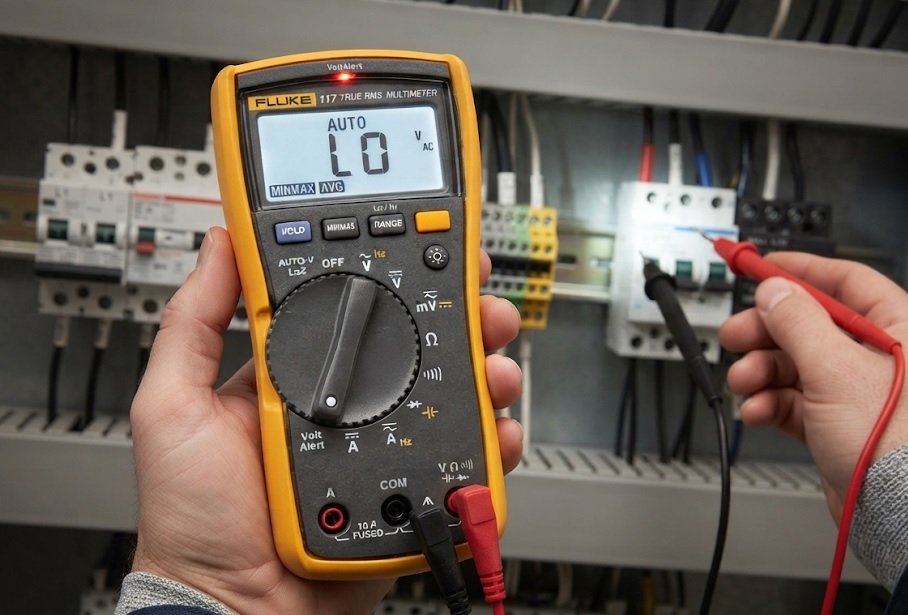
Fluke 117 Digital Multimeter – Best Overall Choice
The Fluke 117 is the recommended tester for emergency light battery voltage checks. Its ±0.5% DC accuracy delivers precise readings between 6V and 12V, while auto-ranging eliminates manual dial guesswork. Built-in VoltAlert detects live circuits for added safety. Ideal for facility managers verifying sealed lead-acid and lithium packs quickly and confidently.
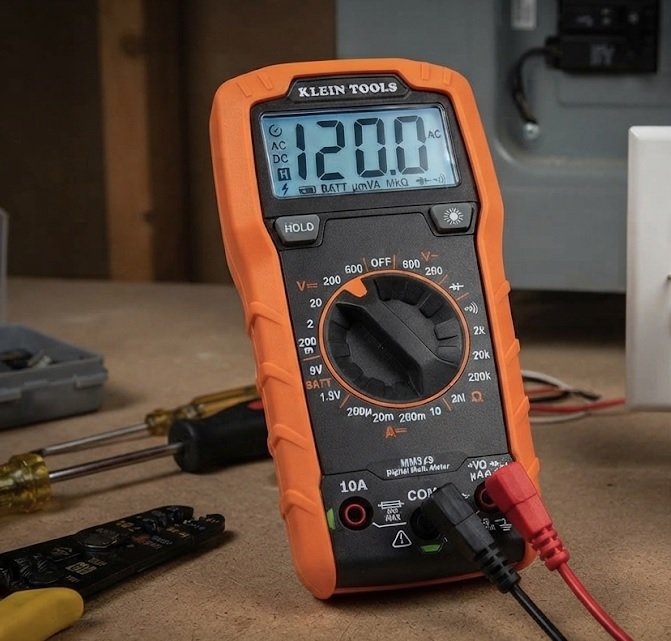
Klein Tools MM325 Multimeter – Best Budget Option
The Klein Tools MM325 is the best option for homeowners and small businesses on a budget. It measures DC voltage up to 600V with ±1% accuracy, enough to confirm 12V battery charge status reliably. Its drop-resistant housing and simple interface make routine emergency light testing fast and hassle-free.
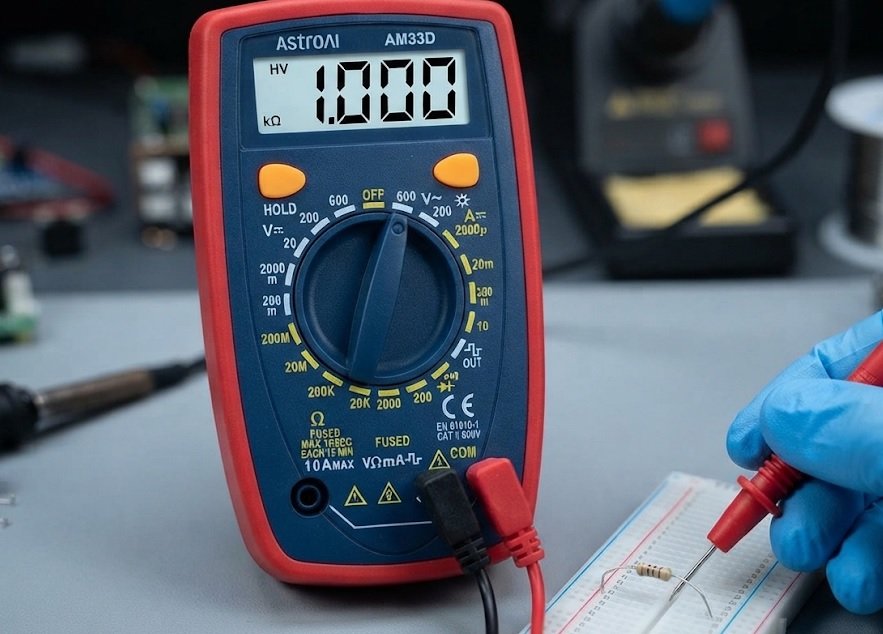
AstroAI AM33D Digital Multimeter – Best Compact Tester
The AstroAI AM33D is ideal for quick spot checks on emergency light batteries. This pocket-sized tester reads DC voltage with ±0.5% accuracy and features a 2000-count display. Its overload protection and one-handed operation suit technicians servicing multiple units across large buildings.
How to Read Emergency Light Battery Charge Status by Voltage
Voltage is the most reliable indicator of remaining battery capacity. A fully charged 12V emergency light battery rests near 12.7V, while a depleted one drops below 12.0V. Reading these numbers correctly tells you whether your unit will survive an outage.
Step-by-Step Voltage Testing Process
Follow these steps for an accurate emergency light battery charge check:
- Disconnect the charger and let the battery rest 30 minutes.
- Set your multimeter to DC voltage mode.
- Touch the red probe to positive, black to negative.
- Record the reading and compare it to the chart below.
12V Emergency Light Voltage Charge Chart
Use this reference table to interpret your readings instantly:
| Voltage Reading | Charge Level | Status |
|---|---|---|
| 12.7V–12.8V | 100% | Excellent |
| 12.4V | 75% | Good |
| 12.2V | 50% | Recharge |
| 12.0V | 25% | Weak |
| Below 11.9V | 0–10% | Replace |
Why Resting Voltage Matters
Testing while the charger is connected gives a false high reading called surface charge. Always let the battery rest before measuring. This single habit prevents misdiagnosing a healthy battery as fully charged.
Quick Rule:
- 12.7V+ = healthy
- 12.2V = recharge now
- Below 11.9V = replace battery
Lead-Acid vs Lithium: Emergency Light Battery Voltage Differences
Not all emergency lights use the same battery chemistry. Sealed lead-acid (SLA) and lithium packs show charge status at very different voltages. Knowing which type you own prevents misreading a healthy battery as faulty.
Sealed Lead-Acid Battery Voltage Levels
SLA batteries, common in older emergency lights, use a predictable 12V scale. Each cell holds roughly 2.1V when full, giving six-cell packs their 12.6V–12.8V resting range.
- 12.7V: Fully charged, ready for outages
- 12.2V: Half capacity, recharge soon
- 11.8V: Deeply discharged, may not recover
Lithium-Ion Emergency Light Voltage Ranges
Lithium packs read higher per cell, so a 3.7V cell at full charge rests near 4.2V. A healthy 11.1V lithium pack therefore shows 12.3V–12.6V when fully charged, not 12.7V.
| Battery Type | Full Charge | Recharge At | Replace At |
|---|---|---|---|
| 12V Lead-Acid | 12.7V | 12.2V | Below 11.9V |
| 11.1V Lithium | 12.6V | 11.4V | Below 10.5V |
| 6V Lead-Acid | 6.4V | 6.1V | Below 5.9V |
Why Chemistry Changes Your Testing Approach
Lithium batteries hold voltage steady until nearly empty, then drop sharply. Lead-acid declines gradually instead. This means a lithium pack at 11.5V may be closer to failure than its number suggests.
Quick Rule:
- Confirm battery chemistry before testing
- Lithium rests higher, drops faster
- Never apply lead-acid voltages to lithium packs
Common Voltage Problems and How to Fix Them
Voltage readings reveal more than charge level—they expose hidden battery faults. Spotting these warning signs early saves you from emergency lights that fail when you need them most.
Why Your Emergency Light Battery Voltage Keeps Dropping
A battery that loses charge within days has a problem beyond normal drain. These are the most common culprits:
- Faulty charger: The unit never reaches full charge, so voltage sits low permanently.
- Parasitic drain: A stuck test circuit or LED indicator slowly bleeds power.
- Aging cells: Batteries over 4–5 years lose capacity and self-discharge faster.
Signs You Need a Replacement Battery
Certain voltage patterns mean replacement, not recharging. Watch for these red flags:
- Voltage below 11.9V after a full 24-hour charge cycle.
- Rapid drop from 12.7V to 12.0V within 48 hours.
- Swollen casing or unusual heat during charging.
- Voltage won’t rise even when the charger shows active output.
How Often Should You Test Emergency Light Batteries?
Monthly voltage checks catch problems before they cause failures. A quick 30-second test per unit fits easily into routine safety inspections. Document each reading to track decline over time.
| Reading After Full Charge | Action Needed |
|---|---|
| 12.6V or higher | No action, battery healthy |
| 12.2V–12.5V | Retest in one week |
| Below 12.0V | Replace battery |
Quick Rule:
- Test every month for early detection
- Low voltage after charging means replacement
- Track readings to spot gradual decline
Tools and Expert Tips for Accurate Voltage Readings
Reliable results depend on the right equipment and technique. Even a quality multimeter gives misleading numbers when used incorrectly. These expert tips ensure every reading reflects true battery health.
Essential Tools for Testing Emergency Light Batteries
You only need a few inexpensive items to check charge status accurately:
- Digital multimeter: Choose one with DC voltage accuracy of ±1% or better.
- Battery load tester: Confirms capacity under real-world draw, not just resting voltage.
- Insulated probes: Prevent accidental shorts across tight battery terminals.
- Testing log sheet: Tracks voltage trends across weeks and months.
Proven Methods to Avoid False Readings
Small mistakes produce big diagnostic errors. Follow these proven methods for trustworthy numbers:
- Rest the battery at least 30 minutes after charging.
- Clean terminals with a dry cloth before probing.
- Hold probes steady until the display stabilizes.
- Test at room temperature—cold batteries read lower.
- Repeat twice to confirm consistent results.
Temperature and Load Effects on Voltage
Cold conditions can drop voltage by 0.2V or more, mimicking a weak battery. Load testing adds realism, since a battery at 12.4V resting may collapse under a 1-amp draw.
| Factor | Effect on Reading | Fix |
|---|---|---|
| Recent charging | Reads falsely high | Rest 30 minutes |
| Cold temperature | Reads falsely low | Test at 20°C–25°C |
| Dirty terminals | Unstable display | Clean before testing |
Quick Rule:
- Rest, clean, and stabilize before reading
- Load test confirms true capacity
- Temperature skews voltage—test warm
Emergency Light Battery Maintenance by Voltage Monitoring
Regular voltage monitoring transforms battery care from reactive to proactive. Tracking readings over time reveals degradation trends long before a unit fails an inspection. This approach extends battery life and guarantees reliable emergency lighting.
Building a Simple Voltage Monitoring Schedule
A consistent testing routine catches problems early without consuming much time:
- Monthly: Quick resting voltage check on every unit.
- Quarterly: Full charge cycle plus load test.
- Annually: Replace batteries showing year-long decline.
Extending Battery Life with Voltage Data
Voltage trends tell you exactly when maintenance pays off. Batteries kept between 12.4V and 12.7V typically last their full rated lifespan. Those repeatedly drained below 12.0V often fail a year early.
- Recharge promptly when readings hit 12.2V.
- Avoid deep discharge below 11.9V whenever possible.
- Store spare batteries at 12.5V in a cool, dry place.
- Replace in matched sets when one unit drops sharply.
When to Replace vs Recharge
Voltage alone doesn’t always decide replacement. Age, physical condition, and charge retention matter equally. A five-year-old battery holding 12.5V may still fail under load.
| Condition | Recharge | Replace |
|---|---|---|
| 12.2V–12.5V, under 3 years old | Yes | No |
| Below 12.0V after charging | No | Yes |
| Over 5 years old, any reading | No | Yes |
| Swollen or hot casing | No | Yes |
Quick Rule:
- Monitor monthly, load test quarterly
- Keep voltage above 12.2V for long life
- Replace batteries over 5 years old
Voltage Readings for Different Emergency Light Applications
Different environments place different demands on emergency light batteries. A warehouse unit running frequent tests drains faster than a rarely used stairwell light. Matching voltage expectations to application ensures accurate assessments.
Commercial and Industrial Emergency Lighting
High-traffic facilities run self-test cycles daily, accelerating battery drain. These units need closer voltage monitoring than residential models.
- Hospitals and schools: Test monthly, expect 12.5V minimum.
- Warehouses: Dust and heat shorten lifespan, check every 2 weeks.
- Parking garages: Cold exposure lowers readings, test warm when possible.
Residential Emergency Light Voltage Expectations
Home units typically see less cycling and hold charge longer. A healthy residential battery may rest at 12.7V for weeks without charging.
- Check voltage every 3 months for standard home units.
- Expect 12.6V–12.8V on a healthy, idle battery.
- Recharge or replace anything reading below 12.2V.
Outdoor and Harsh Environment Considerations
Outdoor emergency lights face temperature swings that distort voltage readings. A battery reading 12.3V in freezing conditions may actually be fully charged.
| Environment | Expected Full Charge | Testing Frequency |
|---|---|---|
| Indoor commercial | 12.7V | Monthly |
| Residential | 12.7V | Every 3 months |
| Outdoor/cold | 12.4V–12.6V | Monthly, warm test |
| Industrial high-use | 12.5V | Every 2 weeks |
Quick Rule:
- Match testing frequency to usage intensity
- Cold environments read lower—adjust expectations
- Industrial units need the closest monitoring
Safety and Compliance When Checking Battery Voltage
Voltage testing involves live electrical components, so safety must come first. Following proper procedures protects both you and the equipment. Compliance standards also require documented battery checks in commercial buildings.
Essential Safety Precautions for Battery Testing
Even low-voltage batteries can cause sparks or burns if mishandled. Take these precautions every time you test:
- Wear safety glasses to protect against acid splashes or sparks.
- Remove metal jewelry that could short across terminals.
- Work in ventilated areas since lead-acid batteries emit hydrogen gas.
- Never test damaged batteries showing cracks, leaks, or swelling.
Meeting Code Requirements for Emergency Lighting
Building codes mandate regular emergency light testing and documentation. Voltage readings serve as valuable proof of proper maintenance.
- Test every 30 days for 30-second function checks.
- Run annual 90-minute full-duration discharge tests.
- Record all voltage readings in a maintenance log.
- Retain documentation for inspection audits.
Documenting Voltage Checks for Inspections
Inspectors want evidence that batteries are maintained, not just present. A simple log with dates, voltages, and actions taken satisfies most requirements. Digital records make trend analysis easier across multiple units.
| Requirement | Frequency | Documentation |
|---|---|---|
| Function test | Monthly | Pass/fail log |
| Duration test | Annually | 90-minute result |
| Voltage check | Monthly | Reading + date |
| Battery replacement | As needed | Date + model |
Quick Rule:
- Safety gear and ventilation are mandatory
- Monthly and annual tests are code-required
- Document every reading for inspections
Conclusion: Mastering Emergency Light Battery Charge Status by Voltage
Reading emergency light battery charge status by voltage takes seconds but prevents dangerous failures. A healthy 12V battery rests at 12.6V–12.8V, while anything below 12.0V needs immediate attention.
Test monthly, document every reading, and replace batteries over five years old. These simple habits guarantee reliable backup lighting.
Grab your multimeter today and check every unit in your building. Don’t wait for an outage to discover a dead battery.
With consistent voltage monitoring, you’ll never be left in the dark.
Frequently Asked Questions about Emergency Light Battery Charge Status by Voltage
What voltage should a fully charged emergency light battery read?
A fully charged 12V emergency light battery should read between 12.6V and 12.8V at rest. This range indicates 100% capacity for sealed lead-acid batteries commonly used in emergency lighting.
Lithium packs differ slightly, resting near 12.3V–12.6V when full. Always confirm your battery chemistry before comparing readings to standard voltage charts.
How do I check emergency light battery voltage correctly?
Disconnect the charger and let the battery rest 30 minutes. Set your multimeter to DC voltage, touch the red probe to positive and black to negative, then record the stable reading.
Testing while charging produces falsely high numbers due to surface charge. Repeat the test twice to confirm consistency before diagnosing the battery’s true condition.
Why does my emergency light battery voltage keep dropping?
Rapid voltage loss usually signals a faulty charger, parasitic drain, or aging cells. A battery that won’t hold 12.4V after a full charge cycle has likely reached end of life.
Check the charger output first, then inspect for stuck test circuits. If voltage still drops within 48 hours, replacement is the most reliable solution.
What is the best way to test emergency light batteries monthly?
The best method combines a quick resting voltage check with a visual inspection. Record each reading in a log to track decline trends over time.
Monthly checks take under a minute per unit. Quarterly load tests add deeper verification by confirming the battery performs under real draw, not just at rest.
What voltage means an emergency light battery needs replacing?
Any reading below 11.9V after a full 24-hour charge indicates replacement. Batteries over five years old should be replaced regardless of voltage.
Also replace batteries showing swelling, heat during charging, or readings that never rise despite an active charger. These signs indicate internal failure beyond recovery.
Do lithium emergency light batteries use the same voltage scale?
No, lithium batteries follow a different voltage scale. A healthy 11.1V lithium pack reads 12.3V–12.6V when fully charged, not the 12.7V expected from lead-acid.
Lithium also holds voltage steady until nearly empty, then drops sharply. This makes low lithium readings more urgent than equivalent lead-acid numbers.
How does temperature affect emergency light battery voltage readings?
Cold temperatures can lower voltage readings by 0.2V or more, mimicking a weak battery. A unit reading 12.3V in freezing conditions may actually be fully charged.
Always test at room temperature between 20°C and 25°C for accurate results. If cold testing is unavoidable, adjust your expectations upward slightly.
How often should emergency light batteries be voltage tested?
Test voltage monthly for commercial and industrial units, and every three months for residential lights. High-traffic facilities running daily self-tests need the closest monitoring.
Building codes require monthly 30-second function tests and annual 90-minute duration tests. Document every voltage reading to satisfy inspection audits and track battery health.