
Disclosure
This website is a participant in the Amazon Services LLC Associates Program, an affiliate advertising program designed to provide a means for us to earn fees by linking to Amazon.com and affiliated sites.
A fully charged alarm system backup battery typically reads 13.5V to 13.8V, a half-charged battery reads around 12.3V to 12.5V, and anything below 11.8V means empty or failing. This voltage reference guide helps you test your security system battery with confidence and avoid false alarms.
Below you’ll find a complete guide with a quick-reference voltage chart, expert tips on testing lead-acid and lithium batteries, and proven methods to spot a dying backup battery before it fails. Keep reading to protect your home or business around the clock.
Key Takeaways
- 13.5V–13.8V means fully charged and healthy
- 12.3V–12.5V signals a half-charged battery
- Below 11.8V indicates empty or failing battery
- Test with a multimeter after disconnecting AC power
- Replace lead-acid batteries every 3–5 years
Best Backup Batteries for Alarm Systems — Detailed Comparison
Power-Sonic PS-1270 — Best Overall Choice
The Power-Sonic PS-1270 is a 12V 7Ah sealed lead-acid battery recommended for most DSC, Honeywell, and Ademco alarm panels. Its maintenance-free design and 5-year shelf life make it the best option for homeowners wanting reliable, long-lasting standby power. Ideal for standard residential security systems.

Yuasa NP7-12 — Best Sealed Lead-Acid Option
The Yuasa NP7-12 delivers 12V 7Ah with exceptional deep-discharge recovery, ideal for areas with frequent power outages. Its valve-regulated construction prevents leaks and corrosion, making it a top recommended choice for commercial alarm panels and older systems needing dependable, maintenance-free performance.

ExpertPower EXP1270 — Best Budget Pick
The ExpertPower EXP1270 offers 12V 7Ah capacity at an affordable price, ideal for DIY replacements and budget-conscious users. It’s rechargeable, spill-proof, and compatible with most alarm panels. A solid best-value option for basic home security systems needing a quick, low-cost battery swap.
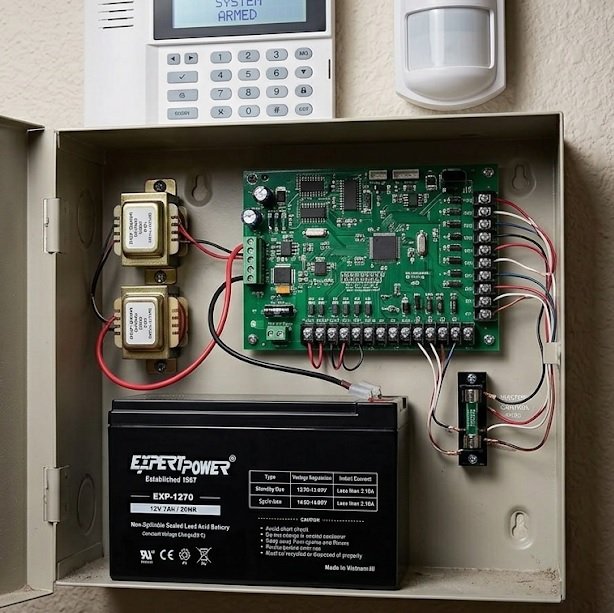
Alarm System Backup Battery Voltage Chart: Charged, Half and Empty Readings
Understanding your alarm battery’s voltage readings is the fastest way to diagnose its health. Most security panels use a 12V sealed lead-acid (SLA) battery, and its charge level directly reflects its remaining capacity.
Standard 12V Battery Voltage Reference Table
Use this quick-reference chart to interpret multimeter readings under no load.
| Charge Level | Voltage Reading | Battery Status |
|---|---|---|
| Fully Charged | 13.5V – 13.8V | Healthy |
| Half Charged | 12.3V – 12.5V | Needs recharging |
| Empty | Below 11.8V | Replace immediately |
How to Test Your Alarm Backup Battery Voltage
Follow these steps for an accurate reading:
- Disconnect AC power to the alarm panel.
- Set your multimeter to DC voltage (20V range).
- Touch the red probe to positive, black to negative.
- Record the reading and compare it to the chart above.
Quick Tip: A reading below 12.0V under load usually means the battery is failing and should be replaced, even if it still powers the panel briefly.
Why Voltage Readings Matter for Security Systems
Low voltage triggers false alarms, beeping keypads, and system failures during outages. Regular testing helps you replace weak batteries before they compromise your protection.
Common Alarm Battery Voltage Problems and How to Fix Them
Even a correctly rated battery can show abnormal voltage readings. Recognizing these warning signs early prevents system downtime and costly service calls.
Signs Your Alarm Backup Battery Is Failing
Watch for these common indicators of a weak or dying battery:
- Keypad beeping or chirping: Usually signals low battery voltage.
- “Low Battery” trouble alert: Panel detects voltage below threshold.
- Frequent false alarms: Caused by unstable power supply.
- Battery swelling or corrosion: Physical sign of internal failure.
Why Voltage Drops Below Normal Levels
Several factors cause alarm battery voltage to fall below the recommended range:
- Age: SLA batteries degrade after 3–5 years.
- Deep discharges: Repeated outages shorten lifespan.
- Charger faults: A failing panel charger won’t recharge properly.
- Extreme temperatures: Heat or cold reduces capacity.
Key Takeaway: If your battery reads below 12.0V after 24 hours of charging, the battery or charger is faulty. Replace the battery first, then retest.
How to Restore or Replace a Weak Battery
Follow these steps to resolve low-voltage issues:
- Recharge and retest: Confirm whether the battery holds voltage.
- Check charger output: It should read 13.5V–13.8V.
- Replace if needed: Swap in a matching 12V battery.
- Reset the panel: Clear the trouble alert after replacement.
Maintenance Tips to Keep Alarm Backup Battery Voltage Healthy
Regular maintenance extends battery life and keeps voltage readings within the ideal range. A few simple habits prevent most low-voltage failures.
Recommended Testing Schedule for Security System Batteries
Follow this testing routine to catch problems early:
- Monthly: Check the keypad for trouble alerts.
- Every 6 months: Test voltage with a multimeter.
- Annually: Perform a full load test.
- Every 3–5 years: Replace the battery regardless of readings.
Best Practices for Longer Battery Life
These habits help your alarm battery hold voltage longer:
- Keep panels cool: Avoid direct heat or sunlight.
- Limit deep discharges: Restore AC power quickly after outages.
- Use quality replacements: Match the original amperage and voltage.
- Clean terminals: Remove corrosion for solid connections.
Pro Tip: Label your battery with the installation date. This makes it easy to track age and replace it before voltage drops unexpectedly.
When to Call a Professional
Some voltage issues require expert attention. Contact a licensed technician if you notice:
- Charger output below 13.5V after testing.
- Repeated low-battery alerts after replacement.
- Panel or wiring damage near the battery terminals.
Professional diagnostics protect both your equipment and your security coverage.
Alarm Battery Voltage by System Type: SLA, Lithium, and More
Not all alarm systems use the same battery chemistry. Voltage ranges vary slightly depending on whether your panel uses sealed lead-acid, lithium, or another type.
Voltage Ranges for Different Battery Chemistries
Compare typical readings across common alarm battery types:
| Battery Type | Fully Charged | Half Charged | Empty |
|---|---|---|---|
| Sealed Lead-Acid (12V) | 13.5V–13.8V | 12.3V–12.5V | Below 11.8V |
| Lithium-Ion (3.7V cell) | 4.1V–4.2V | 3.6V–3.7V | Below 3.0V |
| Lithium (3V coin) | 3.2V–3.3V | 2.9V–3.0V | Below 2.7V |
Wireless Sensor Battery Voltage Guide
Wireless sensors use smaller batteries with different thresholds:
- CR2032 (3V): Replace below 2.7V.
- CR123A (3V): Replace below 2.5V.
- AA/AAA lithium: Replace below 1.2V per cell.
Key Takeaway: Always match the replacement battery to your panel’s original specification. Using the wrong voltage or chemistry can damage the charging circuit.
Matching Voltage to Your Alarm Panel Brand
Popular panels have specific battery requirements:
- Honeywell/Ademco: 12V 4Ah–7Ah SLA.
- DSC: 12V 4Ah–7Ah SLA.
- SimpliSafe: Proprietary lithium packs.
- Ring Alarm: 24-hour lithium backup.
Checking your panel manual ensures the correct voltage match.
How to Choose the Right Replacement Battery for Your Alarm System
Selecting the correct replacement battery ensures your panel charges properly and holds voltage under load. The wrong choice can damage your system or void its warranty.
Key Specifications to Match Before Buying
Always verify these details against your original battery label:
- Voltage: Must match exactly (usually 12V for panels).
- Amperage (Ah): Match or slightly exceed the original rating.
- Terminal type: Confirm F1 or F2 spade connectors.
- Physical dimensions: Ensure it fits the battery compartment.
Where to Buy Reliable Alarm Backup Batteries
Purchase from trusted sources to avoid counterfeit or degraded cells:
- Authorized security dealers: Guaranteed compatibility.
- Reputable electronics retailers: Verified brand names.
- Manufacturer websites: OEM replacements.
Buying Tip: Check the manufacturing date on the battery. Avoid stock older than 12 months, since SLA batteries self-discharge over time.
Installation Steps for a New Alarm Battery
Follow this safe replacement process:
- Power down: Disconnect AC and battery leads.
- Remove the old battery: Note the terminal orientation.
- Install the new battery: Connect red (positive) first, then black.
- Restore power: Reconnect AC and clear any trouble alerts.
- Test voltage: Confirm a reading of 13.5V–13.8V.
Proper installation keeps your security system ready for the next outage.
Frequently Asked Voltage Questions About Alarm Backup Batteries
Homeowners often have specific questions about alarm battery voltage readings. Here are direct answers to the most common concerns.
What Voltage Should a Fully Charged Alarm Battery Show?
A healthy 12V alarm battery reads 13.5V to 13.8V while connected to a charging panel. Readings in this range confirm the battery is holding a full charge and the charger is working correctly.
Is 12.0V a Good Reading for an Alarm Battery?
No. A reading of 12.0V indicates a nearly depleted battery. While it may still power the panel briefly, it needs immediate recharging or replacement to prevent system failure during an outage.
Why Does My Battery Read 13V but Still Show Low?
Surface charge can create a misleading reading. A battery may show 13V right after charging but drop quickly under load. Always perform a load test to confirm true capacity.
Quick Answer: If voltage drops below 12.0V within minutes of disconnecting AC power, the battery has failed and must be replaced.
How Often Should Voltage Be Checked?
Test your alarm battery voltage at least every six months. Systems in areas with frequent outages or extreme temperatures benefit from quarterly testing to catch degradation early.
Safety Warnings and Common Mistakes When Testing Alarm Battery Voltage
Testing voltage seems simple, but a few common errors can damage your equipment or give false readings. Follow these precautions for safe, accurate results.
Safety Precautions Before You Begin
Protect yourself and your panel with these steps:
- Wear safety glasses: Prevent acid splashes from old batteries.
- Work in ventilated areas: SLA batteries can vent hydrogen gas.
- Avoid metal contact: Never bridge both terminals with tools.
- Disconnect AC first: Prevent shock and short circuits.
Common Testing Mistakes to Avoid
These errors lead to inaccurate readings and misdiagnosis:
- Testing under load only: Always check both loaded and resting voltage.
- Ignoring surface charge: Wait 30 minutes after charging before testing.
- Using the wrong multimeter setting: Confirm DC voltage mode.
- Skipping the charger check: A faulty charger mimics a dead battery.
Warning: Never test a battery that shows signs of swelling, cracking, or leaking. Replace it immediately and dispose of it at a certified recycling center.
Disposing of Old Alarm Batteries Safely
Alarm batteries contain lead and acid, so proper disposal matters:
- Recycle at certified centers: Never place in household trash.
- Check retailer programs: Many stores accept old batteries.
- Transport carefully: Tape terminals to prevent short circuits.
Safe handling protects both your family and the environment.
Conclusion: Mastering Alarm System Backup Battery Voltage Checks
Knowing your alarm system backup battery voltage keeps your security running when it matters most. A quick multimeter test reveals whether your battery is charged, half full, or empty.
Remember the key benchmarks: 13.5V–13.8V is healthy, while anything below 11.8V needs replacement. Test every six months and replace batteries every 3–5 years.
Grab your multimeter today and check your panel’s voltage. Don’t wait for a beeping keypad to warn you.
With regular testing, your alarm stays ready around the clock.
Frequently Asked Questions About Alarm System Backup Battery Voltage
What voltage should a fully charged alarm backup battery read?
A fully charged 12V alarm backup battery should read 13.5V to 13.8V while connected to a charging panel. This range confirms the battery holds a full charge and the charger works correctly.
Resting voltage without a charger typically sits around 12.6V to 12.8V. If your reading falls below 12.3V, the battery is losing capacity and needs attention.
How do I test my alarm system backup battery voltage?
Disconnect AC power, set your multimeter to DC voltage, and touch the red probe to positive and black to negative. Record the reading and compare it to standard voltage benchmarks.
For accuracy, test both under load and at rest. Wait 30 minutes after charging to avoid misleading surface charge readings. Replace any battery reading below 11.8V.
Why does my alarm battery show low voltage after charging?
A battery that won’t hold voltage after charging has likely reached the end of its lifespan. SLA batteries typically degrade after 3–5 years of service.
Check your charger output too. It should deliver 13.5V–13.8V. If the charger is faulty, even a new battery won’t stay charged properly.
Can I use a regular 12V battery for my alarm system?
Only if the specifications match exactly. Your alarm panel requires a specific voltage, amperage, and terminal type, usually a 12V 4Ah–7Ah sealed lead-acid battery.
Using the wrong battery can damage the charging circuit or void your warranty. Always match the original battery’s ratings before purchasing a replacement.
How often should I replace my alarm backup battery?
Replace your alarm backup battery every 3 to 5 years, even if voltage readings still look normal. Internal degradation happens gradually and isn’t always visible.
Batteries in hot environments or areas with frequent outages may need replacement sooner. Label your battery with the install date to track its age easily.
What happens if my alarm battery voltage drops too low?
Low voltage triggers trouble alerts, keypad beeping, and false alarms. During a power outage, a depleted battery leaves your home completely unprotected.
If voltage drops below 11.8V, replace the battery immediately. Ignoring low readings risks total system failure when you need it most.
Is 12.5V good for an alarm backup battery?
A 12.5V reading indicates a half-charged battery. While not immediately critical, it signals the battery isn’t holding a full charge and may be weakening.
Recharge and retest after 24 hours. If it stays at 12.5V or drops further, plan for replacement soon to avoid unexpected failures.
How can I extend the life of my alarm backup battery?
Keep panels cool, limit deep discharges, and test voltage every six months. Clean corroded terminals and use quality replacements matching original specs.
Restoring AC power quickly after outages prevents deep discharge damage. With proper care, most SLA batteries last their full 3–5 year lifespan.