
Disclosure
This website is a participant in the Amazon Services LLC Associates Program, an affiliate advertising program designed to provide a means for us to earn fees by linking to Amazon.com and affiliated sites.
A calcium battery’s charge level by voltage ranges from about 12.0V at 25% capacity to 12.8V–13.0V at full charge. This quick reference table lets you check state of charge in seconds — no guesswork, no expensive test gear.
Below you’ll find a complete guide to calcium battery voltage charts, including resting voltage readings, charging ranges, and expert tips for accurate testing. Keep reading to learn proven methods for reading your battery’s true health.
Key Takeaways
- 12.4V resting means roughly 50% charge on a calcium battery.
- 12.0V or lower signals a discharged battery needing immediate recharge.
- Test voltage 2–4 hours after charging for accurate readings.
- Calcium batteries need 14.4V–14.8V to charge fully.
- Surface charge skews results — remove it with a brief load first.
Best Tools for Checking Calcium Battery Charge Level by Voltage
Ancel BA101 Battery Tester — Best Overall Choice
The Ancel BA101 is the recommended pick for anyone testing calcium battery voltage at home. It reads 12V systems with 0.01V accuracy, displays state of charge instantly, and runs 100+ tests on two AA batteries. Ideal for cars, boats, and RVs.

Victron BMV-712 Smart Battery Monitor — Best for Permanent Installation
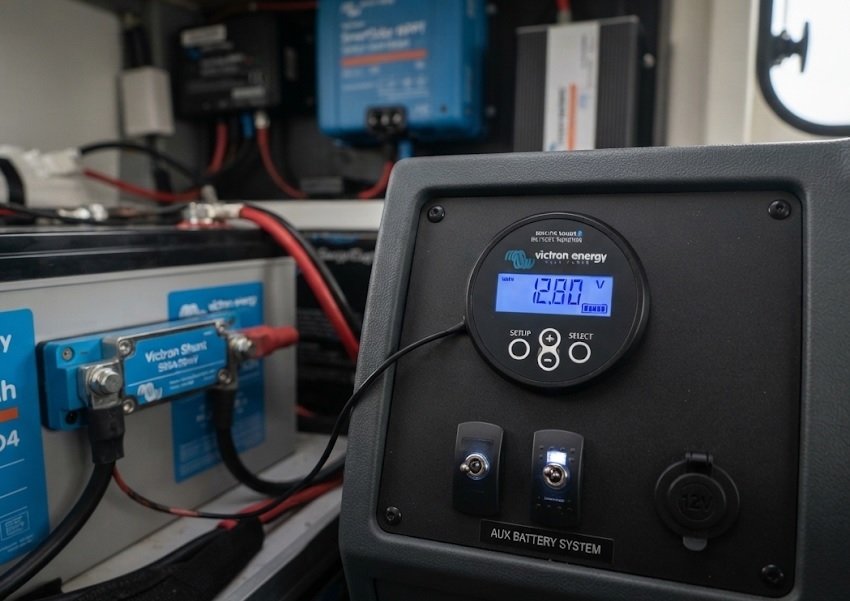
The Victron BMV-712 is the best option for live voltage tracking. It measures voltage to ±0.01V, logs charge history via Bluetooth, and sounds low-voltage alarms. Perfect for camper vans, solar setups, and anyone wanting continuous calcium battery monitoring.
KAIWEETS KM600 Multimeter — Best Budget Multimeter
The KAIWEETS KM600 is ideal for quick, low-cost voltage checks. It offers DC accuracy of ±0.5%, a bright backlit display, and auto-ranging for beginners. A solid, reliable choice for occasional calcium battery testing.

Calcium Battery Voltage Chart: State of Charge at a Glance
Calcium batteries hold a slightly higher resting voltage than standard lead-acid batteries. Use the table below to match voltage readings to approximate state of charge.
| State of Charge | Resting Voltage (12V) |
|---|---|
| 100% | 12.8V – 13.0V |
| 75% | 12.6V |
| 50% | 12.4V |
| 25% | 12.2V |
| 0% (discharged) | 12.0V or lower |
How to Read a Calcium Battery Voltage Chart Accurately
Voltage only reflects true charge when the battery is at rest. Follow these steps for reliable readings:
- Turn off the engine and all electrical loads.
- Wait 2–4 hours to let surface charge dissipate.
- Set your multimeter to DC volts and touch the probes to the terminals.
- Compare the reading against the chart above.
Charging Voltage vs. Resting Voltage
Don’t confuse resting voltage with charging voltage. A calcium battery needs a higher charge rate than older lead-acid types.
- Charging range: 14.4V–14.8V from the alternator or charger
- Float charge: 13.2V–13.6V for maintenance
- Resting (full): 12.8V–13.0V after settling
Quick Tip
- A reading below 12.4V means the battery is under 50% and should be recharged soon.
With the chart understood, let’s look at why calcium batteries behave differently from standard lead-acid designs.
Calcium vs. Standard Lead-Acid: Why Voltage Readings Differ
Calcium batteries use calcium-alloy grids instead of antimony, which changes how they hold and release voltage. Understanding these differences helps you interpret readings correctly.
Key Differences in Voltage Behavior
- Higher charge voltage: Calcium batteries require 14.4V–14.8V, while standard lead-acid needs only 13.8V–14.2V.
- Lower self-discharge: Calcium plates lose charge 3–5x slower during storage.
- Reduced water loss: Sealed calcium designs rarely need topping up.
Why Calcium Batteries Need Higher Charging Voltage
The calcium alloy raises internal resistance, so a lower voltage won’t fully recharge the battery. Undercharging leads to permanent capacity loss over time.
Standard alternators set for lead-acid (13.8V–14.2V) often undercharge calcium batteries. This is a common cause of premature failure in vehicles swapped to calcium types.
Common Misreading: Surface Charge Confusion
Right after charging, a calcium battery may show 13.5V or higher — this is surface charge, not true state of charge.
- Switch on headlights for 30 seconds to remove surface charge.
- Wait 2–4 hours for the voltage to settle.
- Then take your resting voltage reading.
Key Takeaway
- Calcium batteries need 14.4V–14.8V to charge fully — lower voltages cause chronic undercharging.
Now that you understand the “why,” let’s walk through the exact testing process step by step.
How to Test Calcium Battery Voltage: Step-by-Step Guide
Accurate testing takes only a few minutes with the right approach. Follow these steps to get a true voltage reading every time.
Step-by-Step Voltage Testing Process
- Prepare the battery: Ensure the engine and all accessories are off.
- Remove surface charge: Turn on headlights for 30 seconds, then wait 2–4 hours.
- Set your multimeter: Select DC voltage and the 20V range.
- Connect the probes: Touch red to positive and black to negative terminals.
- Record the reading: Compare it against the voltage chart above.
What Your Voltage Reading Means
| Reading | Diagnosis |
|---|---|
| 12.8V – 13.0V | Fully charged, healthy |
| 12.4V – 12.6V | 50–75% charged, recharge soon |
| 12.0V – 12.2V | Under 25%, recharge immediately |
| Below 12.0V | Discharged or failing |
Testing Under Load vs. at Rest
A resting voltage test shows state of charge, but a load test reveals true battery health. A healthy calcium battery should stay above 9.6V during a 15-second cranking load.
If voltage drops sharply under load, the battery may be sulfated or worn out — even if resting voltage looks fine.
Key Takeaway
- Always test at rest and under load — resting voltage alone can hide a weak battery.
Beyond voltage, a few other factors can affect your calcium battery’s performance and lifespan.
Factors That Affect Calcium Battery Voltage Readings
Several conditions can skew your voltage readings or shorten battery life. Knowing them helps you test more accurately and avoid false diagnoses.
Temperature Effects on Voltage
Voltage drops in cold weather and rises in heat. A battery reading 12.4V at 25°C may read closer to 12.2V at 0°C — still healthy, just colder.
- Cold: Slower chemical reactions lower voltage and cranking power.
- Heat: Accelerates self-discharge and grid corrosion.
- Ideal range: Test between 15°C and 25°C for consistency.
Age, Sulfation, and Capacity Loss
Calcium batteries typically last 4–7 years, but sulfation starts early if they’re stored below 12.4V. Sulfated batteries may show normal resting voltage yet fail under load.
Watch for these warning signs:
- Voltage drops fast after charging
- Slow engine cranking
- Swollen case or unusual heat
Charger and Alternator Compatibility
Not all chargers suit calcium batteries. A standard charger capped at 14.2V will never fully recharge one.
Check that your charger or alternator delivers:
- 14.4V–14.8V for bulk charging
- 13.2V–13.6V for float maintenance
- A calcium-compatible mode if available
Key Takeaway
- Temperature, age, and charger voltage all affect readings — always test under consistent conditions.
With these factors in mind, you can now interpret voltage data with far greater confidence.
Calcium Battery Voltage FAQ: Answering Common Reader Questions
Here are quick, direct answers to the questions readers ask most about calcium battery voltage.
What Voltage Is 100% Charge on a Calcium Battery?
A fully charged calcium battery rests at 12.8V–13.0V after surface charge settles. Readings above 13.0V usually indicate recent charging rather than true full charge.
Is 12.2V Bad for a Calcium Battery?
Yes — 12.2V means roughly 25% state of charge. Recharge it soon, since prolonged storage below 12.4V accelerates sulfation.
Can I Charge a Calcium Battery with a Normal Charger?
Only if the charger reaches 14.4V–14.8V. Standard chargers capped at 14.2V will undercharge calcium batteries and shorten their lifespan.
Why Does My Calcium Battery Show 13.5V After Charging?
That’s surface charge, not true state of charge. Remove it by switching on headlights for 30 seconds, then wait 2–4 hours before testing.
At What Voltage Is a Calcium Battery Dead?
Below 12.0V, a calcium battery is considered discharged. Readings under 11.8V often indicate permanent damage or a failed cell.
Quick Reference
- Full: 12.8V–13.0V | Half: 12.4V | Empty: 12.0V
These answers cover the essentials — but a few final practical tips can help you get even more from your calcium battery.
Practical Tips to Maintain Calcium Battery Voltage and Lifespan
Good maintenance keeps voltage stable and extends battery life well beyond the typical range. These habits take minutes but pay off for years.
Storage and Charging Best Practices
Never store a calcium battery below 12.4V. For seasonal storage, charge it fully, then top up every 6–8 weeks.
- Use a smart charger with a calcium or AGM mode reaching 14.8V.
- Disconnect the negative terminal during long storage to stop parasitic drain.
- Keep it cool and dry — heat accelerates corrosion and water loss.
Routine Voltage Checks That Prevent Failure
A monthly voltage check catches problems before they strand you. Record each reading so you can spot slow declines over time.
- Test resting voltage monthly and log it.
- Recharge whenever it drops below 12.4V.
- Run a load test every 6 months.
- Inspect terminals for corrosion and tighten connections.
Signs It’s Time to Replace the Battery
Even with perfect care, calcium batteries eventually wear out. Replace yours when you notice:
- Resting voltage stays below 12.4V after a full charge
- Voltage collapses under load
- Frequent jump-starts become necessary
- Age exceeds 6–7 years
Key Takeaway
- Monthly voltage checks plus proper charging prevent most premature calcium battery failures.
Apply these habits, and your calcium battery will deliver consistent voltage and dependable starts for years.
Calcium Battery Voltage vs. Other Battery Types
Calcium batteries aren’t the only option, and voltage behavior varies across chemistries. Comparing them helps you choose the right battery for your needs.
Voltage Comparison Table: Calcium vs. Lead-Acid vs. AGM
| Battery Type | Full Resting Voltage | Charge Voltage |
|---|---|---|
| Calcium | 12.8V – 13.0V | 14.4V – 14.8V |
| Standard Lead-Acid | 12.6V – 12.7V | 13.8V – 14.2V |
| AGM | 12.8V – 12.9V | 14.4V – 14.8V |
Key Differences That Matter
- Self-discharge: Calcium loses charge 3–5x slower than standard lead-acid.
- Water loss: Calcium and AGM are sealed; lead-acid needs topping up.
- Charging needs: Calcium and AGM require higher voltage than lead-acid.
Which Battery Type Should You Choose?
Pick based on your application and budget:
- Calcium: Ideal for modern cars, RVs, and infrequent use.
- AGM: Best for start-stop vehicles and vibration-heavy setups.
- Standard lead-acid: Cheapest option for older vehicles with basic charging systems.
Regardless of type, always verify your charger matches the battery’s required voltage. Mismatched charging is the leading cause of early failure across all three chemistries.
Key Takeaway
- Calcium and AGM batteries both need 14.4V–14.8V — higher than standard lead-acid.
Now you have the full picture — from voltage charts to real-world testing and maintenance.
Conclusion: Mastering Calcium Battery Charge Level by Voltage
Reading calcium battery charge level by voltage is simple once you know the numbers. A full battery rests at 12.8V–13.0V, while 12.0V signals a dead cell.
Always test at rest, remove surface charge first, and recharge below 12.4V. These proven methods protect your battery for years.
Grab a multimeter or battery monitor today and check your voltage. Your battery will thank you.
Stay proactive, and you’ll never be stranded by a surprise failure again.
Frequently Asked Questions About Calcium Battery Charge Level by Voltage
What voltage is a fully charged calcium battery?
A fully charged calcium battery rests at 12.8V to 13.0V once surface charge dissipates. This is slightly higher than a standard lead-acid battery, which settles around 12.6V–12.7V.
Readings above 13.0V usually mean the battery was recently charged. Wait 2–4 hours after charging before trusting any resting voltage reading.
How do I check my calcium battery charge level with a multimeter?
Turn off all loads, remove surface charge, and set your multimeter to DC volts. Touch the red probe to the positive terminal and the black probe to the negative terminal, then read the display.
Compare the result against a calcium battery voltage chart. A reading of 12.4V equals roughly 50% charge, while 12.0V indicates a discharged battery.
Why does my calcium battery read 13.5V after charging?
That 13.5V reading is surface charge — a temporary voltage layer sitting on the plates. It does not reflect true state of charge and will fade within a few hours.
To get an accurate reading, switch on your headlights for 30 seconds to strip the surface charge, then wait 2–4 hours before testing again.
Can a normal charger fully charge a calcium battery?
Only if it delivers 14.4V–14.8V. Many standard chargers cap at 14.2V, which chronically undercharges calcium batteries and shortens their lifespan.
Check your charger’s specs before use. A smart charger with a dedicated calcium or AGM mode is the best option for safe, complete charging.
At what voltage should I recharge my calcium battery?
Recharge whenever resting voltage drops to 12.4V or lower, which represents about 50% charge. Letting it fall below 12.2V accelerates sulfation.
For longest life, top up at 12.5V–12.6V rather than waiting for a deeper discharge. Monthly voltage checks make this easy to manage.
Is 12.2V bad for a calcium battery?
Yes — 12.2V means roughly 25% state of charge. The battery isn’t dead, but it needs recharging soon to prevent permanent capacity loss.
Storing a calcium battery at this level for weeks causes sulfation, which reduces cranking power and shortens overall service life.
How long does a calcium battery last?
A well-maintained calcium battery typically lasts 4 to 7 years. Lifespan depends on charging habits, temperature, and how deeply it’s discharged.
Frequent deep discharges, undercharging, and hot climates shorten life. Monthly voltage checks and proper charging help you reach the upper range.
What voltage means a calcium battery is dead?
Below 12.0V, a calcium battery is considered discharged. Readings under 11.8V often point to a failed cell or permanent damage.
If voltage stays low after a full charge, or collapses under load, replacement is usually the best option. Test under load to confirm before buying a new battery.