
Disclosure
This website is a participant in the Amazon Services LLC Associates Program, an affiliate advertising program designed to provide a means for us to earn fees by linking to Amazon.com and affiliated sites.
Knowing your cordless drill pack voltage prevents dead-battery surprises mid-project. This quick reference shows what “charged,” “half,” and “empty” actually mean for 18V, 20V, and 12V packs.
You’ll learn the exact voltage ranges per cell, how to test a battery with a multimeter, and expert tips to spot a failing pack before it quits. Read on for the complete guide to reading your drill battery like a pro.
Key Takeaways
- 4.2V per cell = fully charged; 3.7V = half; below 3.0V = empty
- An 18V pack reads about 21V at full charge, not 18V
- Test voltage under load, since surface charge gives false readings
- Resting below 2.5V per cell usually means permanent damage
- Store packs at 50–60% charge to extend their lifespan
Best Battery Testers and Voltage References for Cordless Drill Packs
Fluke 117 Digital Multimeter – Best Overall Choice
The Fluke 117 is the recommended tool for measuring cordless drill pack voltage accurately. It delivers true-RMS readings with 600V max range and auto-ranging convenience. Ideal for testing individual cells or full 18V and 20V packs. Its non-contact voltage detection adds safety when diagnosing failing batteries.

Klein Tools MM325 Multimeter – Best Budget Option
The Klein Tools MM325 offers a reliable, affordable way to check charged, half, and empty states on any drill battery. It measures up to 600V DC with 0.5% accuracy, more than enough for 12V to 20V packs. A solid best option for DIYers who test batteries occasionally.

AstroAI Digital Multimeter 6000 Counts – Best Value Pick
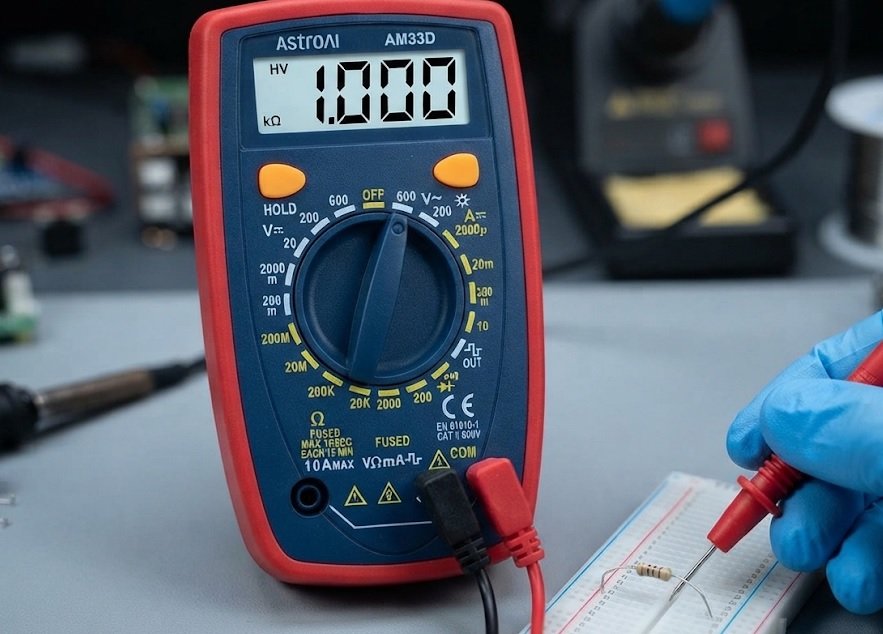
The AstroAI 6000 Counts multimeter is ideal for frequent battery testing, featuring high-resolution 6000-count accuracy and auto-ranging. It reads voltage, continuity, and resistance, helping you spot a weak cell fast. A smart pick for anyone building a cordless drill pack reference chart.
How to Read Cordless Drill Pack Voltage: Charged vs Half vs Empty
Every cordless drill battery is built from individual lithium-ion cells, each rated at a nominal 3.6V to 3.7V. The pack’s total voltage is simply the cell count multiplied by that rating. That’s why an “18V” pack actually peaks near 21V when fully charged.
Voltage Per Cell: The Universal Reference
Lithium-ion cells follow a predictable voltage curve from full to empty. Use this as your master reference for any pack size.
- Fully charged: 4.1–4.2V per cell (resting)
- Half charged: ~3.7V per cell
- Empty (cutoff): 3.0V per cell under load
- Damaged: Below 2.5V per cell at rest
Quick Reference Table: 12V, 18V, and 20V Packs
| Pack | Cells | Full | Half | Empty |
|---|---|---|---|---|
| 12V | 3 | 12.6V | 11.1V | 9.0V |
| 18V | 5 | 21.0V | 18.5V | 15.0V |
| 20V | 5 | 21.0V | 18.5V | 15.0V |
Quick Answer
- Charged = 4.2V per cell
- Half = 3.7V per cell
- Empty = 3.0V per cell
Notice that 18V and 20V packs share identical voltage ranges, since both use five cells. Next, let’s walk through testing your pack with a multimeter.
How to Test Cordless Drill Battery Voltage With a Multimeter
A multimeter gives you a definitive answer on your pack’s state of charge. The process takes under two minutes. Follow these steps for reliable results every time.
Step-by-Step Voltage Testing Process
- Charge the pack fully, then let it rest 30 minutes.
- Set the multimeter to DC voltage, 200V range.
- Touch the red probe to the positive terminal, black to negative.
- Record the reading and compare it to the reference table.
- Apply a load (run the drill) and re-test under load.
Why Surface Charge Gives False Readings
Freshly charged packs show artificially high voltage, called surface charge. A pack reading 21V right off the charger may settle to 20.4V after resting. Always test after a 30-minute rest for accurate results.
Testing under load reveals true health. A weak pack drops sharply when the drill runs, even if resting voltage looks fine.
Signs Your Drill Battery Pack Is Failing
- Rapid voltage drop: Falls below 3.0V per cell under load
- Won’t hold charge: Drops below half within minutes of use
- Cell imbalance: Individual cells differ by more than 0.2V
- Physical swelling: Immediate safety hazard, stop using it
Pro Tip
- Rest 30 minutes before testing
- Always test under load for accuracy
- Replace packs with cells below 2.5V
Now that you can test voltage accurately, let’s cover the best practices for storing and maintaining your packs.
Best Practices for Storing and Maintaining Cordless Drill Pack Voltage
Proper storage keeps your drill battery pack voltage stable for years. Heat and deep discharge are the two biggest killers of lithium-ion packs. A few simple habits protect your investment.
Ideal Storage Voltage and Conditions
Store packs at 50–60% charge, which equals roughly 3.7V per cell. This “storage voltage” minimizes chemical stress and capacity loss. Keep batteries in a cool, dry place between 50°F and 68°F.
- Avoid full charge storage: Long-term 4.2V storage accelerates aging
- Avoid empty storage: Cells below 2.5V may never recover
- Skip the freezer: Condensation damages terminals and electronics
Charging Habits That Extend Battery Life
Charge packs at room temperature whenever possible. Hot packs straight from heavy use should cool for 30 minutes first. Use only the manufacturer’s charger to avoid overvoltage damage.
- Let hot packs cool before charging.
- Remove packs once the charger completes.
- Recharge to storage level before long storage.
- Cycle packs every 2–3 months.
When to Replace a Drill Battery Pack
Replace your pack when resting voltage falls below 2.5V per cell or runtime drops noticeably. Swollen or hot packs are unsafe and must be recycled immediately. Most quality packs last 300–500 charge cycles.
Storage Cheat Sheet
- Store at 50–60% charge
- Keep cool and dry
- Recycle swollen or sub-2.5V packs
With these maintenance habits, your packs will deliver consistent voltage and longer runtime. The reference table and testing steps above give you everything needed to keep every pack project-ready.
Understanding Cordless Drill Pack Voltage Ratings Across Brands
Brands label packs differently, which confuses many buyers. A “20V Max” pack is often the same as an “18V” pack. Understanding these labels helps you compare batteries accurately.
Why 18V and 20V Packs Are Nearly Identical
Both 18V and 20V packs use five lithium-ion cells in series. The 20V figure is the maximum voltage right off the charger, while 18V is the nominal rating. This marketing difference misleads shoppers into thinking 20V is more powerful.
Nominal vs Maximum Voltage Explained
Nominal voltage is the average during discharge, typically 3.6V per cell. Maximum voltage is the peak at full charge, around 4.2V per cell. Manufacturers choose whichever number sounds more impressive.
| Label | Cells | Nominal | Max |
|---|---|---|---|
| 12V Max | 3 | 10.8V | 12.6V |
| 18V | 5 | 18.0V | 21.0V |
| 20V Max | 5 | 18.0V | 21.0V |
What Actually Determines Drill Power
Voltage alone doesn’t dictate performance. Real power depends on several factors working together.
- Amp-hour (Ah) rating: Higher Ah means longer runtime, not more power
- Motor efficiency: Brushless motors convert energy better
- Current delivery: Cells must supply high amps under load
- Gear design: Torque depends on the transmission, not voltage
Brand Label Cheat Sheet
- 18V and 20V Max = same five cells
- Nominal voltage = average, max = peak
- Amp-hours affect runtime, not power
Don’t pay extra for a “20V” label over an equivalent 18V pack. Focus instead on amp-hours, motor type, and build quality when comparing batteries.
Safety Rules When Working With Cordless Drill Pack Voltage
Lithium-ion packs store significant energy and demand respect. Mishandling them can cause fire, burns, or permanent damage. Follow these safety rules every time you test or handle a battery.
Handling and Testing Precautions
Never short the terminals with probes, tools, or jewelry. Even brief contact can spark or melt metal instantly. Keep packs away from metal objects like keys and screws.
- Inspect before testing: Check for cracks, swelling, or leaks
- Work on a non-flammable surface: Avoid wood benches and carpets
- Keep a fire extinguisher nearby: Class D or ABC rated
- Never puncture or crush cells: Internal damage causes thermal runaway
Warning Signs of a Dangerous Battery
Some failures give clear warnings before becoming hazardous. Stop using any pack that shows these signs and recycle it properly.
- Swelling or bulging: Cells are venting gas internally
- Hissing or popping sounds: Immediate fire risk, evacuate
- Excessive heat: Hot to the touch without recent use
- Sweet chemical smell: Electrolyte is leaking
- Discoloration or scorch marks: Prior overheating occurred
Safe Disposal and Recycling
Never throw lithium-ion packs in household trash. Take them to Home Depot, Lowe’s, or Best Buy recycling kiosks. Many municipalities also host hazardous waste drop-off days.
Safety Essentials
- Never short battery terminals
- Recycle swollen or damaged packs
- Keep a fire extinguisher nearby
Following these precautions protects you and your workspace. Safe handling ensures your cordless drill pack voltage testing remains a routine, risk-free task.
Frequently Asked Voltage Questions About Cordless Drill Packs
Even experienced users have lingering questions about battery voltage. Here are direct answers to the most common queries. Each answer gives you a quick, actionable takeaway.
What Voltage Should a Fully Charged Drill Battery Read?
A fully charged lithium-ion pack reads 4.2V per cell. That means an 18V or 20V pack shows about 21V right off the charger. After resting 30 minutes, it settles near 20.4V, which is still fully charged.
Can I Use a Higher Voltage Battery on My Drill?
No, never exceed your drill’s rated voltage. A 20V pack in an 18V tool may work briefly but risks motor burnout and voided warranties. Always match the pack to the tool’s specified voltage range.
Why Does My Battery Show Voltage but Won’t Run the Drill?
Voltage at rest doesn’t guarantee usable power. A pack can read 18V yet collapse under load due to high internal resistance. This signals worn cells that need replacement.
How Low Can I Drain a Drill Battery Safely?
Stop using a pack once it hits 3.0V per cell under load. Built-in BMS circuits usually cut power automatically. Draining below 2.5V at rest causes permanent capacity loss.
Do Amp-Hours Change Battery Voltage?
No, amp-hours (Ah) affect runtime, not voltage. A 2.0Ah and 5.0Ah pack both deliver the same voltage. The larger pack simply runs longer between charges.
Quick Answers
- Full charge = 4.2V per cell
- Never exceed rated tool voltage
- Amp-hours affect runtime, not voltage
These answers cover the voltage questions users ask most often. Combined with the reference table earlier, you now have a complete voltage troubleshooting toolkit.
Real-World Voltage Examples and Troubleshooting Scenarios
Real scenarios make voltage theory click. These examples show how readings translate into real drill performance. Use them to diagnose your own packs quickly.
Example 1: An 18V Pack Reading 14.8V
This pack sits at roughly 2.96V per cell, essentially empty. The drill may sputter or refuse to start. Charge it fully and re-test after 30 minutes.
Example 2: Pack Reads 21V but Drill Won’t Run
A full 21V reading with no runtime points to high internal resistance. One weak cell collapses under load while others read fine. Test each cell individually to find the culprit.
Example 3: New Pack Loses Charge Overnight
Self-discharge beyond 5% per week signals a problem. Possible causes include:
- Defective BMS: The circuit board drains current constantly
- Shorted cell: Internal damage creates a slow drain path
- Contaminated terminals: Dirt or corrosion bridges contacts
Example 4: Voltage Drops Sharply Under Load
A pack reading 20V at rest but 15V under load has worn cells. Healthy packs drop only 1–2V under normal drilling. A 5V drop means replacement is due.
| Reading | Per Cell | Diagnosis |
|---|---|---|
| 21.0V | 4.2V | Fully charged |
| 18.5V | 3.7V | Half charged |
| 15.0V | 3.0V | Empty, recharge |
| 12.5V | 2.5V | Damaged, replace |
Diagnostic Shortcuts
- Rest voltage high but no runtime = weak cell
- Big load drop = worn pack
- Overnight drain = faulty BMS
These scenarios cover the most common voltage problems you’ll encounter. Match your readings to the table above for a fast diagnosis.
Conclusion: Master Your Cordless Drill Pack Voltage Today
Reading cordless drill pack voltage is simple once you know the numbers. Remember: 4.2V per cell is full, 3.7V is half, and 3.0V is empty.
Test after a 30-minute rest for accurate results. Always check voltage under load to catch weak cells early.
Grab your multimeter and test every pack in your shop this week. Replace anything reading below 2.5V per cell.
With these habits, your batteries will deliver reliable power for years.
Frequently Asked Questions About Cordless Drill Pack Voltage
What voltage is a fully charged 18V cordless drill battery?
A fully charged 18V pack reads about 21.0V at rest. That equals 4.2V per cell across five cells in series. The “18V” label refers to nominal voltage, not peak charge.
After resting 30 minutes, the pack settles near 20.4V. It is still fully charged at that reading. Anything above 20V indicates a healthy, charged pack.
How do I test my drill battery voltage with a multimeter?
Set your multimeter to DC voltage and touch the red probe to positive, black to negative. Let the pack rest 30 minutes first. Record the reading and compare it to a voltage reference table.
For the most accurate diagnosis, test again while the drill runs under load. A healthy pack drops only 1–2V. A larger drop reveals worn cells.
What voltage is considered empty for a cordless drill battery?
An empty lithium-ion pack reads 3.0V per cell under load. For an 18V or 20V pack, that equals about 15.0V total. Built-in BMS circuits usually cut power at this point.
Never drain a pack below 2.5V per cell at rest. That level causes permanent capacity loss. Recharge promptly once the drill slows noticeably.
Why does my battery show full voltage but won’t run the drill?
Resting voltage doesn’t guarantee usable power. A pack can read 21V yet collapse under load due to high internal resistance. This signals worn or mismatched cells inside the pack.
Test each cell individually to find the weak one. If cells differ by more than 0.2V, the pack is failing. Replacement is the safest solution.
Is a 20V battery better than an 18V battery?
No, they are essentially identical. Both use five lithium-ion cells and deliver the same real-world power. The 20V figure is just the maximum charge voltage, used for marketing.
Focus instead on amp-hour rating, motor type, and build quality. These factors affect runtime and performance far more than the voltage label.
How low can I safely drain my drill battery before charging?
Recharge once the pack hits 3.0V per cell under load. Most drills slow noticeably before reaching this point. Charging early extends overall battery lifespan.
Avoid running packs until the tool completely dies. Occasional deep discharges are fine, but repeated ones shorten cell life significantly.
Can I revive a drill battery that reads below 2.5V per cell?
Sometimes, but success is limited. A brief trickle charge may restore mildly over-discharged packs. However, cells below 2.5V often suffer permanent chemical damage.
Attempt revival only with proper safety gear and a compatible charger. If the pack swells or heats abnormally, recycle it immediately instead of risking a fire.
What is the best way to store drill batteries for long life?
Store packs at 50–60% charge, roughly 3.7V per cell. Keep them in a cool, dry place between 50°F and 68°F. Avoid full-charge and empty storage, which both accelerate aging.
Cycle packs every two to three months to maintain cell balance. This simple routine maximizes lifespan and keeps voltage readings consistent.