
Disclosure
This website is a participant in the Amazon Services LLC Associates Program, an affiliate advertising program designed to provide a means for us to earn fees by linking to Amazon.com and affiliated sites.
Reading electric scooter battery voltage reveals your pack’s true health and charge level. A fully charged 36V scooter should rest near 42V, not 36V. This complete guide shows you exactly what those numbers mean.
You’ll learn where to find voltage specs, how to test your pack safely, and which readings signal a failing battery. These proven methods take minutes and could save you hundreds in replacements. Keep reading to master your scooter’s most vital sign.
Key Takeaways
- 42V indicates a fully charged 36V pack, not 36V itself
- Resting voltage differs from voltage under load
- Below 3.0V per cell signals damage risk
- Test at full charge, then again after a 30-minute rest
- A 0.5V drop per cell after resting points to a weak battery
Best Tools for Reading Electric Scooter Battery Voltage – Detailed Comparison
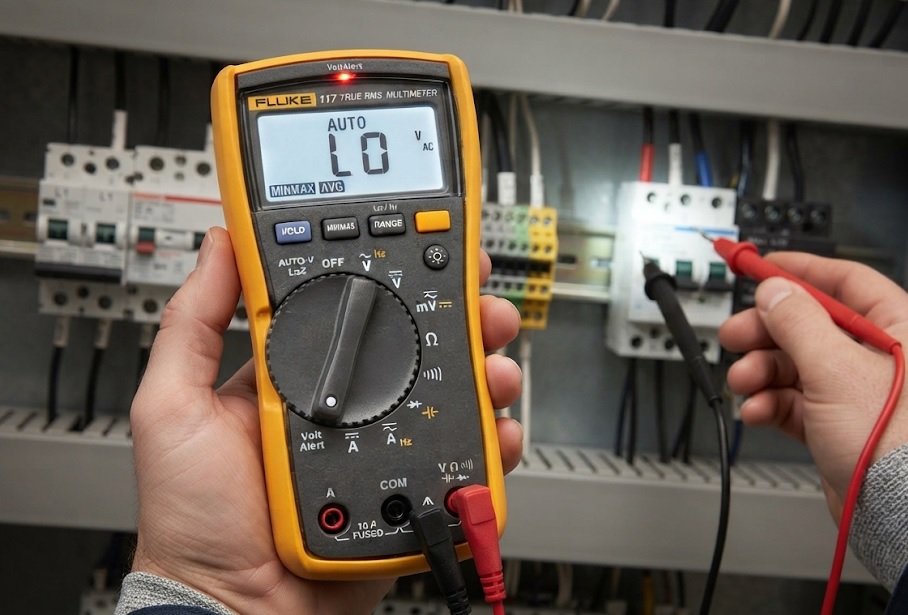
Fluke 117 Electrician’s Multimeter – Best Overall Choice
The Fluke 117 is the recommended tool for accurate voltage readings on any electric scooter. Its 6000-count display delivers precise DC measurements, while built-in VoltAlert detects live circuits instantly. Ideal for riders who want professional-grade reliability, this multimeter handles 36V, 48V, and 60V packs with ease. A proven investment for long-term battery diagnostics.
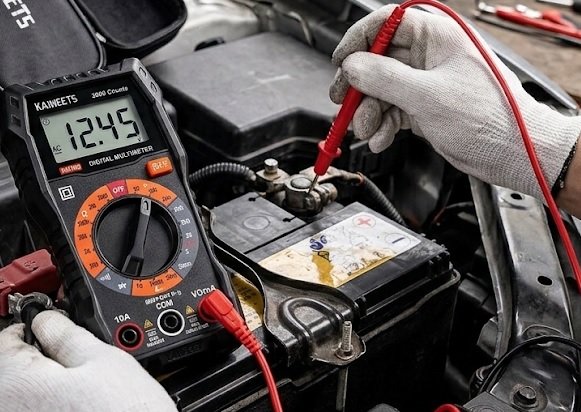
KAIWEETS KM100 Digital Multimeter – Best Budget Option
The KAIWEETS KM100 is the best option for casual riders testing voltage occasionally. It measures up to 600V DC with ±0.5% accuracy, includes auto-ranging, and features a backlit LCD for dim garages. At under $30, it’s ideal for confirming charge levels and spotting weak cells without overspending.
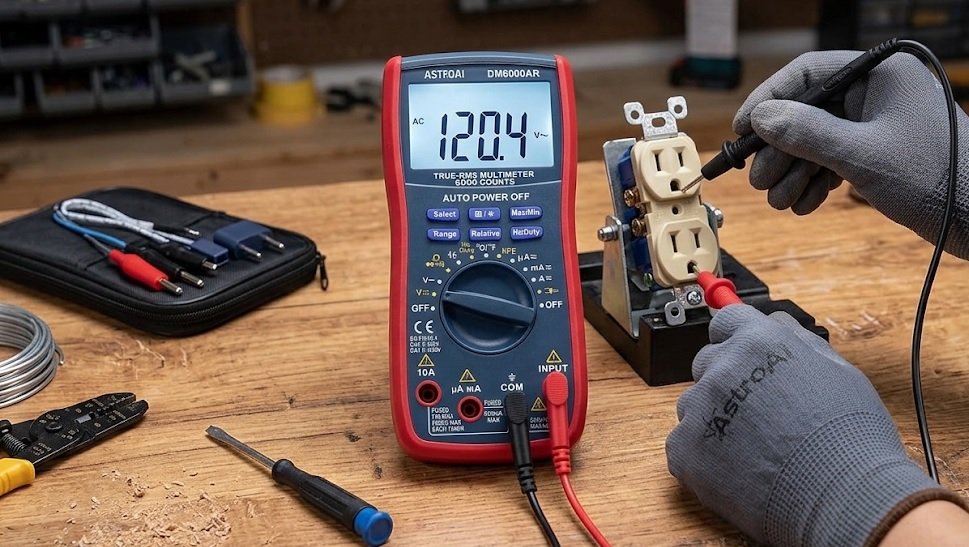
AstroAI DM6000 Multimeter – Best for Beginners
The AstroAI DM6000 suits first-time users thanks to its large rotary dial and clear DC voltage settings. It offers overload protection and a data-hold function, making scooter battery checks simple and safe. Recommended for anyone learning to read voltage without complex setup or steep learning curves.
Understanding Electric Scooter Battery Voltage Basics
Every scooter battery label lists a “nominal” voltage, but that number rarely matches what you measure. Knowing the difference between nominal, full, and empty voltage prevents false alarms. This section breaks down what each reading actually tells you.
Nominal vs. Actual Voltage Explained
Nominal voltage is the average the pack delivers during normal use, not its maximum. A 36V scooter actually peaks near 42V when fully charged. Once you understand this gap, every reading makes sense.
- Nominal: The labeled rating (36V, 48V, 60V)
- Full charge: Nominal × 1.167 (e.g., 48V → 56V)
- Empty cutoff: Roughly nominal × 0.83 (e.g., 48V → 40V)
How Cell Count Determines Pack Voltage
Scooter packs are built from 18650 or similar lithium cells wired in series. Each cell contributes about 3.6V nominal and 4.2V at full charge. Multiply by cell count to get your pack’s real numbers.
| Pack | Cells (Series) | Full Charge | Empty |
|---|---|---|---|
| 36V | 10 | 42V | 30V |
| 48V | 13 | 54.6V | 39V |
| 60V | 16 | 67.2V | 48V |
Why Voltage Drops Under Load
Voltage sags when you accelerate or climb hills, then recovers at rest. A 1-3V temporary drop is normal. Persistent sag beyond that signals a weak or aging pack.
Quick Reference
- Full charge = nominal × 1.167
- Empty cutoff = nominal × 0.83
- Each cell adds 4.2V at full charge
How to Test Electric Scooter Battery Voltage Safely
Testing your scooter’s battery takes about five minutes with the right multimeter. Follow these steps carefully to get accurate readings without risking damage or injury. Safety comes first, so never skip the preparation phase.
Step-by-Step Voltage Testing Process
Charge the pack fully, then let it rest before measuring. This rest period reveals the battery’s true resting voltage.
- Power off the scooter and disconnect the charger.
- Wait 30 minutes for voltage to stabilize.
- Set your multimeter to DC voltage (20V-200V range).
- Touch the red probe to the positive terminal, black to negative.
- Record the reading and compare it to your pack’s spec.
Where to Find Battery Terminals
Most scooters expose the battery under the deck or inside the stem. Some models require removing a panel with basic tools. Always check your owner’s manual before opening anything.
- Deck access: Common on budget and mid-range models
- Stem access: Typical on folding commuter scooters
- External port: Found on some premium models for easy testing
Safety Precautions You Should Never Skip
Lithium packs store serious energy, so careless probing can cause sparks or shorts. Take these precautions every single time.
- Never touch probes together while connected to the pack
- Wear safety glasses to protect against arc flashes
- Avoid metal jewelry that could bridge terminals
- Work in a dry, ventilated area away from flammables
Testing Essentials
- Always rest the pack 30 minutes before reading
- Set multimeter to DC voltage range
- Red probe to positive, black to negative
Interpreting Your Voltage Readings: What the Numbers Mean
A single voltage number tells a story about your battery’s health and charge state. Learning to interpret these readings helps you catch problems early. Here’s how to decode what your multimeter displays.
Voltage-to-Charge-Level Chart
Match your reading against these ranges to estimate remaining charge on a 48V pack.
| Reading | Charge Level | Status |
|---|---|---|
| 54.6V | 100% | Full |
| 50V | ~70% | Healthy |
| 46V | ~40% | Recharge soon |
| 42V | ~15% | Low |
| 39V | 0% | Cutoff |
Signs of a Failing Electric Scooter Battery
Certain voltage patterns reveal a pack nearing the end of its life. Watch for these warning signs during routine testing.
- Rapid voltage drop: Falls 5V+ within minutes of riding
- Won’t reach full charge: Stops at 90% or lower
- Inconsistent readings: Jumps around between tests
- Deep sag under load: Drops below cutoff during acceleration
When to Replace vs. Rebalance Your Pack
Sometimes a low reading means imbalance, not death. If one cell group lags, a balance charge can restore performance. Persistent imbalance or swollen cells mean replacement is the safer choice.
Reading Red Flags
- 5V+ drop in minutes = failing pack
- Never reaching full charge = cell damage
- Try balance charging before replacing
Maximizing Battery Life Through Smart Voltage Management
How you charge and discharge your scooter directly affects how long the battery lasts. Smart voltage habits can double your pack’s lifespan. These practices take little effort but deliver big returns.
Best Charging Practices for Longevity
Lithium packs age fastest at voltage extremes. Keeping your battery in the middle range slows degradation significantly.
- Charge to 80-90% for daily rides instead of 100%
- Avoid full discharge — recharge at 20-30% remaining
- Unplug after charging to prevent trickle overcharge
- Store at 50-60% if not riding for weeks
Temperature’s Impact on Voltage Readings
Cold weather temporarily lowers voltage, while heat inflates it. A pack reading 48V in summer may show 45V on a winter morning. Always test at room temperature for accurate comparisons.
| Condition | Voltage Effect | Action |
|---|---|---|
| Cold (below 50°F) | Reads lower | Warm up before testing |
| Hot (above 90°F) | Reads higher | Cool down, avoid charging |
| Room temp | Accurate | Ideal for diagnostics |
How Often Should You Check Voltage?
Routine checks catch problems before they strand you. A monthly reading builds a baseline for spotting changes.
- Monthly: Quick resting voltage check
- After long rides: Confirm recovery to normal
- Before storage: Verify 50-60% charge level
Longevity Tips
- Charge to 80-90% for daily use
- Test at room temperature only
- Check voltage monthly to spot trends
Common Electric Scooter Battery Voltage Problems and Fixes
Even careful riders run into voltage issues eventually. Most problems have simple causes and solutions. Here are the most common complaints and how to resolve them.
Why Your Scooter Won’t Reach Full Voltage
A pack that stalls below its rated full charge usually has an imbalance or a weak charger. Diagnose the cause before assuming the battery is dead.
- Faulty charger: Test output voltage with your multimeter
- Cell imbalance: One group lags, capping the whole pack
- Aging cells: Capacity fades after 500-800 cycles
- BMS cutoff: Protection board limits charge prematurely
Voltage Drops Suddenly While Riding
A sudden sag to cutoff mid-ride often points to one weak cell group. The BMS shuts down to protect it, killing your ride. Balance charging frequently fixes this.
Battery Reads Zero or Erratic Voltage
Zero or jumping readings usually mean a connection problem, not a dead pack. Check these before replacing anything.
- Inspect fuse: A blown fuse cuts all output
- Check connectors: Loose terminals cause erratic readings
- Test BMS output: Bypass to isolate the fault
- Look for corrosion: Clean terminals with contact cleaner
| Symptom | Likely Cause | Fix |
|---|---|---|
| Won’t reach full | Imbalance or charger | Balance charge, test charger |
| Sudden cutoff | Weak cell group | Rebalance or replace |
| Zero reading | Fuse or connection | Inspect fuse, tighten terminals |
Quick Fixes
- Test charger output before blaming battery
- Balance charge for sudden sag issues
- Check fuse and terminals for zero readings
Advanced Voltage Diagnostics: Per-Cell Testing and BMS Checks
When pack-level readings look normal but performance still lags, dig deeper. Per-cell testing and BMS inspection reveal hidden faults. These advanced methods pinpoint exactly which component is failing.
How to Measure Individual Cell Group Voltage
Open the pack and probe each series group at its balance leads. Compare every group against the others to find the outlier.
- Discharge the pack to roughly 50% first
- Locate balance leads on the BMS connector
- Measure each group from negative to positive in sequence
- Record all readings and calculate the spread
- Healthy spread: Under 0.05V between groups
- Concerning spread: 0.1-0.3V difference
- Failing pack: Over 0.3V difference
Testing the Battery Management System
The BMS controls charging, discharging, and protection. A faulty board mimics a dead battery even when cells are fine.
- Check output voltage: Should match pack voltage minus minimal loss
- Verify charge cutoff: Confirm it stops at the correct full voltage
- Test discharge cutoff: Ensure it protects at low voltage
Building a Voltage Log for Long-Term Tracking
Recording readings over time reveals slow degradation trends. A simple spreadsheet tracks full-charge voltage, resting voltage, and range per charge.
| Metric | Healthy Trend | Warning Sign |
|---|---|---|
| Full-charge voltage | Stable | Drops monthly |
| Cell spread | Under 0.05V | Widening |
| Range per charge | Consistent | Shrinking fast |
Advanced Checks
- Cell spread over 0.3V means pack failure
- Test BMS output to rule out board faults
- Log readings monthly to spot degradation
Voltage Specs Across Popular Electric Scooter Models
Different scooter classes run different voltages, and knowing your model’s spec prevents confusion. Compare your readings against the correct baseline. Here’s how popular categories break down.
36V vs. 48V vs. 60V: Which Do You Have?
Voltage class determines speed, torque, and range. Match your reading to the right tier before judging battery health.
| Class | Full Charge | Typical Use |
|---|---|---|
| 36V | 42V | Budget commuters |
| 48V | 54.6V | Mid-range all-rounders |
| 60V | 67.2V | Performance models |
Common Models and Their Voltage Ratings
Popular scooters follow predictable voltage patterns. Knowing yours speeds up diagnosis.
- Xiaomi M365: 36V system, full charge 42V
- Segway Ninebot Max: 36V system, full charge 42V
- Apollo City: 48V system, full charge 54.6V
- Dualtron models: 60V systems, full charge 67.2V
Matching Readings to Manufacturer Specs
Always verify against your manual before assuming a fault. Some brands cap charge slightly below maximum for longevity.
- Find the nominal rating on the battery label
- Calculate expected full charge using nominal × 1.167
- Compare your reading within a 1V tolerance
- Note brand-specific limits that cap charge below max
Spec Cheat Sheet
- 36V pack reads 42V when full
- 48V pack reads 54.6V when full
- 60V pack reads 67.2V when full
Conclusion: Mastering Electric Scooter Battery Voltage Readings
Reading electric scooter battery voltage gives you full control over your ride’s health. You now know what each number means and when to act. These skills prevent breakdowns and extend pack life.
Test monthly, rest the pack before reading, and log your results. Small habits deliver big savings.
Grab your multimeter and check your scooter today. A five-minute test protects your investment.
Stay proactive, and your battery will reward you with years of reliable rides.
Frequently Asked Questions About Electric Scooter Battery Voltage
What voltage should a fully charged electric scooter battery read?
A fully charged pack reads higher than its nominal rating. Multiply nominal voltage by 1.167 to find the expected full-charge number. A 36V scooter should read about 42V, and a 48V scooter should read roughly 54.6V.
If your reading falls more than 1V below that target, suspect a weak cell group or a faulty charger. Always verify against your manufacturer’s spec before assuming a fault.
How do I test my electric scooter battery voltage at home?
Set your multimeter to DC voltage, power off the scooter, and touch the red probe to positive and black to negative. Wait 30 minutes after charging so the voltage stabilizes before you record the reading.
Compare the result to your pack’s expected full-charge value. Repeat monthly and log each reading to spot slow degradation trends early.
Why does my scooter battery voltage drop under load?
Voltage naturally sags when you accelerate or climb hills because the pack must deliver high current. A temporary 1-3V drop is completely normal and recovers once you ease off the throttle.
Persistent sag beyond 3V, or a sudden drop to cutoff, signals a weak or aging cell group. Try a balance charge before replacing the pack.
What is the best way to check if my battery is failing?
Test resting voltage monthly and watch for trends. A pack that no longer reaches full charge, drops 5V within minutes, or shows erratic readings is likely failing.
For deeper diagnosis, measure individual cell groups. A spread over 0.3V between groups confirms a failing pack that needs rebalancing or replacement.
Can cold weather affect my scooter’s voltage reading?
Yes, cold temperatures temporarily lower voltage readings. A pack reading 48V in summer may show 45V on a winter morning without any real fault.
Always test at room temperature for accurate comparisons. Never charge a frozen pack, as this can cause permanent lithium damage.
How often should I check my electric scooter battery voltage?
Check resting voltage once a month to build a baseline. Also test after long rides to confirm the pack recovers to normal levels.
Before storing your scooter for weeks, verify it sits at 50-60% charge. This middle range minimizes degradation during downtime.
What voltage means my scooter battery is completely dead?
Most packs cut off around nominal voltage × 0.83. That means a 48V pack stops near 39V, and a 36V pack stops near 30V.
Never discharge below cutoff, as this damages lithium cells permanently. Recharge once you hit 20-30% remaining for the best lifespan.
Which multimeter is best for reading scooter battery voltage?
The Fluke 117 is the recommended choice for professional-grade accuracy on any pack. Budget riders can rely on the KAIWEETS KM100 for reliable basic readings.
Beginners often prefer the AstroAI DM6000 for its simple dial and overload protection. Any meter with a DC voltage range works for basic diagnostics.