
Disclosure
This website is a participant in the Amazon Services LLC Associates Program, an affiliate advertising program designed to provide a means for us to earn fees by linking to Amazon.com and affiliated sites.
Finding the right CR123A replacement starts with two numbers: 16 mm diameter and 34 mm height, plus a 3V nominal voltage. Match both, and your device gets safe, reliable power without a loose or oversized fit.
This complete guide covers CR123A equivalents, cross-reference charts, voltage rules, and expert tips for choosing rechargeable or lithium alternatives. Keep reading to match your cell correctly the first time.
Key Takeaways
- 16 mm x 34 mm and 3V define a true CR123A match.
- CR123A, CR123, DL123A, and SF123A are the same cell.
- Never substitute a 3.7V 16340 for a 3V-only device.
- Check polarity and chemistry before buying rechargeables.
- Match size first, voltage second, brand last.
Best CR123A Replacement Batteries for Reliable Everyday Power – Detailed Comparison
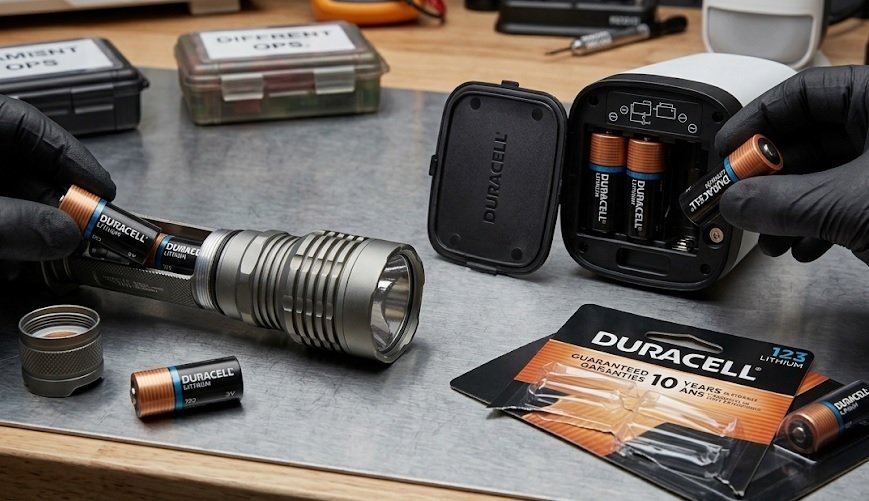
Duracell Ultra CR123A – Best Overall Choice
The Duracell Ultra CR123A is the recommended pick for most devices. It delivers a stable 3V output with a 10-year shelf life, making it ideal for flashlights, security cameras, and smoke detectors. Reliable performance in extreme temperatures seals the deal.
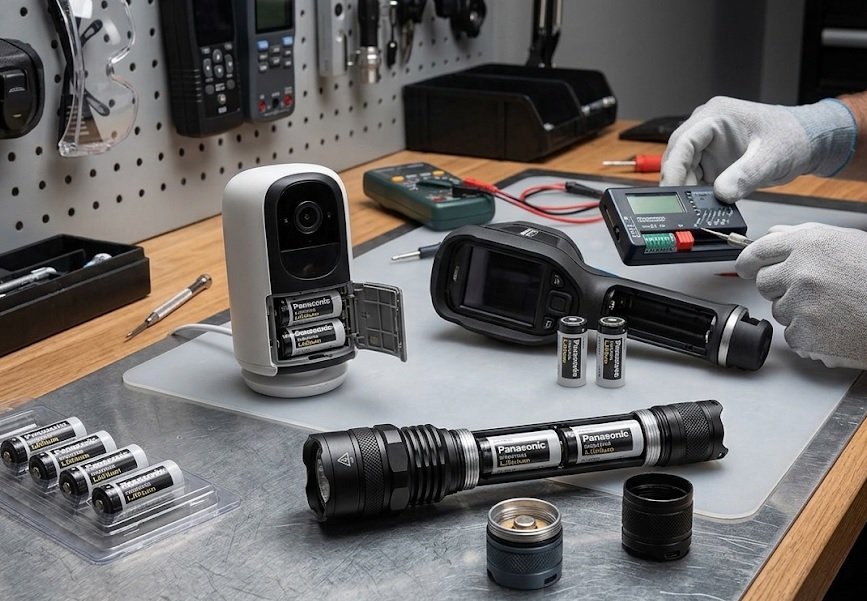
Panasonic CR123A Industrial – Best for Long-Term Storage
The Panasonic CR123A Industrial is the best option for preppers and bulk buyers. Its 10-year shelf life and consistent 1,550 mAh capacity suit emergency kits, night vision gear, and medical devices. Trusted, dependable, and widely recommended by professionals.
Streamlight CR123A Lithium – Best for High-Drain Tactical Lights
The Streamlight CR123A is ideal for tactical flashlights and high-drain devices. Engineered for rapid energy discharge, it maintains strong output under heavy loads. A proven choice for law enforcement, hunters, and anyone needing dependable brightness in critical moments.
CR123A Size and Voltage Specifications: What You Must Match
Before buying any CR123A replacement, confirm two specs: physical dimensions and nominal voltage. Getting either wrong risks poor contact, device damage, or outright failure.
CR123A Dimensions in Millimeters and Inches
A genuine CR123A measures 16 mm (0.63 in) diameter and 34 mm (1.34 in) height. This compact cylindrical shape fits tight battery tubes in flashlights and cameras.
- Diameter: 16 mm – too wide, and it won’t slide into the tube
- Height: 34 mm – too short, and contacts won’t touch
- Weight: Roughly 17 g per lithium cell
CR123A Voltage: Why 3V Matters
Standard CR123A cells deliver 3V nominal voltage using lithium manganese dioxide chemistry. Devices built for this voltage may fail or overheat with higher-output cells.
- 3V CR123A: Standard for most cameras, lights, and sensors
- 3.7V 16340: Rechargeable alternative, but not a direct swap
- 3.6V lithium: Used in some specialized industrial equipment
Quick Spec Check
- Size: 16 mm x 34 mm
- Voltage: 3V nominal
- Chemistry: Lithium manganese dioxide (LiMnO2)
With the specs confirmed, the next step is identifying which battery names cross-reference to the CR123A.
CR123A Cross Reference Chart: Equivalent Battery Names
The CR123A goes by many names depending on the brand and industry. Knowing these equivalents prevents confusion and wasted purchases.
Common CR123A Equivalent Names
These labels all describe the same 16 mm x 34 mm, 3V lithium cell. Any of them works as a direct CR123A replacement.
- CR123A: The most common international label
- CR123: Shortened form, identical cell
- DL123A: Duracell’s proprietary designation
- SF123A: SureFire’s branded version
- EL123A: Energizer’s naming convention
- RL123A: Used by some industrial suppliers
CR123A vs 16340: Key Differences
The 16340 is a rechargeable lithium-ion cell with similar dimensions but higher voltage. It is not a safe drop-in replacement for every device.
| Spec | CR123A | 16340 |
|---|---|---|
| Voltage | 3V | 3.6-3.7V |
| Chemistry | LiMnO2 | Li-ion |
| Rechargeable | No | Yes |
| Size | 16 x 34 mm | 16 x 34 mm |
Is CR123A the Same as CR2?
No. The CR2 measures 15.6 mm x 27 mm, making it shorter and thinner. It is not interchangeable with a CR123A despite the similar name.
Cross-Reference Summary
- CR123A = CR123 = DL123A = SF123A = EL123A
- 16340 fits but runs at higher voltage
- CR2 is smaller and NOT compatible
Now that equivalents are clear, let’s cover safe swapping rules for rechargeable options.
Can You Use Rechargeable CR123A Replacements Safely?
Rechargeable options exist, but they are not universal swaps. Understanding voltage and device limits prevents damage and safety hazards.
When Rechargeable 16340 Cells Work
Some flashlights and devices explicitly support 3.7V rechargeable cells. These units regulate voltage internally, so the higher output causes no harm.
- Check the manual: Look for “16340” or “RCR123A” support
- Verify voltage range: Devices rated 3.0-4.2V are usually safe
- Use protected cells: Built-in circuits prevent over-discharge
When You Must Stick With 3V Lithium
Many cameras, smoke detectors, and medical devices require exact 3V input. A 3.7V cell can fry circuits or trigger false readings.
- Smoke detectors: Voltage-sensitive sensors demand 3V
- Film cameras: Older metering systems expect stable 3V
- Medical devices: Precision electronics reject higher voltage
Step-by-Step Safe Swap Checklist
- Read your device manual for approved battery types
- Confirm dimensions: 16 mm x 34 mm
- Match voltage: 3V standard or 3.7V if approved
- Check polarity markings before inserting
- Test device function immediately after swapping
Rechargeable Safety Rules
- Only use 3.7V cells in devices rated for them
- Never mix rechargeable and disposable cells
- Always verify polarity before insertion
With safety covered, let’s look at where CR123A cells are commonly used.
Common Devices That Use CR123A Batteries
CR123A cells power a wide range of everyday and specialty devices. Knowing where they appear helps you stock the right replacements.
Flashlights and Tactical Gear
CR123A batteries are the standard for compact, high-output flashlights. Their high energy density delivers bright light in cold conditions where alkalines fail.
- Tactical flashlights: SureFire, Streamlight, and Olight models
- Headlamps: Many hiking and caving headlamps use single cells
- Weapon lights: Common in law enforcement and hunting setups
Security and Safety Devices
Security systems rely on CR123A cells for reliable, long-lasting power. Their stable voltage suits sensors that must work during outages.
- Alarm sensors: Motion detectors and door contacts
- Security cameras: Wireless models and trail cameras
- Smoke detectors: Some premium models use lithium cells
Cameras and Medical Equipment
Older film cameras and modern medical tools depend on CR123A precision. Voltage consistency matters more than capacity in these applications.
- Film cameras: Many 35mm SLRs use CR123A for metering
- Digital cameras: Select compact models accept the cell
- Medical devices: Glucose meters and hearing aids
Where CR123A Cells Are Used
- Flashlights, headlamps, and weapon lights
- Security sensors and wireless cameras
- Film cameras and select medical devices
Beyond device type, storage and handling practices affect performance and safety.
CR123A Storage, Shelf Life, and Disposal Tips
Proper storage extends CR123A shelf life and keeps cells safe. Poor handling can cause leakage, corrosion, or dangerous short circuits.
How Long Do CR123A Batteries Last?
Quality lithium cells hold a 10-year shelf life when stored correctly. Heat and moisture are the biggest threats to longevity.
- Temperature: Store between 10-25°C (50-77°F)
- Humidity: Keep in dry, sealed containers
- Packaging: Leave cells in original blister packs
Storage Mistakes to Avoid
Loose cells rolling together can short-circuit and overheat. Never store batteries in metal containers or near conductive materials.
- Don’t refrigerate: Condensation damages lithium chemistry
- Don’t mix old and new: Uneven discharge causes issues
- Don’t store loose: Use plastic cases or original packaging
- Don’t expose to heat: Avoid cars, dashboards, or direct sun
Safe Disposal of Used CR123A Cells
Lithium batteries should never go in regular trash. They can spark fires in collection trucks and landfills.
- Check if your device shows reduced output or dimming
- Test voltage with a multimeter if unsure
- Tape both terminals with electrical tape
- Take to a certified battery recycling center
- Never puncture, crush, or incinerate cells
Storage and Disposal Essentials
- 10-year shelf life when stored cool and dry
- Never store cells loose or in metal containers
- Tape terminals and recycle – never trash lithium
With storage and disposal covered, let’s address frequently asked questions about CR123A replacements.
How to Choose the Right CR123A Replacement Every Time
Choosing a replacement comes down to a simple priority order. Follow it, and you’ll never buy the wrong cell again.
The Three-Step Matching Method
Match in this exact sequence to avoid costly mistakes. Each step eliminates incompatible options fast.
- Size first: Confirm 16 mm x 34 mm dimensions
- Voltage second: Verify 3V nominal unless device approves 3.7V
- Brand and chemistry last: Choose reputable lithium makers
Signs You Need a Replacement
Devices rarely die suddenly. Watch for these warning signs before total failure.
- Dimming output: Flashlights lose brightness gradually
- False alerts: Security sensors trigger randomly
- Slow response: Cameras lag or fail to power on
- Visible corrosion: White residue on terminals
Buying Tips to Avoid Counterfeits
Counterfeit lithium cells are common online and can damage devices. Buy from authorized retailers and inspect packaging carefully.
- Check spelling: Typos on labels signal fakes
- Verify weight: Genuine cells weigh about 17 g
- Buy from trusted sellers: Avoid suspiciously cheap listings
- Check dates: Fresh stock ensures full shelf life
| Priority | Specification | Why It Matters |
|---|---|---|
| 1 | Size (16 x 34 mm) | Ensures proper fit |
| 2 | Voltage (3V) | Protects device circuits |
| 3 | Brand/chemistry | Guarantees reliability |
Selection Checklist
- Match size, then voltage, then brand
- Watch for dimming or false alerts as warning signs
- Buy from authorized sellers to avoid counterfeits
Understanding costs helps you budget for replacements and bulk purchases.
CR123A Replacement Costs: What to Expect Per Cell
Prices vary widely by brand, quantity, and seller. Understanding typical ranges helps you spot good deals and avoid overpaying.
Average Price Ranges
Single cells cost more per unit than bulk packs. Buying in larger quantities drops the per-cell price significantly.
- Single cell: $2-$5 at retail stores
- 2-pack: $5-$9 from major brands
- 12-pack: $18-$30 online
- Bulk (50+): As low as $1 per cell
Disposable vs Rechargeable: Long-Term Value
Rechargeable 16340 cells cost more upfront but pay off with heavy use. Occasional users save more with disposables.
| Factor | Disposable CR123A | Rechargeable 16340 |
|---|---|---|
| Upfront cost | Low | Higher |
| Reuse | No | 500+ cycles |
| Best for | Occasional use | Frequent use |
| Voltage | 3V | 3.7V |
Where to Buy for the Best Value
Authorized online retailers often beat big-box store prices. Watch for counterfeit risk when prices seem too low.
- Online retailers: Bulk pricing and brand variety
- Hardware stores: Convenient but pricier per cell
- Specialty dealers: Best for tactical and industrial cells
- Membership clubs: Good value on multi-packs
Cost-Saving Basics
- Bulk packs cut per-cell cost dramatically
- Rechargeables win for frequent use
- Avoid suspiciously cheap listings – counterfeit risk
Now that you know the costs, let’s wrap up with final guidance on making the right choice.
Conclusion: Matching Your CR123A Replacement With Confidence
The right CR123A replacement comes down to two specs: 16 mm x 34 mm size and 3V voltage. Match both, and your device runs safely and reliably.
Always verify equivalents like DL123A or SF123A before buying. Check voltage limits before choosing rechargeables.
Grab your cells from authorized sellers and keep a spare pack on hand. Stock up today and never get caught powerless again.
With these expert tips, you’ll pick the perfect cell every single time.
Frequently Asked Questions About CR123A Replacements
What battery can replace a CR123A?
Any cell labeled CR123A, CR123, DL123A, EL123A, or SF123A works as a direct replacement. These names all describe the same 16 mm x 34 mm, 3V lithium cell.
A 16340 rechargeable also fits physically, but only use it if your device explicitly supports 3.7V input. Otherwise, stick with standard 3V lithium cells.
Is a CR123A the same as an 18650?
No, they are completely different sizes. The 18650 measures 18 mm x 65 mm, making it much larger than the CR123A’s 16 mm x 34 mm dimensions.
An 18650 also runs at 3.6-3.7V and is rechargeable. Never force an 18650 into a CR123A compartment, as it simply won’t fit or function safely.
Can I use a 16340 instead of a CR123A?
Only if your device is rated for 3.7V. The 16340 matches the CR123A’s physical size but delivers higher voltage that can damage 3V-only electronics.
Check your manual for “RCR123A” or “16340” support. Devices like smoke detectors and film cameras typically require exact 3V input and reject rechargeables.
How long do CR123A batteries last?
Quality CR123A cells offer a 10-year shelf life when stored properly. In active use, runtime depends on device drain, ranging from a few hours in flashlights to years in sensors.
Store cells between 10-25°C in dry conditions to maximize lifespan. Heat and moisture are the biggest threats to lithium battery longevity.
Why does my CR123A battery die so fast?
Fast drain usually signals a high-drain device or a counterfeit cell. Tactical flashlights and cameras pull heavy current, shortening runtime significantly.
Check for fake batteries by verifying weight and label spelling. Genuine cells weigh about 17 g. Also test with a multimeter to confirm voltage output.
Are all CR123A batteries the same voltage?
Standard CR123A cells deliver 3V nominal voltage using lithium manganese dioxide chemistry. However, rechargeable 16340 versions output 3.6-3.7V.
This voltage difference matters greatly. Always confirm your device’s accepted range before swapping between disposable and rechargeable options.
What is the best way to store CR123A batteries?
Keep cells in original packaging at room temperature, away from heat and moisture. Never store them loose in metal containers, which can cause short circuits.
Avoid refrigerators due to condensation risk. For long-term storage, use plastic battery cases and keep cells away from direct sunlight.
Can CR123A batteries leak or explode?
Quality lithium cells rarely leak, but misuse increases risk. Short circuits, punctures, and overheating can cause leakage, venting, or fire.
Never mix old and new cells, reverse polarity, or expose batteries to extreme heat. Dispose of damaged cells safely at certified recycling centers.