
Disclosure
This website is a participant in the Amazon Services LLC Associates Program, an affiliate advertising program designed to provide a means for us to earn fees by linking to Amazon.com and affiliated sites.
Is your car clicking but not cranking? This complete guide helps you tell the difference between car battery vs. starter problems fast. You’ll save time and money with a simple diagnosis tree.
We’ll walk through proven methods to test your battery, inspect the starter, and read the symptoms correctly. By the end, you’ll know exactly which part failed — and what to do next.
Key Takeaways
- Dim lights + slow crank usually means a weak battery, not a bad starter.
- Single loud click with bright lights often points to the starter solenoid.
- Test voltage first — 12.6V resting is healthy; below 12.2V is suspect.
- Jump starting that works briefly confirms battery trouble, not starter failure.
- Corroded terminals mimic both faults — clean them before buying parts.
Best Diagnostic Tools for Car Battery vs. Starter Problems — Detailed Comparison
ANCEL BA101 Car Battery Tester 12V — Best Overall Choice
The ANCEL BA101 is the best option for quick battery health checks. It reads voltage, cold cranking amps, and internal resistance in seconds. Recommended for DIYers who want a fast answer before touching the starter. Its backlit display makes results easy to read in any garage.

OBD2 Scanner BLUEDRIVER PRO — Best for Electrical Diagnostics
The BlueDriver Pro plugs into your OBD2 port and reads fault codes tied to starting issues. It’s ideal for ruling out alternator, sensor, or ignition faults that mimic starter failure. Recommended for owners who want dealer-level insight without the dealer price.

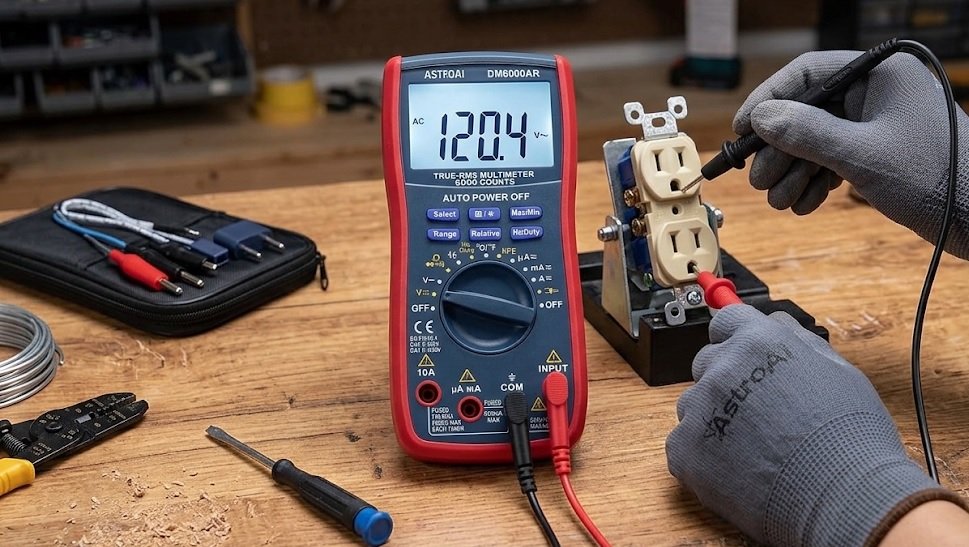
AstroAI Digital Multimeter TRMS 6000 — Best Budget Tester
The AstroAI TRMS 6000 is a cheap, reliable multimeter for voltage drop tests. It confirms whether your battery holds 12.6V or your starter draws excessive amps. Best option for beginners learning the diagnosis tree. Compact, accurate, and under $40.
How to Tell If It’s a Car Battery vs. Starter Problem
Most no-start situations trace back to one of two culprits. The symptoms differ in predictable ways once you know what to listen and look for.
Key Symptoms of a Weak or Dead Battery
A failing battery gives warning signs before it dies completely. Watch for these clues:
- Slow, labored cranking that worsens in cold weather
- Dim headlights or flickering interior lights
- Rapid clicking instead of a steady crank
- Battery warning light glowing on the dash
These point to low voltage, not a mechanical failure. A jump start that brings the car back to life strongly confirms battery trouble.
Key Symptoms of a Failing Starter Motor
A bad starter often shows the opposite pattern. Lights stay bright, but the engine won’t turn over.
- Single loud click with no crank at all
- Bright lights that stay strong when you turn the key
- Grinding or whirring sounds from the bell housing
- Intermittent starting — works cold, fails hot
Quick Symptom Comparison Table
| Symptom | Likely Battery | Likely Starter |
|---|---|---|
| Slow crank | Yes | Rare |
| Single click | No | Yes |
| Dim lights | Yes | No |
| Bright lights, no crank | No | Yes |
Quick Rule
- Dim lights + slow crank = battery
- Bright lights + single click = starter
Step-by-Step Diagnosis: Testing Battery and Starter Safely
Once symptoms point you in a direction, confirm the fault with real tests. Follow these steps in order to avoid replacing the wrong part.
Step 1: Test Battery Voltage at Rest
Turn off the engine and let the battery sit for an hour. Set your multimeter to DC volts and touch the probes to the terminals.
- 12.6V or higher — battery is healthy
- 12.2V to 12.5V — partially discharged, recharge and retest
- Below 12.2V — likely weak or failing battery
Step 2: Check Voltage During Cranking
Have a helper turn the key while you watch the meter. Cranking voltage should stay above 9.6V. Anything lower means the battery can’t handle the load.
Step 3: Perform a Voltage Drop Test on the Starter
This test isolates the starter circuit from the battery itself. Measure voltage between the battery positive post and the starter terminal while cranking.
- Set multimeter to DC volts.
- Connect one probe to the battery positive post.
- Connect the other to the starter’s main terminal.
- Crank the engine and read the value.
A reading above 0.5V indicates excessive resistance in cables or connections. Below 0.5V with a no-crank condition points to a faulty starter.
Step 4: Bench Test or Bypass the Starter
If voltage checks pass but the engine still won’t crank, bypass the ignition switch. Apply 12V directly to the starter solenoid terminal. A working starter will spin — silence confirms replacement is needed.
Test Order Matters
- Always test battery first — it’s free and fast
- Voltage drop above 0.5V = cable or connection issue
- Direct bypass spinning = starter is fine
Common Mistakes When Diagnosing Battery vs. Starter Issues
Even experienced DIYers misread these symptoms. Avoiding a few common traps saves money and prevents unnecessary part swaps.
Replacing the Starter When the Battery Is Weak
A weak battery can mimic a dead starter under load. If cranking voltage drops below 9.6V, the starter may be perfectly fine. Always load-test the battery before condemning the starter.
Ignoring Corroded or Loose Connections
Bad cables cause voltage drops that look like component failures. Check these points first:
- Battery terminals — look for white or blue crust
- Ground straps — engine-to-chassis grounds corrode silently
- Starter signal wire — a loose connector causes intermittent no-cranks
Cleaning and tightening these costs nothing and often solves the problem outright.
Overlooking the Alternator and Parasitic Draw
A failing alternator drains the battery overnight, creating repeat no-starts. Test charging output at 13.5V to 14.5V with the engine running. A parasitic draw above 50mA also kills batteries between drives.
Misreading Clicking Sounds
Rapid clicking usually signals low voltage, not a bad starter. A single heavy clunk points to the solenoid or starter drive. Listening carefully narrows the diagnosis before you spend a dime.
Avoid These Traps
- Never replace the starter before load-testing the battery
- Clean grounds and terminals before buying parts
- Rapid clicking = voltage issue, single clunk = starter
When to Replace Your Battery or Starter: Cost and Repair Guide
Once diagnosis confirms the faulty part, decide whether to repair or replace. Costs vary widely, so knowing typical ranges prevents overpaying.
Average Replacement Costs in 2024
| Component | DIY Cost | Shop Cost |
|---|---|---|
| Battery | $100–$200 | $200–$350 |
| Starter motor | $150–$300 | $400–$800 |
| Alternator | $150–$350 | $500–$1,000 |
Battery replacement takes 15 minutes with basic tools. Starter swaps run 1–3 hours depending on engine layout.
Signs You Need a New Battery Soon
- Age over 3–5 years — most batteries fail within this window
- Swollen case — heat damage makes failure imminent
- Slow starts in mild weather — capacity has dropped
- Frequent jump starts — the battery no longer holds charge
Signs Your Starter Needs Replacement
- Confirmed voltage drop under 0.5V with no crank
- Grinding noises from worn drive gears
- Starter spins but engine doesn’t — broken Bendix gear
- Bypass test produces silence — motor is dead
Repair vs. Replace: Which Makes Sense?
Starters can be rebuilt for $80–$150, but rebuilds often fail sooner than new units. For daily drivers, a new or remanufactured starter is the safer bet. Batteries, by contrast, are never worth repairing — replace them outright.
Cost-Saving Tips
- DIY battery swaps save $100–$150
- Starter bypass test confirms failure before spending
- Rebuilt starters save money but may not last as long
Preventing Car Battery and Starter Problems Long-Term
Most starting failures are preventable with simple maintenance habits. A few minutes each season extends component life significantly.
Battery Maintenance Habits That Extend Life
Heat and corrosion are a battery’s biggest enemies. Protect yours with these routines:
- Clean terminals every 6 months — baking soda and water remove crust safely
- Apply dielectric grease to posts to block future corrosion
- Test voltage monthly — catch drops before they strand you
- Avoid short trips — the alternator needs 20 minutes to fully recharge
Protecting Your Starter Motor
Starter wear comes from heat soak and excessive cranking. Follow these rules to add years of service:
- Fix fuel or ignition issues quickly — long cranking overheats the starter.
- Never crank longer than 10 seconds at a time.
- Keep heat shields intact on exhaust-adjacent starters.
- Address oil leaks that drip onto the starter solenoid.
Seasonal Checks for Cold and Hot Weather
Cold weather thickens engine oil and stresses weak batteries. Hot weather accelerates internal battery corrosion. Test both battery and charging system before summer and winter arrive.
When to Call a Professional
If voltage tests pass but the no-start persists, wiring or the ignition switch may be at fault. These require advanced diagnostics and are best left to a certified mechanic.
Prevention Checklist
- Clean terminals twice yearly
- Never crank longer than 10 seconds
- Test battery before every seasonal change
Frequently Confused Scenarios: Edge Cases in No-Start Diagnosis
Some situations blur the line between battery and starter faults. These edge cases trip up even seasoned mechanics, so recognize them early.
Intermittent No-Starts That Fix Themselves
A car that starts fine cold but fails when hot often has a heat-soaked starter. Conversely, failures only on cold mornings point to a weak battery. Track when the problem occurs to narrow the cause.
Security System and Immobilizer Interference
Modern anti-theft systems can block cranking entirely. Watch for these clues:
- Security light flashing when you turn the key
- No click at all — not even a relay sound
- Key fob not recognized — try the spare key
These mimic starter failure but require a locksmith or dealer reset instead.
Neutral Safety Switch and Clutch Pedal Issues
Automatics won’t crank unless the shifter sits fully in Park or Neutral. Manuals require the clutch pedal pressed to the floor. A faulty switch here produces total silence — identical to a dead starter.
Bad Ignition Switch Symptoms
A worn ignition switch cuts power to the starter signal wire. Accessories may work while cranking produces nothing. Test for voltage at the starter signal terminal during key turn to confirm.
Parasitic Draw Draining Overnight
A glovebox light or failing module can drain the battery in hours. Measure current draw with everything off — anything above 50mA needs investigation. This mimics a bad battery but repeats even after replacement.
Edge Case Clues
- No click at all? Check security system or ignition switch
- Hot-only failures suggest heat-soaked starter
- Repeat drains after new battery = parasitic draw
Tools and Safety Tips for DIY Battery and Starter Testing
Working around a car’s electrical system carries real risks. The right tools and precautions keep you safe while delivering accurate results.
Essential Tools for Accurate Diagnosis
You don’t need a full shop to diagnose starting faults. These basics cover nearly every scenario:
- Digital multimeter — measures voltage and resistance precisely
- Load tester or conductance tester — confirms battery health under stress
- Jumper cables or jump pack — for safe boost attempts
- Insulated wrenches — prevent accidental shorts on terminals
- Safety glasses and gloves — batteries contain corrosive acid
Safety Precautions Before You Begin
- Turn off the engine and remove the key.
- Disconnect the negative terminal first when removing a battery.
- Never lean over a battery while cranking — hydrogen gas can ignite.
- Keep metal tools away from both terminals simultaneously.
- Work in a well-ventilated area, never in a closed garage.
Avoiding Damage During Testing
Reversing multimeter probes won’t harm the meter but gives negative readings. Touching probes to the wrong terminals can blow fuses or fry modules. Double-check connections before every test.
Interpreting Results Correctly
A single voltage reading tells only part of the story. Always combine resting voltage, cranking voltage, and voltage drop results. Together, they confirm whether the battery, cables, or starter is at fault.
Safety Essentials
- Disconnect negative terminal first
- Always wear eye protection around batteries
- Combine multiple tests before concluding
Conclusion: Mastering Car Battery vs. Starter Diagnosis
Distinguishing car battery vs. starter problems comes down to reading symptoms correctly. Dim lights and slow cranking point to the battery. Bright lights and a single click signal the starter.
Always test voltage first before buying parts. A cheap multimeter saves hundreds in unnecessary replacements.
Grab your tools and run the diagnosis tree today. Start with the battery — it’s fast, free, and usually the culprit.
With these proven methods, you’ll diagnose any no-start confidently.
Frequently Asked Questions About Car Battery vs. Starter Problems
How can I tell if my car won’t start because of the battery or the starter?
Turn on your headlights and try cranking the engine. Dim or flickering lights with slow cranking point to a weak battery. Bright, steady lights with a single click or silence indicate a starter fault.
For confirmation, test resting voltage with a multimeter. A reading below 12.2V strongly suggests battery trouble, while healthy voltage plus no crank points to the starter.
What does it mean when my car clicks once but won’t start?
A single loud click usually means the starter solenoid engages but the motor doesn’t spin. This often indicates worn starter contacts or a failed motor winding.
However, low voltage can also cause a single click. Load-test the battery first, then perform a voltage drop test on the starter circuit before replacing anything.
Can a bad battery damage my starter motor?
Yes, indirectly. A weak battery forces the starter to draw excessive current, which overheats windings and accelerates wear over time.
Low voltage also causes the starter drive to engage weakly, leading to grinding and gear damage. Keeping your battery healthy protects the starter and extends its lifespan.
How many volts should a car battery read while cranking?
Cranking voltage should stay above 9.6V during engine turnover. Readings between 9.6V and 10.5V indicate a healthy battery under load.
Anything below 9.6V means the battery can’t handle the starter’s demand. This often mimics starter failure, so always test cranking voltage before condemning the starter.
Why does my car start fine cold but not when hot?
Heat soak is the usual culprit. A worn starter draws more current when hot, and resistance increases inside the motor. This pattern strongly suggests starter replacement.
Weak batteries can also struggle in heat due to internal corrosion. Test both components when the engine is warm to reproduce the fault accurately.
What is the best way to test a starter without removing it?
Perform a voltage drop test on the starter circuit while cranking. A reading above 0.5V indicates excessive resistance in cables or connections.
You can also bypass the ignition switch by applying 12V directly to the solenoid terminal. If the starter spins, the motor is fine and the fault lies elsewhere.
How long should a car battery and starter last?
Most car batteries last 3 to 5 years depending on climate and driving habits. Extreme heat shortens life significantly, while moderate climates extend it.
Starter motors typically last 100,000 to 150,000 miles. Frequent short trips, oil leaks, and prolonged cranking reduce starter lifespan considerably.
Should I replace the battery and starter at the same time?
Only if both tests fail. Replacing a healthy starter wastes money and adds unnecessary labor. Diagnose each component independently before deciding.
That said, if your battery is over five years old and the starter is confirmed bad, replacing both together can prevent a near-future breakdown.