
Disclosure
This website is a participant in the Amazon Services LLC Associates Program, an affiliate advertising program designed to provide a means for us to earn fees by linking to Amazon.com and affiliated sites.
You should check your car battery’s voltage once a month for optimal performance. Regular testing helps you catch a failing battery before it leaves you stranded. This simple habit extends battery life and saves money.
This complete guide reveals expert tips on testing frequency, warning signs, and proven methods to maintain your battery. Keep reading to protect your vehicle and avoid costly breakdowns.
Key Takeaways
- Test monthly: a healthy battery reads 12.4–12.7 volts at rest.
- Below 12.4V signals a weak charge needing attention soon.
- Drop to 12.0V or lower means recharge or replace immediately.
- Extreme heat and cold shorten battery life, so test more often.
- Load testing reveals failing batteries that voltage checks miss.
Best Battery Testers for Checking Car Battery Voltage
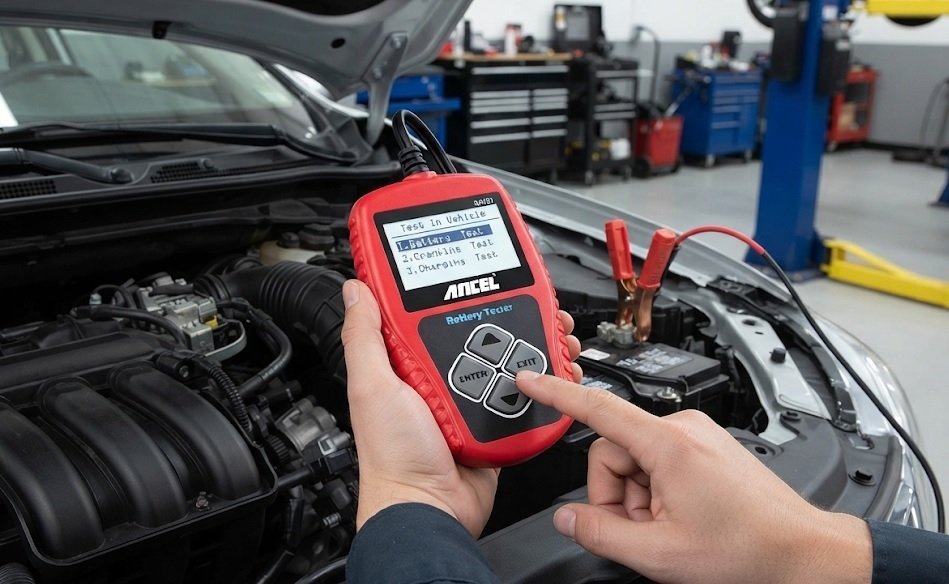
ANCEL BA101 Professional 12V Car Battery Tester – Best Overall Choice
The ANCEL BA101 is our top-recommended battery tester for accurate voltage readings. It displays voltage, CCA, and internal resistance in seconds. The backlit screen works in dim garages. This best option suits DIYers wanting dealer-level diagnostics at home.
KONNWEI KW208 12V Battery Tester – Best Budget Option
The KONNWEI KW208 delivers reliable voltage and cranking tests for under $40. It supports 100–2000 CCA and works on cars, trucks, and boats. This ideal for budget-conscious owners who want quick, dependable results without extra features.

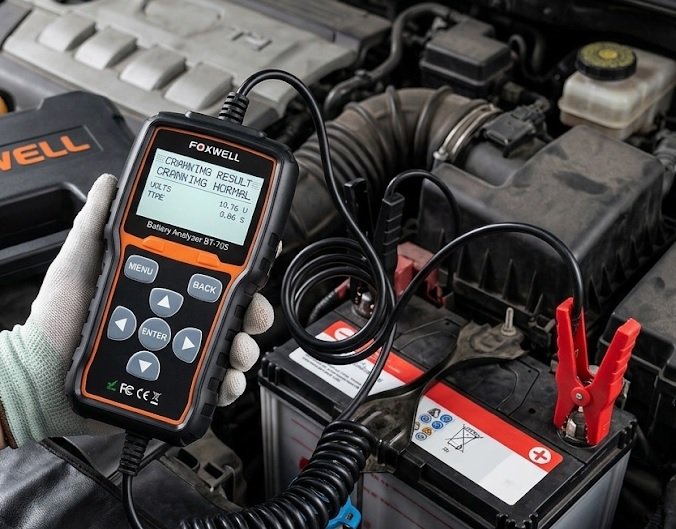
FOXWELL BT705 12V/24V Battery Analyzer – Best for Multiple Vehicles
The FOXWELL BT705 handles both 12V and 24V systems, making it ideal for fleets and RV owners. It runs in-vehicle and out-of-vehicle tests with printable results. This powerful analyzer is recommended for anyone maintaining several batteries regularly.
How Often Should You Check Car Battery Voltage? Recommended Testing Schedule
Battery voltage testing frequency depends on age, climate, and driving habits. Following a consistent schedule prevents surprise failures and extends battery life.
Monthly Voltage Checks for Most Drivers
Test your battery once a month under normal conditions. A healthy reading stays between 12.4 and 12.7 volts with the engine off. Monthly checks catch slow drains before they become no-starts.
Weekly Testing in Extreme Conditions
Hot summers and freezing winters stress batteries faster. Check weekly if you live in extreme heat or cold. Short trips under 20 minutes also justify more frequent testing.
- Hot climates: Heat accelerates fluid evaporation and grid corrosion.
- Cold climates: Cold reduces cranking power and masks weak cells.
- Short commutes: Brief drives may not fully recharge the battery.
Age-Based Testing Guidelines
Batteries older than three years need closer monitoring. Test every two weeks once your battery passes the three-year mark. Most batteries last three to five years with proper care.
| Battery Age | Testing Frequency |
|---|---|
| New (0–1 year) | Every 1–2 months |
| Mid-life (1–3 years) | Monthly |
| Old (3+ years) | Every 2 weeks |
Quick Summary
- Monthly testing works for most drivers.
- Weekly checks suit extreme climates and short trips.
- Older batteries need testing every two weeks.
How to Check Your Car Battery Voltage: Step-by-Step Guide
Testing your battery takes under five minutes with a multimeter or dedicated tester. Follow these steps for accurate readings every time.
What You Need Before Testing
Gather a digital multimeter or battery tester, safety glasses, and gloves. Ensure the engine is off and all accessories are powered down. Wait at least one hour after driving for a rested reading.
Step-by-Step Voltage Testing Process
- Turn off the engine and remove the key from the ignition.
- Set your multimeter to DC voltage at the 20V range.
- Connect the red lead to the positive terminal and black to negative.
- Read the display and note the resting voltage.
- Start the engine and recheck — the alternator should push readings to 13.7–14.7V.
Understanding Your Voltage Readings
Voltage numbers tell a clear story about battery health. Compare your results against the chart below.
| Reading (Engine Off) | Battery Status |
|---|---|
| 12.6V or higher | Healthy, fully charged |
| 12.4V | About 75% charged |
| 12.2V | About 50% charged |
| Below 12.0V | Weak — recharge or replace |
- Above 12.6V: No action needed beyond routine checks.
- 12.2–12.4V: Recharge and retest within a week.
- Below 12.0V: Perform a load test or visit a mechanic.
Quick Summary
- Rest the battery one hour before testing.
- 12.6V means healthy; below 12.0V means trouble.
- Running voltage should read 13.7–14.7V.
Warning Signs Your Car Battery Voltage Is Dropping
Low voltage rarely appears without warning. Recognizing early symptoms helps you replace a failing battery before it strands you.
Common Symptoms of a Weak Battery
Your car often signals trouble before voltage drops below safe levels. Watch for these early warning signs during daily driving.
- Slow engine cranking: The starter turns sluggishly or hesitates.
- Dim headlights: Lights flicker or brighten only when revving.
- Dashboard warnings: The battery light or check engine light appears.
- Electrical glitches: Windows, radio, or locks behave erratically.
Why Voltage Drops: Common Causes
Several factors drain your battery faster than normal. Identifying the cause prevents repeat failures.
- Parasitic drain: A faulty module pulls power while the car sits.
- Weak alternator: Charging voltage below 13.7V leaves the battery undercharged.
- Corroded terminals: Buildup blocks current flow and skews readings.
- Age and sulfation: Chemical breakdown reduces capacity permanently.
When to Replace vs. Recharge
Not every low reading means a dead battery. Use this guide to decide your next step.
| Scenario | Recommended Action |
|---|---|
| 12.2–12.4V, battery under 3 years | Recharge and retest |
| Below 12.0V after charging | Replace the battery |
| Voltage drops overnight | Test for parasitic drain |
| Battery over 4 years old | Replace proactively |
Quick Summary
- Slow cranking and dim lights signal low voltage.
- Parasitic drains and weak alternators cause most drops.
- Batteries over four years old deserve proactive replacement.
Tips to Maintain Healthy Car Battery Voltage Year-Round
Preventive maintenance keeps voltage stable and extends battery life. Small habits make a measurable difference over time.
Daily Driving Habits That Protect Your Battery
How you drive affects how well your battery charges. Adopt these proven habits to keep voltage in the healthy range.
- Drive at least 20 minutes per trip to allow full recharging.
- Limit short trips that drain more power than they restore.
- Turn off accessories before shutting down the engine.
- Avoid leaving lights on or doors ajar overnight.
Seasonal Battery Care Tips
Temperature extremes demand extra attention. Adjust your routine as seasons change.
- Summer: Park in shade and check electrolyte levels monthly.
- Winter: Test voltage weekly and consider a battery blanket.
- Storage: Use a trickle charger if the car sits over two weeks.
Cleaning and Inspection Routine
Physical care prevents corrosion and poor connections. Follow this simple monthly routine.
- Inspect terminals for white or blue-green buildup.
- Clean corrosion with a baking soda and water paste.
- Tighten connections to ensure solid contact.
- Apply dielectric grease to prevent future oxidation.
- Check the case for cracks, swelling, or leaks.
| Maintenance Task | Frequency |
|---|---|
| Voltage test | Monthly |
| Terminal cleaning | Every 3 months |
| Load test | Twice yearly |
| Professional inspection | Annually |
Quick Summary
- Longer drives keep batteries fully charged.
- Clean terminals every three months to prevent corrosion.
- Trickle chargers protect stored vehicles.
How Driving Habits and Climate Affect Your Battery Testing Schedule
No single schedule fits every driver. Your habits and local climate directly influence how often voltage checks are needed.
Short Trips vs. Long Commutes
Frequent short trips prevent full recharging and accelerate wear. Drivers covering under 10 miles per trip should test voltage every two weeks. Long highway commutes keep batteries healthier, allowing monthly checks.
Hot vs. Cold Climate Testing Frequency
Heat and cold damage batteries in different ways. Adjust your testing routine based on your region.
| Climate | Testing Frequency | Primary Risk |
|---|---|---|
| Hot (above 90°F) | Every 2 weeks | Fluid evaporation, corrosion |
| Moderate | Monthly | Normal wear |
| Cold (below 32°F) | Every 2 weeks | Reduced cranking power |
Vehicles That Need More Frequent Checks
Certain vehicles place heavier demands on their batteries. Owners of these should test more often.
- Electric and hybrid cars: Auxiliary 12V batteries still require monitoring.
- Cars with dashcams: Constant recording causes parasitic drain.
- Vehicles stored outdoors: Temperature swings stress batteries year-round.
- Older cars: Aging alternators charge less efficiently.
Adjusting Your Schedule for Seasonal Changes
Batteries weaken gradually, so seasonal shifts matter. Increase testing frequency at the start of summer and winter. These transitions expose hidden weaknesses before they cause failures.
Quick Summary
- Short trips and extreme climates require biweekly testing.
- Dashcams and stored vehicles drain batteries faster.
- Test more often at the start of summer and winter.
Tools and Methods for Accurate Car Battery Voltage Testing
Accurate readings depend on using the right equipment correctly. Different tools suit different levels of DIY experience.
Multimeter vs. Dedicated Battery Tester
Both tools measure voltage, but they serve different purposes. Choose based on how much detail you need.
| Tool | Best For | Key Feature |
|---|---|---|
| Digital multimeter | Basic voltage checks | Measures volts, amps, resistance |
| Dedicated battery tester | Load and CCA testing | Simulates real starting load |
| Smart charger with display | Charging and monitoring | Maintains and reconditions |
Choosing the Right Multimeter Settings
Incorrect settings produce misleading results. Follow these steps for reliable readings.
- Set the dial to DC voltage (V with a straight line).
- Select 20V range for standard 12V batteries.
- Insert leads correctly — black in COM, red in VΩmA.
- Touch probes firmly to clean terminal metal.
Why Load Testing Matters More Than Voltage Alone
Resting voltage can look healthy while a battery still fails under load. A load test simulates the high current demand of starting. Batteries reading 12.6V may still fail if internal resistance is high.
- Voltage test: Shows state of charge only.
- Load test: Reveals true cranking ability.
- Conductance test: Measures internal resistance and CCA.
Quick Summary
- Multimeters handle basic voltage checks.
- Load testers reveal hidden battery weakness.
- Use the 20V DC range for 12V batteries.
Common Mistakes to Avoid When Checking Car Battery Voltage
Even careful owners make errors that skew readings or damage components. Avoiding these pitfalls ensures accurate results and safer testing.
Testing Errors That Produce False Readings
Small mistakes can make a healthy battery look dead — or hide a failing one. Watch for these common testing errors.
- Testing immediately after driving: Surface charge inflates readings; wait one hour.
- Dirty or corroded terminals: Resistance skews voltage measurements.
- Loose probe contact: Poor connections cause erratic numbers.
- Wrong multimeter setting: AC mode or wrong range gives useless results.
Safety Precautions During Battery Testing
Batteries contain sulfuric acid and produce explosive hydrogen gas. Follow these safety rules every time.
- Wear safety glasses and gloves before touching terminals.
- Work in ventilated areas away from sparks or open flames.
- Connect red to positive first, then black to negative.
- Never short the terminals with tools or jewelry.
- Disconnect negative first when removing a battery.
Misinterpreting Voltage Results
A single reading rarely tells the full story. Avoid these interpretation mistakes.
- Assuming 12V means full charge: A rested battery should read 12.6V.
- Ignoring temperature effects: Cold lowers voltage temporarily.
- Skipping the load test: Voltage alone misses failing batteries.
| Mistake | Consequence |
|---|---|
| Testing while engine runs | Measures alternator, not battery |
| Ignoring corrosion | False low readings |
| Trusting one test | Missed early failure signs |
Quick Summary
- Wait an hour after driving before testing.
- Always wear safety glasses and gloves.
- Combine voltage and load tests for accuracy.
Conclusion: Check Your Car Battery Voltage Regularly
Checking your car battery’s voltage monthly protects you from breakdowns and extends battery life. Simple testing catches problems early.
Test monthly, watch for warning signs, and act on low readings fast. These habits deliver reliable performance year-round.
Grab a multimeter or battery tester today. Start your testing routine this week.
Your battery works hard every day. A few minutes of care keeps you moving confidently.
Frequently Asked Questions About Car Battery Voltage Checks
What voltage should a car battery read when fully charged?
A fully charged battery reads 12.6 volts or higher with the engine off. Readings between 12.4 and 12.6V indicate a healthy charge level.
When running, the alternator should push voltage to 13.7–14.7V. Anything below 12.4V at rest suggests the battery needs recharging or replacement.
How do I check my car battery voltage at home?
Set a digital multimeter to DC voltage at the 20V range. Touch the red probe to the positive terminal and black to negative with the engine off.
Wait one hour after driving for an accurate rested reading. Compare your result against a voltage chart to determine battery health.
Can I check battery voltage without a multimeter?
Yes — many cars display voltage through the dashboard or a built-in digital gauge. Some vehicles show battery status in the infotainment menu.
However, these readings are less precise than a multimeter. For accurate diagnosis, invest in a dedicated battery tester or basic multimeter.
Why does my battery voltage drop overnight?
Overnight voltage drops usually indicate a parasitic drain from a faulty module, dashcam, or interior light left on. A healthy battery holds voltage for weeks.
Test by disconnecting the negative cable overnight. If voltage holds, a component is draining power. A mechanic can isolate the source.
What is the best way to test a car battery under load?
Use a dedicated load tester or conductance tester that simulates starting demand. These tools reveal weak batteries that pass basic voltage checks.
Alternatively, crank the engine while watching voltage. A drop below 9.6V during cranking signals a failing battery.
How long does a car battery last with regular voltage checks?
Most batteries last three to five years with proper maintenance. Monthly voltage checks and clean terminals maximize lifespan.
Extreme climates shorten battery life significantly. In hot regions, expect two to three years; moderate climates often reach five.
Should I disconnect my battery when testing voltage?
No — resting voltage tests work fine with the battery connected. Just ensure the engine and all accessories are completely off.
Disconnecting is only necessary when testing for parasitic drains or performing load tests outside the vehicle.
What voltage means my battery needs replacing?
Readings below 12.0V after a full charge indicate a battery that needs replacement. Consistently low voltage despite charging confirms internal failure.
Batteries over four years old showing weak readings should be replaced proactively. Don’t wait for a no-start situation.