
Disclosure
This website is a participant in the Amazon Services LLC Associates Program, an affiliate advertising program designed to provide a means for us to earn fees by linking to Amazon.com and affiliated sites.
Learning how to test a battery after it has been sitting for months starts with one simple step: check the voltage with a multimeter before charging or installing it. A resting battery below 12.4 volts is likely discharged, while readings under 12.0 volts often signal permanent damage or sulfation.
This complete guide walks you through proven methods to test car, lawn mower, and deep-cycle batteries safely at home. You’ll learn the tools you need, the exact voltage benchmarks, and expert tips to tell whether your battery can be saved or must be replaced.
Key Takeaways
- 12.6 volts means a healthy, fully charged battery at rest.
- Below 12.0 volts, sulfation may have caused permanent damage.
- Load test results matter more than voltage alone for real-world power.
- Charge first, then retest after 2–24 hours of rest for accuracy.
- Monthly top-up charging prevents deep discharge during long storage.
Best Battery Testers for Reviving a Battery After Months in Storage
ANCEL BA101 Car Battery Load Tester – Best Overall Choice
The ANCEL BA101 is a recommended pick for anyone testing a battery that sat unused for months. It performs 6V and 12V load tests, checks alternator output, and displays results instantly on a clear LCD screen. Its rugged clamps and over-voltage protection make it ideal for garage use.

KONNWEI KW208 Battery Tester – Best Budget Option
The KONNWEI KW208 is a budget-friendly 12V tester that delivers accurate voltage and cranking-amp readings in seconds. It requires no internal battery, drawing power directly from the battery under test. This is the best option for occasional home diagnostics on cars, trucks, and motorcycles.

NOCO GENIUS10 Smart Charger – Best for Recharging Dormant Batteries
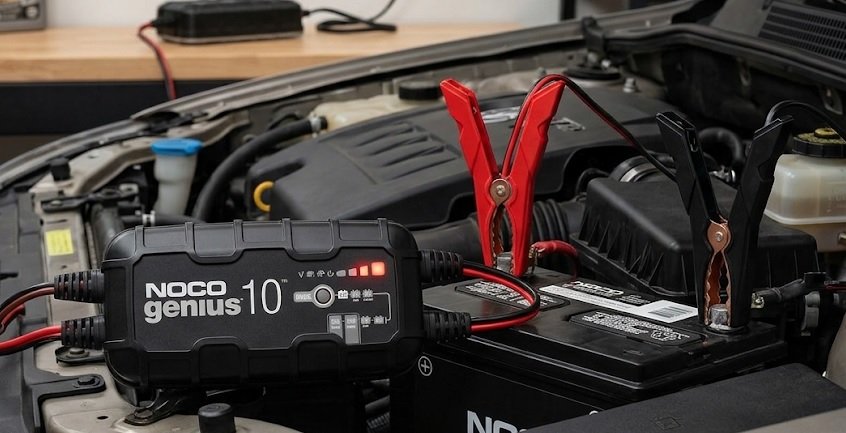
The NOCO GENIUS10 combines a 10-amp charger with a built-in battery tester and repair mode. It safely desulfates deeply discharged batteries and automatically stops when fully charged. Ideal for restoring batteries that sat for months before testing.
How to Test a Battery After Long-Term Storage: Step-by-Step Methods
A battery that sat for months loses charge through self-discharge and may suffer sulfation. Follow these proven methods to test it safely and accurately.
Step 1: Visual Inspection Before Testing
Check the battery case for cracks, swelling, or leaks before connecting any tool. Look for white or blue crusty deposits on the terminals.
- Swollen case: Replace immediately; internal damage is likely
- Terminal corrosion: Clean with a baking soda solution and wire brush
- Low electrolyte: Top up flooded batteries with distilled water only
Step 2: Measure Resting Voltage With a Multimeter
Set your multimeter to DC volts and touch the red probe to the positive terminal, black to negative. Record the reading before charging anything.
| Voltage Reading | Battery Condition |
|---|---|
| 12.6V or higher | Healthy, fully charged |
| 12.4V | About 75% charged |
| 12.0V | About 25% charged |
| Below 11.9V | Deeply discharged or damaged |
Step 3: Perform a Load Test
Voltage alone does not reveal true capacity. A load tester applies resistance and shows how the battery performs under real demand.
- Charge the battery fully, then let it rest 2–24 hours
- Connect the load tester and apply the specified load
- Watch voltage; it should stay above 9.6V for 15 seconds
If voltage drops below 9.6V, the battery likely needs replacement.
How to Tell If a Battery Sitting for Months Can Be Saved or Must Be Replaced
Not every dormant battery is dead forever. The right tests reveal whether recharging will restore it or whether replacement is the smarter choice.
Signs a Stored Battery Can Be Recovered
Batteries that hold a charge after recharging often have recoverable capacity. Watch for these positive indicators:
- Voltage rebounds above 12.4V after charging and resting
- Load test stays above 9.6V for the full 15 seconds
- No swelling, cracks, or sulfur smell during charging
A smart charger with repair mode can reverse mild sulfation on deeply discharged batteries.
Warning Signs the Battery Is Permanently Damaged
Some batteries cannot be saved no matter how long you charge them. Replace the battery if you notice:
- Voltage stays below 10.5V even after 24 hours on a charger
- Case is swollen or bulging, indicating internal short circuits
- Load test drops instantly below 9.6V under minimal load
- Age exceeds 4–5 years, the typical service lifespan
Quick Rule:
- Recovers: holds 12.4V+ after charging
- Replace: stays under 10.5V or shows swelling
How Long Can a Battery Sit Before It Dies?
Lead-acid batteries self-discharge roughly 3–5% per month in warm conditions. After six months, many fall below 12.0V and risk sulfation.
Lithium batteries lose only 1–2% monthly, making them far more forgiving during long storage periods.
How to Safely Recharge a Battery That Has Been Sitting for Months
Recharging a dormant battery requires the right charger and a careful approach. Rushing the process can cause overheating or permanent damage.
Choosing the Right Charger for a Dormant Battery
Use a smart charger with repair or desulfation mode whenever possible. These units automatically adjust voltage and current based on battery condition.
- Trickle charger (1–2 amps): Best for slow, gentle recovery
- Smart charger (5–10 amps): Ideal for most 12V batteries
- Fast charger (10+ amps): Avoid on deeply discharged batteries
Never use a fast charger on a battery reading below 11.0V, as it can overheat the plates.
Step-by-Step Recharging Process
- Disconnect the battery from the vehicle or equipment
- Clean terminals and check electrolyte levels on flooded batteries
- Connect charger clamps: red to positive, black to negative
- Select the lowest appropriate amperage setting
- Charge for 2–24 hours, monitoring for heat or odors
- Disconnect and let the battery rest 2 hours before retesting
Safety Precautions During Recharging
Batteries release hydrogen gas while charging, which is highly flammable. Always work in a well-ventilated area away from sparks or open flames.
- Wear safety glasses and gloves to prevent acid burns
- Never charge a frozen or swollen battery
- Stop immediately if the case feels hot to the touch
Pro Tip: Slow charging at 1–2 amps recovers sulfated batteries better than fast charging.
Battery Testing by Type: Car, Lawn Mower, and Deep-Cycle Batteries
Different batteries require slightly different testing approaches. Understanding your battery type ensures accurate results and prevents damage.
Testing a Car Battery After Months of Sitting
Car batteries face heavy cranking demands, so load testing is essential. A resting voltage below 12.4V means the battery needs charging before any load test.
- Target voltage: 12.6V fully charged at rest
- Load test minimum: 9.6V for 15 seconds
- Cranking amps: Compare against the rated CCA on the label
Testing a Lawn Mower or Motorcycle Battery
Small engine batteries are often 12V with lower amp-hour ratings. They discharge faster and sulfatate more quickly during storage.
- Test with a 12V load tester rated for small batteries
- Expect 12.4V+ after a full charge and rest
- Replace if under 2 years old but fails to hold charge
Testing Deep-Cycle and Marine Batteries
Deep-cycle batteries tolerate discharge better but still suffer from long storage. Capacity testing reveals their true health.
| Battery Type | Resting Voltage | Key Test |
|---|---|---|
| Car (SLI) | 12.6V | Load/CCA test |
| Lawn mower | 12.4V+ | Voltage + load |
| Deep-cycle | 12.7V | Capacity test |
Remember: Match your tester to the battery type for accurate readings.
How to Prevent Battery Damage During Long-Term Storage
Proper storage habits prevent the sulfation and deep discharge that ruin dormant batteries. A few simple steps keep your battery healthy for months.
Best Storage Practices for Any Battery
How you store a battery matters as much as how you test it. Follow these proven methods to maximize lifespan.
- Charge to 100% before storing; never store a discharged battery
- Disconnect the negative terminal to stop parasitic drain
- Store in a cool, dry place between 50–80°F (10–27°C)
- Avoid concrete floors; place on wood or a shelf
- Keep terminals clean and coat them with dielectric grease
Maintenance Charging Schedule
Batteries self-discharge even when disconnected. A maintenance charger prevents voltage from dropping into the danger zone.
- Connect a smart trickle charger during storage
- Top up the charge every 4–6 weeks if not using a maintainer
- Check resting voltage monthly with a multimeter
- Recharge immediately if voltage falls below 12.4V
Storage Tips by Battery Type
| Battery Type | Storage Voltage | Recharge Interval |
|---|---|---|
| Lead-acid (flooded) | 12.6V | Every 4–6 weeks |
| AGM/Gel | 12.8V | Every 6–8 weeks |
| Lithium (LiFePO4) | 13.2V (50–60%) | Every 3–6 months |
Golden Rule: Never let a stored battery drop below 12.4V — sulfation begins below this threshold.
Common Mistakes When Testing a Battery That Sat for Months
Even experienced DIYers make errors that lead to false readings or damaged batteries. Avoiding these pitfalls ensures accurate results and safer testing.
Testing Errors That Skew Results
Incorrect testing technique produces misleading voltage and load readings. Watch for these frequent mistakes.
- Testing immediately after charging: Surface charge inflates voltage; always rest 2–24 hours
- Skipping the load test: Voltage alone hides weak capacity
- Using dirty probes: Corrosion adds resistance and lowers readings
- Testing in freezing temperatures: Cold reduces voltage temporarily
Charging Mistakes That Damage Batteries
Improper charging can turn a recoverable battery into a permanent loss. Avoid these dangerous habits.
- Using a fast charger on a deeply discharged battery
- Overcharging beyond 24 hours on a non-smart charger
- Charging a frozen, swollen, or leaking battery
- Ignoring excessive heat or sulfur odors during charging
Storage and Handling Oversights
Poor storage habits accelerate sulfation and shorten battery life. These oversights are easy to fix.
- Storing on concrete: Causes temperature swings and self-discharge
- Leaving terminals connected: Allows parasitic drain to empty the battery
- Forgetting maintenance charges: Lets voltage fall below safe levels
Avoid This: Never test voltage right after charging — resting the battery is essential for accurate readings.
Tools and Equipment You Need to Test a Dormant Battery
Having the right tools makes battery testing faster, safer, and more accurate. Most items are affordable and useful for years of maintenance.
Essential Testing Tools
These core tools cover voltage checks, load testing, and safe handling for any battery type.
- Digital multimeter: Measures resting voltage and detects parasitic drain
- Battery load tester: Reveals true capacity under real-world demand
- Smart charger with repair mode: Safely recharges and desulfates dormant batteries
- Wire brush and terminal cleaner: Removes corrosion for accurate connections
Optional but Helpful Additions
These extras improve accuracy and convenience, especially if you maintain multiple batteries.
- Battery conductance tester: Estimates CCA and state of health instantly
- Hydrometer: Checks electrolyte specific gravity on flooded batteries
- Battery maintainer: Keeps stored batteries topped up automatically
- Safety gear: Gloves and goggles protect against acid and sparks
Quick Tool Comparison
| Tool | Best For | Typical Cost |
|---|---|---|
| Multimeter | Voltage checks | $15–$40 |
| Load tester | Capacity testing | $30–$80 |
| Smart charger | Recharging/repair | $40–$120 |
| Conductance tester | CCA/health estimate | $50–$150 |
Minimum Kit: A multimeter, load tester, and smart charger cover 95% of testing needs.
Conclusion: Testing a Battery After Months of Storage
Testing a battery after it has been sitting for months is simple with the right approach. Check voltage, run a load test, and recharge slowly before deciding to replace it.
Remember the golden rule: rest the battery before testing for accurate readings. Proper storage and monthly maintenance charging prevent most failures.
Grab your multimeter today and test that dormant battery. You may save money by reviving it instead of buying new.
With these proven methods, you can confidently keep every battery in your garage ready to perform.
Frequently Asked Questions About Testing a Battery After Months of Storage
What voltage should a battery read after sitting for months?
A healthy 12V battery should read 12.6V or higher at rest. Readings between 12.0V and 12.4V indicate partial discharge, while anything below 12.0V signals deep discharge or possible sulfation damage.
Let the battery rest two hours before testing for accurate results. Surface charge from recent charging can inflate readings and mislead your diagnosis.
How do I test a car battery that has been sitting for a year?
Start with a visual inspection, then measure resting voltage with a multimeter. If it reads below 12.4V, charge it slowly at 1–2 amps for up to 24 hours before load testing.
A battery sitting a full year often suffers sulfation. If voltage stays under 10.5V after charging, replacement is usually the best option.
Can a battery be revived after sitting for months?
Yes, many dormant batteries recover with slow charging and repair mode. Smart chargers with desulfation pulses can reverse mild sulfation and restore lost capacity.
However, batteries with swollen cases, cracked housings, or readings below 10.5V are typically beyond saving. Always test after charging to confirm recovery.
How long should I charge a battery that has been sitting?
Charge at a low amperage for 2–24 hours, depending on battery size and discharge depth. A 1–2 amp trickle charge works best for deeply discharged batteries.
Monitor for excessive heat or sulfur odors during charging. Stop immediately if either occurs, as these indicate internal damage or a safety hazard.
Is a load test necessary if the voltage looks normal?
Absolutely. Voltage alone cannot reveal true capacity. A battery may show 12.6V but fail instantly under load due to internal resistance or plate damage.
Load testers apply real demand and reveal whether the battery can deliver cranking power. Voltage should stay above 9.6V for 15 seconds.
What is the best way to store a battery long-term?
Charge it fully, disconnect the negative terminal, and store it in a cool, dry location. Avoid concrete floors and keep terminals clean and greased.
Use a smart maintainer or recharge every 4–6 weeks. Never let stored batteries drop below 12.4V, where sulfation begins.
Why does my battery die again after recharging?
A battery that dies repeatedly likely has permanent sulfation, internal shorts, or worn plates. These conditions prevent it from holding charge regardless of charging time.
Check the manufacturing date; batteries over 4–5 years old often reach end of life. Replace rather than risk being stranded.
Can cold weather affect battery test results?
Yes, cold temperatures temporarily reduce voltage and cranking power. Test batteries at room temperature whenever possible for accurate readings.
If testing in cold conditions, note that readings may appear artificially low. Warm the battery first or compare results against warm-weather benchmarks.