You can prevent sulfation in stored lead-acid batteries by keeping them fully charged, storing them in cool conditions, and running periodic maintenance charges. These proven methods protect capacity and extend battery life for years.
This complete guide covers the causes of sulfation, expert tips for float charging, and a simple storage checklist. Keep reading to discover how to keep your batteries healthy during long periods of inactivity.
Key Takeaways
- 50% charge is the minimum safe storage level to avoid hard sulfation.
- Cool, dry storage below 80°F slows crystal formation dramatically.
- Recharge stored batteries every 3–6 months to restore full capacity.
- Float chargers prevent self-discharge during long-term storage.
- Equalization charges reverse early sulfation before it becomes permanent.
Best Products for Preventing Sulfation in Stored Lead-Acid Batteries – Detailed Comparison
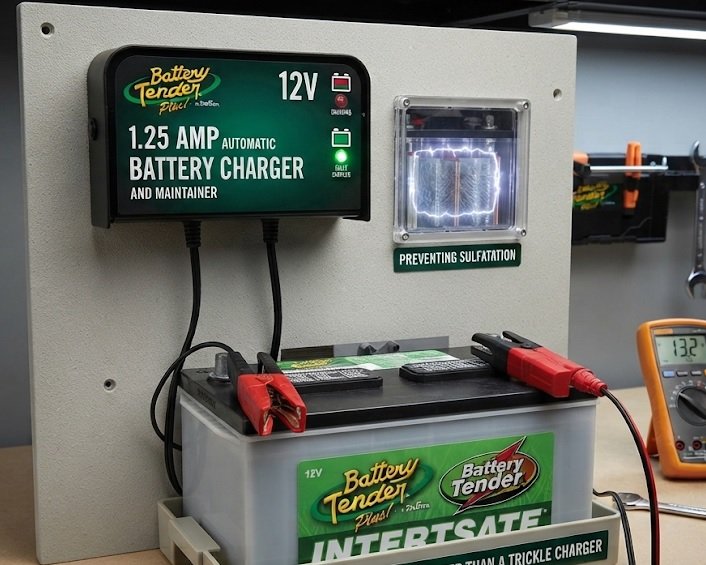
Battery Tender Plus 021-0128 – Best Overall Choice
The Battery Tender Plus 021-0128 is the recommended pick for long-term battery storage. Its 1.25-amp float mode maintains a full charge without overcharging, and temperature compensation adjusts output automatically. Ideal for cars, motorcycles, and boats stored for months at a time.
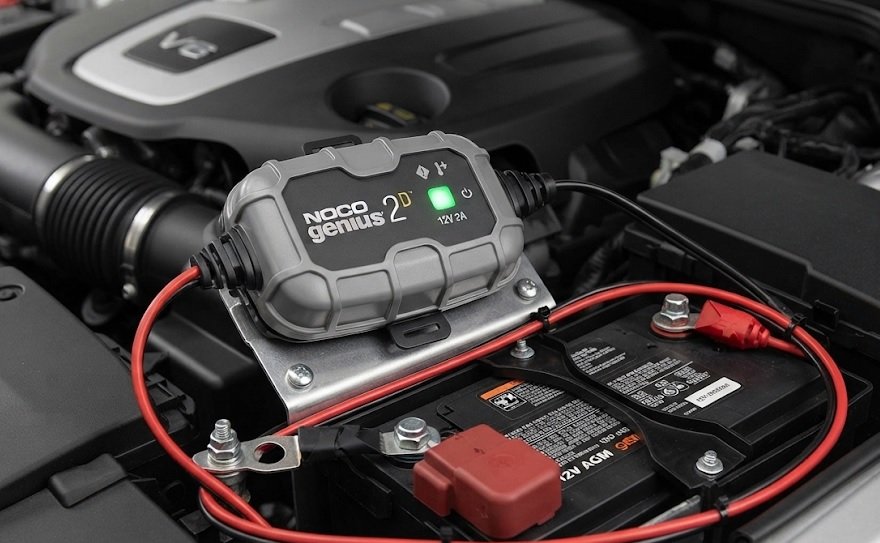
NOCO GENIUS2D 2-Amp Smart Charger – Best Option for Maintenance
The NOCO GENIUS2D delivers a 2-amp fully automatic charge with desulfation mode built in. It repairs early sulfation damage while maintaining stored batteries, making it ideal for seasonal equipment. Its spark-proof, reverse-polarity protection adds safety for beginners.
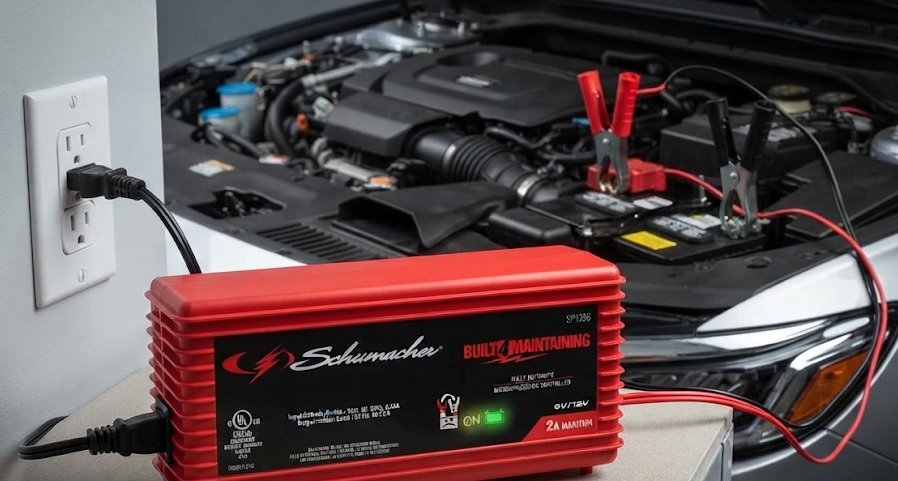
Schumacher SP1296 3-Amp Battery Maintainer – Best Budget Pick
The Schumacher SP1296 offers reliable 3-amp maintenance charging at an affordable price. It includes a desulfation mode and reverse-hook protection, making it a solid value option for keeping stored lead-acid batteries topped off between uses.
What Causes Sulfation in Stored Lead-Acid Batteries?
Sulfation occurs when lead sulfate crystals harden on battery plates during inactivity. Understanding the root causes helps you stop damage before it becomes permanent.
Why Batteries Sulfate During Storage
Every lead-acid battery self-discharges slowly, even when disconnected. When charge drops, lead sulfate crystals form and eventually harden into an insulating layer.
- Self-discharge: Batteries lose 3–5% charge monthly at room temperature.
- High heat: Every 15°F above 77°F doubles the self-discharge rate.
- Low electrolyte levels: Exposed plates sulfate faster.
- Long idle periods: Months without charging allow crystals to harden.
Warning Signs of Sulfation Damage
Catching sulfation early makes recovery far easier. Watch for these common symptoms in stored batteries.
- Slow cranking or reduced runtime
- Battery won’t hold a full charge
- Excessive heat during charging
- Visible white crust on terminals or plates
Quick Summary
- Sulfation is the #1 killer of stored lead-acid batteries.
- Heat and self-discharge accelerate crystal formation.
- Early warning signs include slow cranking and poor charge retention.
Soft vs. Hard Sulfation
Not all sulfation is permanent. Soft sulfation occurs in the early weeks and reverses with a proper recharge. Hard sulfation develops after months of neglect, forming dense crystals that resist normal charging.
| Type | Timeline | Reversible? |
|---|---|---|
| Soft sulfation | Days to weeks | Yes, with recharge |
| Hard sulfation | Months | Rarely, needs desulfator |
Now that you know what causes sulfation, let’s explore the proven prevention methods.
Proven Methods to Prevent Sulfation in Stored Batteries
Prevention is far easier than repair. These practical steps keep stored lead-acid batteries healthy for months of inactivity.
1. Charge Fully Before Storing
Never store a battery below 50% state of charge. A full charge minimizes sulfate crystal formation during idle periods.
- Target: 100% charge before storage
- Check: Resting voltage of 12.6V+ for 12V batteries
- Avoid: Storing partially discharged batteries
2. Store in Cool, Dry Conditions
Temperature directly impacts self-discharge speed. Cooler environments slow chemical reactions and extend storage life.
| Storage Temp | Self-Discharge Rate |
|---|---|
| 77°F (25°C) | 4% per month |
| 95°F (35°C) | 8% per month |
| 50°F (10°C) | 2% per month |
3. Use a Float Charger or Maintainer
A quality maintainer keeps batteries at optimal voltage automatically. This is the recommended method for storage longer than one month.
- Float chargers: Hold steady voltage indefinitely
- Smart maintainers: Cycle charge as needed
- Desulfators: Reverse early crystal buildup
4. Recharge Every 3–6 Months
If no maintainer is available, recharge stored batteries regularly. This restores lost capacity before sulfation hardens.
Prevention Checklist
- Charge to 100% before storage.
- Store below 80°F in a dry location.
- Use a maintainer for long-term storage.
- Recharge every 3–6 months without one.
Next, let’s look at how to recover batteries already showing sulfation symptoms.
How to Reverse Early Sulfation and Restore Battery Capacity
Soft sulfation is often recoverable with the right charging approach. Acting early dramatically improves your chances of restoring lost capacity.
Step-by-Step Desulfation Process
Follow this numbered process to reverse early crystal buildup safely.
- Inspect first: Check for cracks, leaks, or swollen cases.
- Top up electrolyte: Add distilled water to cover plates.
- Apply equalization charge: Use a controlled overcharge at low amps.
- Run a desulfator: Use pulse technology for 24–48 hours.
- Test capacity: Perform a load test to confirm recovery.
Equalization Charging Explained
Equalization applies a controlled overcharge that breaks down soft sulfate crystals. It also balances cell voltages across the battery.
- Voltage: 14.4V–15.5V for 12V flooded batteries
- Duration: 2–4 hours, monitored closely
- Caution: Avoid on sealed AGM or gel batteries
When Desulfation Won’t Work
Hard sulfation that has persisted for months is often permanent. In these cases, replacement is the only reliable option.
| Condition | Recovery Chance |
|---|---|
| Soft sulfation (weeks) | High (70–90%) |
| Moderate sulfation (months) | Moderate (30–50%) |
| Hard sulfation (year+) | Low (under 10%) |
Recovery Tips
- Act within weeks for best results.
- Equalization works on flooded batteries only.
- Hard sulfation usually means replacement.
With recovery covered, let’s compare the best tools for keeping batteries sulfation-free.
Best Battery Maintainers and Desulfators Compared
Choosing the right equipment makes sulfation prevention simple and automatic. Here’s how the top options compare for stored lead-acid batteries.
Battery Maintainer Comparison Table
Each product targets different storage needs and budgets. Use this table to match a device to your situation.
| Product | Amps | Desulfation | Best For |
|---|---|---|---|
| Battery Tender Plus 021-0128 | 1.25A | No | Year-round float charging |
| NOCO GENIUS2D | 2A | Yes | Repair + maintenance |
| Schumacher SP1296 | 3A | Yes | Budget-conscious users |
Which Maintainer Should You Choose?
Your choice depends on storage duration and battery condition.
- Short-term storage (under 1 month): Battery Tender Plus is ideal.
- Batteries showing sulfation: NOCO GENIUS2D repairs and maintains.
- Tight budgets: Schumacher SP1296 delivers solid value.
Key Features to Look For
Not all maintainers are equal. Prioritize these features for reliable sulfation prevention.
- Automatic float mode: Prevents overcharging during long storage.
- Temperature compensation: Adjusts voltage for climate changes.
- Desulfation mode: Reverses early crystal buildup.
- Safety protections: Spark-proof and reverse-polarity guarded.
Buying Summary
- Battery Tender Plus: best for simple float charging.
- NOCO GENIUS2D: best all-rounder with desulfation.
- Schumacher SP1296: best budget maintainer.
Beyond equipment, proper long-term storage habits seal in your results. Let’s cover the final best practices.
Long-Term Storage Best Practices for Lead-Acid Batteries
Good storage habits lock in everything you’ve learned so far. These final practices keep batteries healthy for months or even years.
Pre-Storage Preparation Checklist
Prepare every battery properly before it goes into storage. Skipping these steps invites sulfation.
- Clean terminals: Remove corrosion with a wire brush and baking soda.
- Check electrolyte: Top up flooded batteries with distilled water only.
- Charge fully: Reach 100% and verify 12.6V+ resting voltage.
- Disconnect cables: Prevent parasitic drain from connected devices.
Ideal Storage Environment
Where you store a battery matters as much as how you charge it. Aim for stable, moderate conditions.
- Temperature: 50–80°F (10–27°C) is the sweet spot.
- Humidity: Keep dry to prevent terminal corrosion.
- Surface: Store on wood or plastic, never bare concrete.
- Ventilation: Avoid sealed spaces; batteries can vent hydrogen.
Monthly and Seasonal Maintenance
Regular check-ins catch problems before they become permanent. A few minutes monthly saves expensive replacements.
- Monthly: Verify voltage stays above 12.4V.
- Quarterly: Recharge if no maintainer is connected.
- Seasonally: Run a load test before returning to service.
| Storage Duration | Recommended Action |
|---|---|
| Under 1 month | Full charge, disconnect |
| 1–6 months | Maintainer or monthly recharge |
| 6+ months | Float charger + quarterly checks |
Storage Essentials
- Clean, charge fully, and disconnect before storing.
- Keep batteries cool, dry, and off concrete.
- Check voltage monthly and recharge quarterly.
You now have every tool and technique needed to keep stored batteries sulfation-free.
Common Mistakes That Cause Sulfation in Stored Batteries
Even careful owners make errors that accelerate sulfation. Avoiding these common pitfalls protects your battery investment.
Top Storage Mistakes to Avoid
These missteps are the leading causes of premature battery failure during storage.
- Storing on concrete: Old myths aside, cold floors speed self-discharge.
- Leaving cables connected: Parasitic drains pull batteries below 50%.
- Ignoring voltage checks: Silent self-discharge goes unnoticed for months.
- Using tap water: Minerals contaminate electrolyte and damage plates.
- Overcharging: Excessive voltage boils electrolyte and warps plates.
Charging Errors That Speed Up Sulfation
Improper charging habits do as much damage as neglect. Watch for these warning behaviors.
- Fast charging stored batteries: High amps create heat and hard crystals.
- Charging in extreme cold: Cold batteries resist accepting charge.
- Skipping float mode: Topping off once isn’t enough for long storage.
- Mixing battery types: AGM, gel, and flooded need different voltages.
Environmental Factors Often Overlooked
Storage location quietly determines how fast sulfation develops.
| Factor | Risk Level |
|---|---|
| Hot garage (95°F+) | High |
| Unheated shed (freezing) | Moderate |
| Climate-controlled space | Low |
Mistakes to Avoid
- Never store below 50% charge.
- Don’t leave cables connected during storage.
- Avoid fast charging and extreme temperatures.
Now let’s answer the questions readers ask most about battery sulfation.
Expert Answers to Common Sulfation Questions
These are the questions readers ask most about preventing sulfation in stored lead-acid batteries. Each answer is short and actionable.
How Long Can a Lead-Acid Battery Sit Without Charging?
A fully charged battery can sit roughly 2–3 months before self-discharge drops it below safe levels. In hot climates, that window shrinks to weeks. Use a maintainer for anything longer.
Does a Trickle Charger Prevent Sulfation?
Yes, if it has a proper float mode. A constant trickle without regulation can overcharge and boil electrolyte. Smart maintainers cycle safely and are the recommended option.
Can a Sulfated Battery Be Saved?
It depends on severity. Early soft sulfation often reverses with equalization or a desulfator. Hard sulfation from months of neglect rarely recovers, so replacement becomes the practical choice.
Does Cold Weather Stop Sulfation?
No. Cold slows self-discharge but doesn’t stop crystal formation. Freezing a discharged battery can also crack plates and cases. Cool storage is good; freezing is not.
Quick Reference Table
| Question | Short Answer |
|---|---|
| Safe storage time | 2–3 months max |
| Trickle charger safe? | Only with float mode |
| Recovery possible? | Yes, if caught early |
| Cold prevents sulfation? | No |
Quick Answers
- Recharge within 2–3 months of storage.
- Use float-mode maintainers, not raw trickle chargers.
- Cold slows but never stops sulfation.
With these answers covered, you’re ready to protect any stored battery with confidence.
Conclusion: Preventing Sulfation in Stored Lead-Acid Batteries
Preventing sulfation in stored lead-acid batteries comes down to three simple habits: charge fully, store cool, and recharge regularly. These proven methods protect capacity and extend battery life for years.
The single best practice is connecting a smart float maintainer during storage. It handles everything automatically and eliminates guesswork.
Grab a quality maintainer today and set a quarterly voltage check reminder. Your batteries will reward you with reliable power whenever you need them.
With consistent care, sulfation becomes a problem you simply never face again.
Frequently Asked Questions About Preventing Sulfation in Stored Lead-Acid Batteries
What is sulfation in a lead-acid battery?
Sulfation is the buildup of lead sulfate crystals on battery plates during discharge or storage. When a battery sits partially charged, these crystals harden and block the chemical reactions needed to hold and release power.
Soft sulfation forms within weeks and reverses with proper charging. Hard sulfation develops after months of neglect and permanently reduces capacity, often requiring battery replacement.
How to prevent sulfation in a stored battery?
Charge the battery to 100% before storage, keep it in a cool, dry place, and connect a smart float maintainer. These three steps prevent most sulfation cases entirely.
If no maintainer is available, recharge every three to six months. Check resting voltage monthly and keep it above 12.4V for 12V batteries.
What voltage should a stored 12V battery maintain?
A healthy stored 12V battery should rest at 12.6V or higher. Anything below 12.4V signals partial discharge and rising sulfation risk.
Recharge immediately if voltage drops below 12.4V. Consistent readings under 12.0V indicate significant sulfation that may already be difficult to reverse.
Which is better: trickle charger or battery maintainer?
A battery maintainer is the better option for storage. It monitors voltage and applies charge only when needed, preventing overcharging automatically.
Basic trickle chargers deliver constant current and can boil electrolyte over months. Smart maintainers with float mode are safer and recommended for any storage longer than a few weeks.
Why does my stored battery keep dying?
Repeated dying usually means parasitic drain, sulfation, or an aging battery. Disconnect all cables during storage to eliminate hidden drains from clocks and electronics.
If voltage still drops, the battery likely has sulfation damage or worn plates. Run a load test to confirm whether recovery or replacement makes more sense.
Can a desulfator restore a sulfated battery?
A desulfator can restore batteries with soft or moderate sulfation. Pulse technology breaks down early crystals and often recovers 70–90% of lost capacity when treated promptly.
Hard sulfation from a year or more of neglect rarely responds. In those cases, replacement is usually more cost-effective than continued desulfation attempts.
Does storing a battery on concrete drain it?
Modern plastic battery cases prevent the old concrete-drain myth. However, cold concrete floors still accelerate self-discharge and temperature swings.
Store batteries on wood, plastic, or a shelf in a climate-controlled space. This keeps temperatures stable and slows sulfation significantly.
How often should I check a stored battery?
Check stored batteries once a month with a voltmeter. Quarterly recharges are sufficient when no maintainer is connected.
Batteries on a float charger need less attention, but a quick monthly voltage check catches charger failures early and protects your investment.