
Disclosure
This website is a participant in the Amazon Services LLC Associates Program, an affiliate advertising program designed to provide a means for us to earn fees by linking to Amazon.com and affiliated sites.
Choosing the right charger for car, boat and motorcycle batteries protects your investment and extends battery life. This complete guide reveals the essential features that separate reliable chargers from costly mistakes.
You’ll discover how voltage, amperage, and smart charging technology work together for optimal performance. Read on for expert tips on matching any charger to your specific vehicle and battery type.
Key Takeaways
- Match charger voltage to your battery: 6V, 12V, or 24V systems.
- Choose amperage at roughly 10% of battery capacity for safe charging.
- Smart multi-stage chargers prevent overcharging and desulfation damage.
- Look for battery-type settings: flooded, AGM, gel, and lithium.
- Marine and motorcycle batteries need waterproof, vibration-resistant units.
Best Battery Chargers for Car, Boat and Motorcycle Batteries – Detailed Comparison
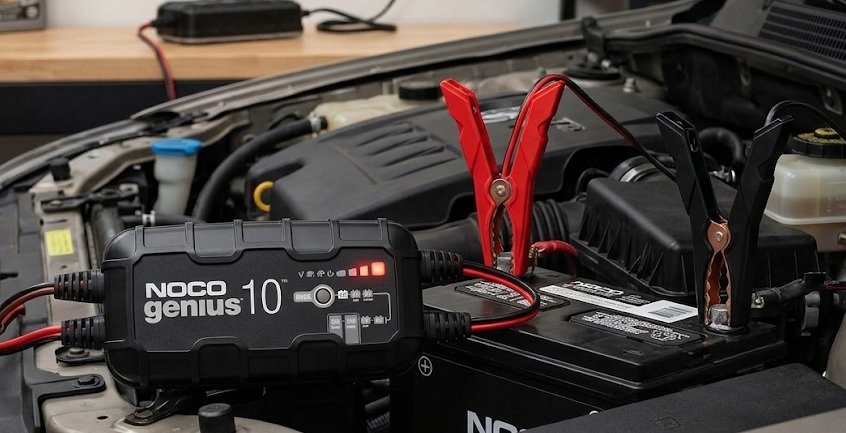
NOCO GENIUS10 – Best Overall Choice
The NOCO GENIUS10 is a fully automatic 10-amp smart charger recommended for 6V and 12V batteries. It repairs, maintains, and desulfates with nine charging modes. The force-charge feature revives dead batteries down to one volt, making it the best option for year-round garage use.
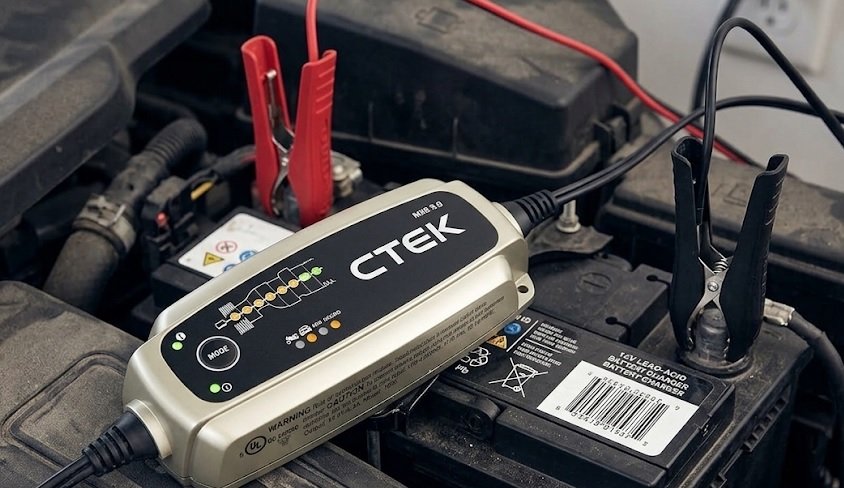
CTEK MXS 5.0 – Best for Motorcycle Batteries
The CTEK MXS 5.0 delivers a gentle 5-amp output ideal for motorcycle and smaller boat batteries. Its eight-step charging program includes temperature compensation for reliable winter charging. A dedicated AGM and recondition mode restores deeply discharged batteries, making it a proven choice for seasonal riders.
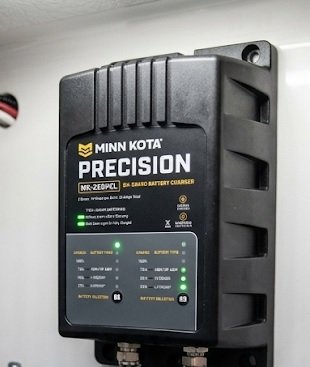
Minn Kota Precision MK 220 PCL – Best for Boat Batteries
The Minn Kota Precision MK 220 PCL is a waterproof 20-amp charger built for marine environments. It charges up to three 12V batteries independently with digital precision and corrosion-resistant hardware. The low-line voltage compensation ensures full charging even at docks with unstable power.
Essential Features to Look for in a Battery Charger
Not all chargers are built the same. Understanding core specifications helps you match a charger to your car, boat, or motorcycle battery safely.
Voltage and Amperage Matching
Voltage must match your battery exactly: 6V, 12V, or 24V. Amperage determines charging speed and should equal roughly 10% of battery capacity. A 50Ah motorcycle battery needs about a 5-amp charger.
- Too low amperage: Slow charging, but safe for maintenance
- Too high amperage: Risk of overheating and plate damage
- Correct amperage: Efficient, safe, and extends battery life
Smart Charging Technology
Modern smart chargers use multi-stage charging to optimize battery health. Stages typically include bulk, absorption, float, and equalization. This prevents overcharging and reverses sulfation on neglected batteries.
Battery Type Compatibility
Different batteries demand different charging profiles. Using the wrong mode shortens lifespan.
| Battery Type | Key Charging Need |
|---|---|
| Flooded Lead-Acid | Higher voltage, equalization mode |
| AGM | Moderate voltage, no equalization |
| Gel | Lower voltage, gentle current |
| Lithium (LiFePO4) | Dedicated lithium profile required |
Quick Summary
- Match voltage exactly; size amperage to 10% of capacity
- Multi-stage charging protects and restores batteries
- Always select the correct battery-type profile
How to Choose the Right Charger for Your Vehicle and Battery Type
Your vehicle type and battery chemistry dictate which charger works best. Follow these practical guidelines to avoid costly mistakes.
Charging a Car Battery Safely
Cars typically use 12V lead-acid or AGM batteries with 40-80Ah capacity. A 6-10 amp smart charger handles most passenger vehicles. Always connect the positive clamp first, then the negative to a grounded metal point.
- Daily drivers: 4-6 amp maintainer prevents drain
- Stored vehicles: Float mode keeps batteries topped off
- Deeply discharged: Repair mode restores sulfated cells
Marine Battery Charger Requirements
Boats demand waterproof, corrosion-resistant chargers rated for marine use. Multi-bank models charge house and starting batteries simultaneously. Ignition protection prevents sparks near fuel vapors.
Motorcycle Battery Charging Tips
Motorcycle batteries are small, often 12-20Ah, and need low-amperage charging. A 1-2 amp trickle charger is ideal for winter storage. Avoid fast charging, which overheats compact plates.
Step-by-Step Charger Selection Process
- Identify battery voltage (6V, 12V, or 24V)
- Calculate amperage at 10% of Ah rating
- Confirm battery chemistry (flooded, AGM, gel, lithium)
- Check environment (indoor, marine, vibration exposure)
- Choose features like desulfation, float mode, and safety certifications
Quick Summary
- Car batteries suit 6-10 amp smart chargers
- Boats require waterproof, ignition-protected units
- Motorcycles need gentle 1-2 amp trickle charging
Safety Features and Smart Technology in Modern Battery Chargers
Modern chargers include protective technology that prevents damage and injury. Understanding these features helps you buy with confidence.
Must-Have Safety Protections
Quality chargers guard against common hazards automatically. Look for these certified protections before purchasing.
- Reverse polarity protection: Prevents damage from wrong clamp connections
- Overcharge cutoff: Stops charging once the battery reaches full capacity
- Short circuit protection: Shuts down if clamps touch each other
- Spark-proof design: Blocks sparks until clamps connect properly
- Thermal protection: Reduces output if the unit overheats
Smart Charger Technology Explained
Smart chargers use microprocessor control to adjust voltage and current in real time. They automatically detect battery condition and select the optimal charging profile. Many models also offer Bluetooth monitoring through smartphone apps.
Desulfation and Battery Restoration
Sulfation is the leading cause of early battery failure. Repair modes deliver pulsed current that breaks down sulfate crystals on battery plates. This can restore neglected batteries and extend service life significantly.
Charger Comparison: Key Specifications
| Feature | Basic Charger | Smart Charger |
|---|---|---|
| Charging Stages | 1-2 | 7-9 |
| Battery Detection | Manual | Automatic |
| Repair Mode | No | Yes |
| Float Maintenance | Limited | Full support |
| Safety Shutoff | Basic | Multi-layer |
Quick Summary
- Reverse polarity and overcharge protection are essential
- Smart chargers auto-detect and optimize charging
- Desulfation modes revive neglected batteries
Common Mistakes to Avoid When Charging Car, Boat and Motorcycle Batteries
Even quality chargers fail when used incorrectly. Avoiding these common errors protects your battery and equipment.
Wrong Voltage or Amperage Selection
Connecting a 12V charger to a 6V battery causes overheating and permanent damage. Likewise, high-amperage charging on small motorcycle batteries warps plates. Always verify ratings before connecting clamps.
- Mismatched voltage: Immediate risk of boiling and swelling
- Excessive amperage: Overheats compact battery plates
- Incorrect battery profile: Shortens lifespan significantly
Ignoring Ventilation and Environmental Hazards
Lead-acid batteries release hydrogen gas during charging, which is highly flammable. Always charge in well-ventilated areas away from sparks or open flames. Marine chargers must be ignition-protected for this reason.
Charging a Frozen or Damaged Battery
Never charge a frozen battery, as internal pressure can cause explosion. Let it thaw completely at room temperature first. Similarly, batteries with cracked cases or swollen cells should be replaced, not charged.
Leaving Batteries on Chargers Indefinitely
Only smart chargers with float mode can stay connected long-term safely. Basic chargers left plugged in will overcharge and destroy batteries. For seasonal storage, use a maintainer designed for continuous connection.
Quick Troubleshooting Checklist
- Charger won’t start: Check clamp polarity and connection
- Battery won’t hold charge: Test for sulfation or dead cells
- Charger overheats: Verify amperage matches battery size
- Error codes appear: Consult manual for fault meanings
Quick Summary
- Always match voltage and amperage to battery specs
- Charge in ventilated areas away from ignition sources
- Never charge frozen, cracked, or swollen batteries
Maintenance Tips to Extend Battery and Charger Lifespan
Proper care keeps batteries and chargers performing reliably for years. These proven habits deliver the best return on your investment.
Routine Battery Maintenance Practices
Clean battery terminals regularly to prevent corrosion buildup. A mixture of baking soda and water neutralizes acid residue safely. Apply dielectric grease afterward to block future corrosion.
- Check water levels: Top off flooded batteries with distilled water monthly
- Inspect cables: Replace frayed or loose connections immediately
- Test voltage: Use a multimeter to confirm healthy charge levels
- Clean terminals: Remove corrosion with a wire brush
Seasonal Storage Best Practices
Batteries self-discharge during storage, losing up to 5% monthly. Connect a smart maintainer to keep them fully charged. Store in cool, dry locations to slow chemical degradation.
Charger Care and Storage
Keep charger clamps clean and dry between uses. Coil cables loosely to prevent internal wire damage. Store units indoors away from moisture, and inspect cords for wear before each use.
Recommended Maintenance Schedule
| Frequency | Task |
|---|---|
| Monthly | Check voltage and water levels |
| Quarterly | Clean terminals and inspect cables |
| Seasonally | Run desulfation or repair mode |
| Annually | Load test and replace weak batteries |
Quick Summary
- Clean terminals and check water monthly
- Use maintainers during seasonal storage
- Inspect charger cables and clamps before every use
How Much Should You Spend on a Battery Charger?
Battery charger prices range from budget trickle units to premium smart models. Understanding price tiers helps you match spending to your actual needs.
Budget Chargers ($20-$50)
Entry-level chargers handle basic 12V charging for occasional use. They typically offer 1-2 amp output and minimal safety features. Best for maintaining a single motorcycle or lawn tractor battery.
Mid-Range Smart Chargers ($50-$120)
This tier delivers the best value for most owners. Multi-stage charging, repair modes, and automatic detection come standard. Brands like NOCO and CTEK dominate this segment with proven reliability.
- 6-10 amp output: Handles car and boat batteries
- Multi-chemistry support: Works with flooded, AGM, gel, and lithium
- Desulfation modes: Restores neglected batteries
Premium Marine and Multi-Bank Chargers ($120-$400)
Marine-grade and multi-bank units justify higher prices through durability and capacity. Waterproof housings, ignition protection, and independent bank charging protect expensive boat battery systems.
Price vs. Feature Comparison
| Price Tier | Amperage | Best For |
|---|---|---|
| Budget | 1-2A | Motorcycle maintenance |
| Mid-Range | 5-10A | Cars, SUVs, small boats |
| Premium | 10-20A+ | Marine systems, multi-battery setups |
Quick Summary
- Budget chargers suit occasional motorcycle use
- Mid-range smart chargers offer the best value
- Premium marine units protect multi-battery systems
Frequently Asked Questions About Battery Chargers
These common questions cover the practical concerns most owners face when selecting and using battery chargers.
Can One Charger Handle Car, Boat, and Motorcycle Batteries?
Yes, a multi-chemistry smart charger with adjustable amperage works across all three. Select the correct voltage and battery profile for each application. A 10-amp unit covers most needs, though very small motorcycle batteries benefit from lower settings.
How Long Does Charging Take?
Charging time depends on battery capacity and charger amperage. A 50Ah battery at 5 amps takes roughly 10-12 hours from empty. Larger boat batteries may need overnight or multi-day charging sessions.
Is It Safe to Leave a Charger Connected?
Only chargers with float or maintenance mode are safe for continuous connection. These units automatically reduce output once batteries reach full charge. Basic chargers must be disconnected to prevent overcharging damage.
What Does a Desulfation Mode Do?
Desulfation pulses high-frequency current to break down sulfate crystals on battery plates. This restores capacity in neglected batteries and extends overall lifespan. Run it seasonally for best results.
Quick Answers Reference
- Voltage match: Always exact (6V, 12V, or 24V)
- Amperage rule: 10% of battery Ah rating
- Safe long-term use: Float mode only
- Winter storage: Use a maintainer, not a basic charger
Quick Summary
- Multi-chemistry chargers work across all vehicle types
- Float mode makes long-term connection safe
- Desulfation restores neglected batteries
Conclusion: Choosing the Best Battery Charger for Cars, Boats and Motorcycles
Selecting the right charger for car, boat and motorcycle batteries comes down to matching voltage, amperage, and battery chemistry. Smart features like multi-stage charging and desulfation protect your investment long-term.
Prioritize safety certifications and correct battery profiles above price. A quality charger costs less than replacing batteries prematurely.
Review your battery specifications today, then choose a charger that matches your needs. Your batteries will reward you with years of reliable service.
Frequently Asked Questions About Battery Chargers for Cars, Boats and Motorcycles
What is the best way to charge a car battery at home?
Use a smart charger matched to your battery’s voltage and chemistry. Connect the positive clamp first, then the negative to a grounded metal point. Charge in a well-ventilated area away from sparks.
Set the charger to the correct battery profile, such as AGM or flooded. A 6-10 amp unit safely charges most car batteries overnight without risk of overcharging.
How do I know what amp charger I need for my battery?
Choose an amperage roughly equal to 10% of your battery’s Ah rating. A 50Ah battery needs about 5 amps, while a 100Ah marine battery suits 10 amps. This rate charges efficiently without overheating plates.
Lower amperage is always safer, just slower. For maintenance charging, 1-2 amps works well for motorcycles and stored vehicles.
Can I use a car battery charger on a boat battery?
Yes, if voltage and chemistry match. Most boat batteries are 12V flooded or AGM, identical to car batteries. However, marine environments demand waterproof, ignition-protected chargers for safety.
Multi-bank marine chargers handle house and starting batteries separately. Never use a standard garage charger aboard a vessel near fuel vapors.
Why won’t my charger charge my battery?
Common causes include reversed clamps, poor connections, or a battery below minimum voltage. Many smart chargers refuse to start on deeply discharged batteries until repair mode activates.
Check clamp polarity, clean corroded terminals, and verify the battery isn’t frozen or damaged. If error codes persist, test the battery with a multimeter or replace it.
Is a trickle charger the same as a battery maintainer?
Not exactly. A trickle charger delivers constant low current, which can overcharge over time. A maintainer monitors voltage and only charges when needed, making it safe for long-term connection.
For seasonal storage, always choose a maintainer with float mode. It keeps batteries topped off without damaging them.
How often should I charge my motorcycle battery?
Charge monthly during riding season if the bike sits unused. During winter storage, connect a maintainer continuously. Motorcycle batteries self-discharge about 5% monthly.
Small 12-20Ah batteries need only 1-2 amps. Avoid fast charging, which warps compact plates and shortens lifespan.
What is desulfation and does it really work?
Desulfation uses pulsed current to break down sulfate crystals that form on neglected battery plates. These crystals block current flow and reduce capacity over time.
Repair modes genuinely restore mildly sulfated batteries, recovering significant capacity. Severely damaged batteries with dead cells cannot be saved, however.
Which battery charger brand is most reliable?
NOCO, CTEK, and Minn Kota consistently earn top recommendations for reliability. NOCO suits general automotive use, CTEK excels with motorcycles, and Minn Kota dominates marine applications.
Match the brand to your primary use case rather than chasing lowest price. Quality chargers outlast cheap units and protect expensive batteries.