
Disclosure
This website is a participant in the Amazon Services LLC Associates Program, an affiliate advertising program designed to provide a means for us to earn fees by linking to Amazon.com and affiliated sites.
Checking your garage door opener battery charge status by voltage takes seconds and prevents surprise lockouts. A fully charged 12V battery should read 12.6V or higher, while anything below 12.0V signals trouble.
This complete guide gives you an easy voltage lookup chart, expert tips for testing backup batteries, and proven methods to spot a failing battery before it quits. Keep reading to protect your home’s most-used entry point.
Key Takeaways
- 12.6V or higher means a fully charged 12V backup battery.
- 12.0V to 12.5V is partial charge — recharge or replace soon.
- Below 12.0V indicates a weak battery that risks opener failure.
- Test voltage monthly under load, not just at rest.
- Most garage opener batteries last 3–5 years before dropping voltage.
Best Replacement Batteries for Garage Door Opener Voltage Checks – Detailed Comparison
ExpertPower EXP12180 12V 18Ah – Best Overall Choice
The ExpertPower EXP12180 is the recommended pick for most LiftMaster and Chamberlain openers. Its 12V 18Ah sealed lead-acid design holds 12.6V+ at full charge and resists voltage sag under load. Ideal for homeowners wanting reliable, long-lasting backup power with easy terminal compatibility.

Mighty Max ML7-12 12V 7.2Ah – Best Compact Option
The Mighty Max ML7-12 is the best option for smaller Genie and Craftsman units with tight battery compartments. This 12V 7.2Ah SLA battery delivers consistent voltage readings and recharges quickly. Perfect for budget-conscious buyers who still want dependable performance and simple drop-in installation.

Chamberlain 41A6357-1 Replacement Battery – Best OEM Fit
The Chamberlain 41A6357-1 is ideal for LiftMaster and Chamberlain models needing an exact factory match. This 12V 4.5Ah OEM battery guarantees correct voltage specs and plug-and-play wiring. Choose it when warranty compliance and original-equipment reliability matter most.
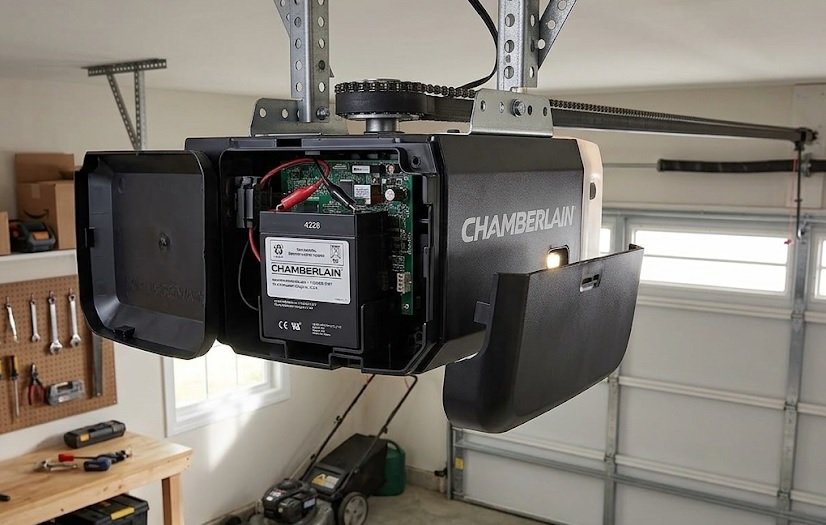
Garage Door Opener Battery Voltage Chart: What Each Reading Means
Voltage is the fastest way to judge your backup battery’s health. Use this lookup table to interpret readings from a standard 12V sealed lead-acid battery.
| Voltage Reading | Charge Status | Action Needed |
|---|---|---|
| 12.6V – 12.8V | 100% charged | None — healthy |
| 12.4V – 12.5V | 75% charged | Monitor monthly |
| 12.2V – 12.3V | 50% charged | Recharge soon |
| 12.0V – 12.1V | 25% charged | Replace or recharge |
| Below 12.0V | Discharged/failing | Replace immediately |
How to Test Your Battery Voltage Correctly
Testing at rest gives a false sense of security. Follow these steps for an accurate reading:
- Disconnect the charger and wait 30 minutes.
- Set your multimeter to DC voltage (20V range).
- Touch red to positive and black to negative terminals.
- Record the reading and compare it to the chart above.
Why Voltage Drops Under Load
A battery can read 12.6V at rest yet fail the moment the opener runs. This voltage sag happens because aging cells can’t deliver current fast enough.
- Healthy battery: Drops no more than 0.5V under load
- Weak battery: Drops below 11.5V during operation
- Failing battery: Cuts out entirely when the motor engages
Quick Rule: 12.6V = full, 12.0V = replace, below 11.5V under load = dead.
Common Garage Door Opener Battery Problems and Voltage Symptoms
Most opener failures trace back to a handful of battery issues. Recognizing the voltage symptoms helps you diagnose problems fast.
Signs Your Battery Is Failing
Watch for these warning signs before your opener dies completely:
- Beeping every few seconds: Usually signals low voltage below 12.0V
- Opener works only when plugged in: Backup battery isn’t holding charge
- Slow or jerky door movement: Voltage sag under load
- Red indicator light: Chamberlain and LiftMaster models flag low battery voltage
Why Batteries Lose Voltage Over Time
Sealed lead-acid batteries degrade gradually, and several factors accelerate the decline:
- Age: Most lose capacity after 3–5 years
- Heat: Garage temperatures above 90°F speed up corrosion
- Deep discharge: Repeated drops below 12.0V shorten lifespan
- Overcharging: Faulty charging circuits boil off electrolytes
How to Extend Battery Life
Simple habits keep your battery voltage in the healthy 12.6V range longer:
- Test monthly with a multimeter to catch voltage drops early.
- Keep the garage ventilated to reduce heat buildup.
- Cycle the opener during power outages to prevent deep discharge.
- Replace every 3–5 years regardless of readings.
Quick Rule: Beeping, red lights, and plug-in-only operation all point to low voltage. Test, then replace.
How to Replace a Garage Door Opener Battery by Voltage Reading
Once voltage confirms the battery is failing, replacement takes about 15 minutes. Follow this process for a safe, correct swap.
Step-by-Step Replacement Process
- Unplug the opener from its power source before touching anything.
- Open the battery compartment on the motor unit or wall console.
- Note the wiring: red is positive, black is negative.
- Remove the old battery and match its voltage and amp-hour rating.
- Connect the new battery and secure it in place.
- Restore power and test the opener twice.
Matching Voltage and Amp-Hour Ratings
Voltage must match exactly, but amp-hour (Ah) ratings offer some flexibility. Higher Ah means longer backup runtime without harming the opener.
| Opener Brand | Typical Battery | Voltage |
|---|---|---|
| Chamberlain / LiftMaster | 41A6357-1 | 12V 4.5Ah |
| Genie | ML7-12 | 12V 7.2Ah |
| Universal backup | EXP12180 | 12V 18Ah |
Post-Replacement Voltage Check
After installing, verify the new battery reads correctly:
- At rest: Should read 12.6V or higher
- Under load: Should stay above 11.5V
- After 24 hours: Should hold steady, not drift downward
If voltage keeps dropping, the charging circuit — not the battery — may be faulty.
Quick Rule: Match voltage exactly, upgrade Ah freely, and always re-test after installation.
Charging Your Garage Door Opener Battery: Voltage Recovery Tips
Many backup batteries can be recharged rather than replaced. Understanding voltage recovery helps you decide which route saves money.
Can a Low-Voltage Battery Be Recharged?
Recharging works best when voltage is between 12.0V and 12.5V. Batteries below 11.5V often have permanent cell damage and won’t recover fully.
- 12.0V–12.5V: Recharge with a trickle charger — good recovery odds
- 11.5V–12.0V: Attempt recharge, then re-test after 24 hours
- Below 11.5V: Replace — recharging rarely restores capacity
How to Recharge a Garage Opener Battery Safely
- Remove the battery from the opener unit.
- Use a 12V smart charger with automatic shutoff.
- Charge at 10% of Ah rating (e.g., 0.45A for a 4.5Ah battery).
- Let it rest 30 minutes after charging before testing.
- Re-test voltage: It should settle at 12.6V or higher.
Why Your Opener’s Built-In Charger May Not Be Enough
Most openers trickle-charge the battery only during AC power. After an outage, the built-in charger can take days to restore full voltage.
An external smart charger recovers a depleted battery in hours instead. This matters most for batteries that sat discharged for weeks.
Quick Rule: Above 12.0V, recharge. Below 11.5V, replace. Always use a smart charger with auto shutoff.
Voltage Reference by Garage Door Opener Brand and Model
Not every opener uses the same battery voltage. This brand-by-brand reference helps you find the correct reading for your specific unit.
Chamberlain and LiftMaster Voltage Specs
Most Chamberlain and LiftMaster models use a 12V 4.5Ah backup battery. The wall console displays status through beeps and LED colors.
- Green LED: Battery above 12.4V — healthy
- Yellow LED: Battery between 12.0V and 12.4V — recharge
- Red LED with beeping: Below 12.0V — replace now
Genie and Craftsman Voltage Specs
Genie and Craftsman openers typically use 12V 7.2Ah batteries. Their larger capacity means slightly slower voltage drop during outages.
- 12.6V+: Full charge — no action
- 12.2V–12.5V: Partial charge — test again in one week
- Below 12.0V: Weak — replace or recharge externally
Quick Brand Voltage Comparison
| Brand | Battery Voltage | Full Charge Reading | Replace Below |
|---|---|---|---|
| Chamberlain | 12V 4.5Ah | 12.6V | 12.0V |
| LiftMaster | 12V 4.5Ah | 12.6V | 12.0V |
| Genie | 12V 7.2Ah | 12.6V | 12.0V |
| Craftsman | 12V 7.2Ah | 12.6V | 12.0V |
Quick Rule: All major brands use 12V systems. Full charge is always 12.6V; replace at 12.0V.
Tools and Safety Tips for Testing Battery Voltage Safely
Accurate voltage testing requires the right tools and a few safety habits. Get both right, and you’ll diagnose battery health confidently every time.
Essential Tools for Voltage Testing
You only need a few inexpensive items to check your opener battery:
- Digital multimeter: The most accurate way to read DC voltage
- Flathead screwdriver: For opening battery compartments
- Insulated gloves: Protect against accidental shorts
- 12V smart charger: For recharging low-voltage batteries safely
Safety Precautions Before You Begin
Battery testing is low-risk, but these precautions prevent accidents:
- Unplug the opener before removing any battery.
- Never short the terminals with metal tools.
- Work in a ventilated area away from open flames.
- Inspect for corrosion or swelling before handling.
- Dispose of old batteries at approved recycling centers.
Common Testing Mistakes to Avoid
Even experienced DIYers make these errors. Avoid them for reliable readings:
- Testing while charging: Gives inflated voltage readings
- Testing immediately after use: Surface charge skews results
- Ignoring load tests: Resting voltage alone misses weak cells
- Using the wrong multimeter setting: Always select DC voltage
Wait at least 30 minutes after charging or use before testing. This lets the battery settle to its true voltage.
Quick Rule: Use a digital multimeter on DC setting, test 30 minutes after use, and always unplug the opener first.
Frequently Asked Voltage Questions: Quick Answers for Common Scenarios
These practical scenarios cover the situations homeowners ask about most. Each one includes the correct voltage response and next step.
What Voltage Means a Battery Is Fully Charged?
A fully charged 12V garage opener battery reads 12.6V to 12.8V at rest. Anything above 12.6V after a 30-minute rest indicates a healthy, fully charged battery.
Why Does My Battery Show 13V or Higher?
Readings above 13V usually mean the battery is still on the charger or just came off it. This is surface charge, not true capacity.
- 13V+ right after charging: Normal — wait 30 minutes
- 13V+ after resting: Possible overcharge or faulty charger
- 14V+ under charge: Normal charging voltage for 12V systems
How Often Should I Check Voltage?
Monthly testing catches problems before they strand you. Adjust frequency based on battery age:
| Battery Age | Test Frequency | Replace When |
|---|---|---|
| 0–2 years | Every 3 months | Below 12.0V |
| 2–4 years | Monthly | Below 12.2V |
| 4+ years | Every 2 weeks | Any drop below 12.4V |
Can Cold Weather Affect Voltage Readings?
Yes. Cold slows the chemical reaction inside the battery, so readings may appear lower than actual capacity. Test at room temperature for accurate results.
Quick Rule: 12.6V = full, 13V+ = surface charge, and test more often as batteries age.
Conclusion: Master Your Garage Door Opener Battery Charge Status by Voltage
Checking garage door opener battery charge status by voltage is simple, fast, and prevents frustrating lockouts. A quick multimeter reading tells you everything.
Remember the golden rule: 12.6V means full, 12.0V means replace. Test monthly and watch for beeping or red lights.
Grab your multimeter today and check your battery. Replace weak cells before they fail.
With these voltage checks, you’ll never be locked out again.
Frequently Asked Questions About Garage Door Opener Battery Voltage
What voltage should a fully charged garage door opener battery read?
A fully charged 12V garage door opener battery should read 12.6V to 12.8V at rest. This reading confirms the battery holds a complete charge and can power your opener during outages.
Always test 30 minutes after charging or use. Testing immediately gives inflated surface-charge readings that don’t reflect true capacity.
How do I know if my garage door opener battery needs replacing?
Replace your battery when voltage drops below 12.0V at rest or falls under 11.5V during operation. These readings indicate failing cells that can’t deliver reliable backup power.
Also watch for beeping, red indicator lights, or the opener working only when plugged in. Any of these symptoms means it’s time for a replacement.
Can I test garage door opener battery voltage without a multimeter?
Most openers include built-in indicators that approximate battery health. Chamberlain and LiftMaster models use green, yellow, and red LEDs to signal voltage levels.
However, a digital multimeter gives precise readings for accurate diagnosis. Built-in lights only show ranges, not exact voltage, so a multimeter remains the best option.
Why does my garage door opener battery voltage keep dropping?
Repeated voltage drops usually mean an aging battery or a faulty charging circuit. Batteries older than 3–5 years naturally lose capacity and struggle to hold 12.6V.
If a new battery also loses voltage, test the opener’s charging system. A defective charger won’t restore full voltage, leaving the battery permanently depleted.
What is the best way to recharge a low-voltage opener battery?
Use an external 12V smart charger with automatic shutoff for the best results. Charge at roughly 10% of the amp-hour rating for safe, efficient recovery.
Built-in opener chargers work slowly and only during AC power. An external charger restores depleted batteries in hours instead of days, making it the recommended method.
Does cold weather affect garage door opener battery voltage?
Yes, cold temperatures slow the chemical reactions inside lead-acid batteries. Voltage readings may appear lower than actual capacity during winter months.
Test your battery at room temperature for accurate results. If readings stay below 12.0V after warming, the battery likely needs replacement.
How long does a garage door opener battery typically last?
Most garage door opener batteries last 3 to 5 years under normal conditions. Heat, frequent outages, and deep discharges shorten that lifespan significantly.
Test monthly after year two and replace proactively. Waiting for complete failure risks being locked out during a power outage.
Which voltage reading means I should recharge instead of replace?
Readings between 12.0V and 12.5V indicate partial charge — recharge rather than replace. These batteries still have recoverable capacity with a proper smart charger.
Below 11.5V, replacement is the better choice. Deeply discharged batteries rarely recover full capacity, even after extended charging.