
Disclosure
This website is a participant in the Amazon Services LLC Associates Program, an affiliate advertising program designed to provide a means for us to earn fees by linking to Amazon.com and affiliated sites.
Checking a battery’s voltage under load versus at rest reveals its true health. A resting voltage test shows state of charge, while a load test exposes hidden weaknesses and failing cells.
This complete guide walks you through both proven methods step by step. You’ll learn expert tips, correct readings, and how to spot a dying battery before it strands you.
Key Takeaways
- 12.6V at rest means a healthy, fully charged 12V battery.
- Below 9.6V during a load test signals a failing battery.
- Resting tests measure charge; load tests measure true capacity.
- Wait 2–4 hours after charging before testing at rest.
- Surface charge skews readings—remove it with a brief load.
Best Battery Testers for Checking Voltage Under Load vs. at Rest – Detailed Comparison
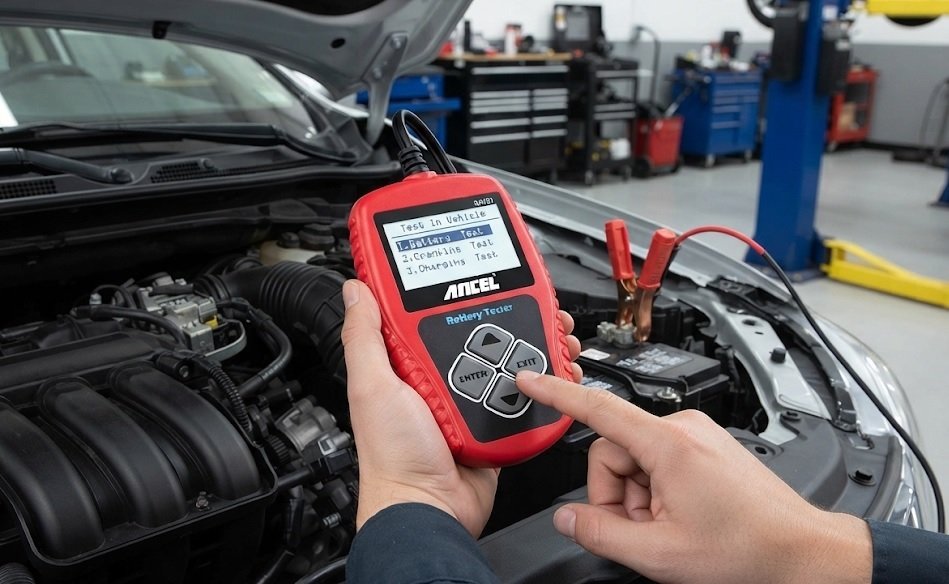
Ancel BA101 12V Car Battery Tester – Best Overall Choice
The Ancel BA101 is the recommended pick for most DIYers and shops. It runs load, cranking, and charging tests in seconds, displaying voltage, CCA, and internal resistance. Its large backlit screen and 100–2000 CCA range make it ideal for cars, trucks, and boats.
Schumacher BT-100 100-Amp Battery Load Tester – Best Analog Option
The Schumacher BT-100 applies a true 100-amp carbon-pile load, mimicking real starting demands. This best option for traditionalists shows voltage drop under load instantly on an analog gauge. It works on 6V and 12V batteries and needs no batteries of its own.

KAIWEETS KM601 Digital Multimeter – Best Budget Tester
The KAIWEETS KM601 is ideal for measuring resting voltage and basic load checks with a helper. It offers True RMS accuracy, auto-ranging, and a bright 6000-count display. At under $40, it’s the smartest entry point for beginners learning voltage testing.

Understanding Battery Voltage at Rest vs. Under Load
A battery’s voltage tells two different stories depending on when you measure it. Resting voltage reveals state of charge, while loaded voltage exposes true capacity and internal health.
Knowing the difference helps you diagnose weak batteries before they fail completely.
What Is Resting Voltage?
Resting voltage is measured after the battery sits unused for 2–4 hours with no charger or load attached. It reflects the battery’s stabilized chemical state.
- 12.6V or higher: Fully charged
- 12.2V: About 50% charged
- Below 12.0V: Discharged, needs charging
What Is Voltage Under Load?
Loaded voltage is measured while the battery powers a load, such as cranking an engine. It shows how the battery performs under real-world demand.
A healthy 12V battery should stay above 9.6V during a 15-second load test.
Quick Comparison
- At rest: Measures charge level
- Under load: Measures real capacity
- Both together: Reveal full battery health
Why Both Tests Matter
A battery can show 12.6V at rest yet collapse under load due to sulfation or worn plates. Testing both values catches problems a single reading would miss.
Next, we’ll walk through the exact steps to perform each test correctly.
How to Test Battery Voltage at Rest: Step-by-Step Guide
Testing resting voltage is simple, but preparation matters. Follow these steps for accurate readings every time.
Step 1: Prepare the Battery
Turn off all accessories and disconnect the charger. Let the battery sit for 2–4 hours to shed surface charge.
- Remove surface charge: Briefly turn on headlights for 30 seconds
- Ensure safety: Wear gloves and eye protection
- Clean terminals: Remove corrosion for solid contact
Step 2: Connect the Multimeter
- Set your multimeter to DC voltage (20V range)
- Touch the red probe to the positive terminal
- Touch the black probe to the negative terminal
- Wait for the reading to stabilize
Step 3: Read the Results
Compare your reading against this reference table:
| Voltage | State of Charge |
|---|---|
| 12.6V+ | 100% charged |
| 12.4V | 75% charged |
| 12.2V | 50% charged |
| 12.0V | 25% charged |
| Below 11.9V | Discharged |
Pro Tip
- Test at room temperature for best accuracy.
- Cold batteries read lower than actual charge.
Resting voltage alone won’t reveal a weak battery. The load test is next.
How to Check Battery Voltage Under Load: Step-by-Step Guide
A load test reveals what resting voltage hides. Here’s how to measure it correctly with a multimeter or dedicated tester.
Method 1: Cranking Test (No Special Tools)
- Connect the multimeter to the battery terminals
- Have a helper crank the engine for 15 seconds
- Watch the lowest voltage displayed during cranking
- Record the reading immediately
A healthy battery stays above 9.6V throughout the crank.
Method 2: Carbon-Pile Load Tester
Apply a load equal to half the battery’s CCA rating for 15 seconds. This simulates real starting demand without running the engine.
- Above 9.6V: Battery passes
- 9.0–9.6V: Marginal, retest soon
- Below 9.0V: Replace the battery
Interpreting Load Test Results
Compare resting and loaded readings together for the full picture:
| Resting | Loaded | Diagnosis |
|---|---|---|
| 12.6V | 10.5V | Healthy battery |
| 12.6V | 9.2V | Weak, aging |
| 12.2V | 8.5V | Failing, replace |
Warning Signs
- Voltage drops fast, then recovers slowly
- Dim lights during cranking
- Clicking starter with no crank
Now let’s look at common testing mistakes that skew your readings.
Common Mistakes When Testing Battery Voltage Under Load vs. at Rest
Even experienced DIYers make errors that produce misleading readings. Avoid these pitfalls for accurate results.
Mistake 1: Testing Too Soon After Charging
A freshly charged battery holds surface charge that inflates voltage readings. Always wait 2–4 hours or remove it with a brief load.
- Wrong: Testing right after disconnecting the charger
- Right: Let it rest, then measure
Mistake 2: Skipping the Load Test
Many people trust resting voltage alone. A battery can read 12.6V at rest yet fail instantly under load due to sulfation.
Always pair both tests for a complete diagnosis.
Mistake 3: Using a Cheap or Faulty Multimeter
Low-quality meters often display inaccurate DC voltage. Verify your tool against a known-good battery before trusting results.
Mistake 4: Ignoring Temperature Effects
Cold weather lowers voltage readings; heat raises them. Test at room temperature whenever possible for consistency.
| Mistake | Impact | Fix |
|---|---|---|
| Testing after charging | False high reading | Wait 2–4 hours |
| No load test | Missed weak cells | Add cranking test |
| Bad multimeter | Inaccurate data | Verify calibration |
| Extreme temps | Skewed voltage | Test at room temp |
Remember
- Clean terminals prevent false low readings.
- Recheck after any failed test.
Next, we’ll cover how to interpret results when your battery fails both tests.
What to Do When Your Battery Fails the Voltage Test
A failed resting or load test doesn’t always mean replacement. Diagnose the cause before spending money.
Step 1: Recharge and Retest
Fully charge the battery with a smart charger, then let it rest for 2–4 hours. Retest both resting and loaded voltage.
- Recovers fully: Battery was simply discharged
- Still fails: Likely internal damage
Step 2: Check the Charging System
A weak alternator can drain a healthy battery. With the engine running, voltage should read 13.7–14.7V at the terminals.
Below 13.2V suggests alternator or belt issues.
Step 3: Inspect for Parasitic Draw
Something may drain the battery overnight. Use a multimeter to measure current draw with everything off.
- Under 50mA: Normal
- Over 50mA: Faulty component draining power
Step 4: Decide—Replace or Repair
Use this guide to make the call:
| Condition | Action |
|---|---|
| Under 3 years old, fails once | Recharge and monitor |
| Over 4 years old, fails load test | Replace battery |
| Good battery, keeps dying | Check alternator and draw |
Before You Buy
- Test the alternator first—it’s often the real culprit.
- Most batteries last 3–5 years.
Finally, let’s compare the two testing methods side by side.
Voltage Under Load vs. at Rest: Side-by-Side Comparison
Both tests serve distinct purposes. This comparison shows when and why to use each one.
Key Differences at a Glance
| Factor | At Rest | Under Load |
|---|---|---|
| What it measures | State of charge | True capacity |
| When to test | 2–4 hours after charging | During cranking or load |
| Healthy reading | 12.6V+ | Above 9.6V |
| Detects sulfation | No | Yes |
| Tools needed | Multimeter | Load tester or helper |
When to Use Each Test
Use a resting voltage test for quick charge checks and routine maintenance. It’s fast, safe, and requires only a basic multimeter.
Use a load test when diagnosing starting problems or before long trips. It reveals weaknesses resting voltage cannot detect.
Which Test Is More Accurate?
Neither is “better”—they answer different questions. Resting voltage confirms charge; load testing confirms real-world performance.
- For routine checks: Resting voltage
- For diagnosing failures: Load test
- For complete health: Both together
Best Practice
- Test resting voltage monthly.
- Run a load test before winter and long trips.
- Always compare both results before replacing a battery.
With both methods mastered, you can confidently diagnose any battery in minutes.
Tools and Safety Tips for Testing Battery Voltage
Having the right tools and following safety rules prevents damage and injury. Here’s what you need before starting.
Essential Tools for Voltage Testing
- Digital multimeter: Minimum 10 megohm input impedance for accurate DC readings
- Carbon-pile load tester: Applies realistic current for load testing
- Smart battery charger: Restores charge before resting voltage tests
- Wire brush and terminal cleaner: Removes corrosion for solid contact
- Safety glasses and insulated gloves: Protects against sparks and acid
Critical Safety Precautions
Batteries release explosive hydrogen gas and contain sulfuric acid. Respect these risks every time you test.
- Work in a well-ventilated area away from open flames
- Never short the terminals with tools or jewelry
- Connect the positive probe first, negative last
- Keep sparks and cigarettes far away
Testing Different Battery Types
Voltage targets vary by chemistry. Use the correct reference for your battery:
| Battery Type | Full Charge (Rest) | Load Minimum |
|---|---|---|
| Lead-acid (12V) | 12.6V | 9.6V |
| AGM (12V) | 12.8V | 9.6V |
| Lithium (LiFePO4) | 13.4V | 12.0V |
Safety First
- Ventilate the area—hydrogen gas is explosive.
- Wear eye protection at all times.
- Match voltage targets to battery chemistry.
Now let’s explore how to extend your battery’s lifespan with proper maintenance.
Conclusion: Mastering Battery Voltage Under Load vs. at Rest
Checking battery voltage under load versus at rest gives you the full health picture. Resting tests confirm charge; load tests expose hidden weaknesses.
Use both methods together for accurate diagnoses. Test resting voltage monthly and run a load test before winter or long trips.
Grab your multimeter today and test your battery with confidence.
With these proven methods, you’ll catch failing batteries early and avoid surprise breakdowns.
Frequently Asked Questions About Checking Battery Voltage Under Load vs. at Rest
What is the difference between battery voltage at rest and under load?
Resting voltage measures state of charge after the battery sits idle for 2–4 hours. It shows how full the battery is.
Loaded voltage measures performance while the battery powers a load, like cranking an engine. It reveals true capacity and internal health that resting voltage cannot detect.
What should a 12V battery read under load?
A healthy 12V battery should stay above 9.6V during a 15-second load test. This threshold applies to most lead-acid and AGM batteries.
Readings between 9.0V and 9.6V indicate a marginal battery needing replacement soon. Anything below 9.0V means the battery has failed and should be replaced immediately.
How long should a battery rest before testing voltage?
Wait at least 2–4 hours after charging or driving before measuring resting voltage. This allows surface charge to dissipate for an accurate reading.
If you’re short on time, remove surface charge by turning on headlights for 30 seconds. Then wait a few minutes before testing.
Can a battery show 12.6V but still be bad?
Yes, absolutely. A battery can read 12.6V at rest yet fail instantly under load due to sulfation or worn plates.
This is why load testing is essential. Always pair resting and loaded readings for a complete diagnosis before trusting a battery.
What is the best way to test a car battery at home?
Use a digital multimeter for resting voltage and a carbon-pile load tester for load testing. Together, they provide the most accurate home diagnosis.
For quick checks, a cranking test with a helper works well. Watch the lowest voltage during a 15-second crank—it should stay above 9.6V.
Why does my battery voltage drop so fast under load?
A rapid voltage drop under load signals high internal resistance, often from sulfation, age, or a failing cell. The battery cannot deliver current efficiently.
If voltage collapses below 9.0V quickly, replacement is usually the best option. First, verify your charging system and connections are sound.
Does temperature affect battery voltage readings?
Yes, temperature significantly impacts voltage. Cold weather lowers readings, while heat raises them. A cold battery may read lower than its actual charge level.
For consistent results, test at room temperature whenever possible. Adjust expectations for extreme conditions before condemning a battery.
How often should I check my battery’s voltage?
Test resting voltage monthly for routine maintenance. Run a full load test before winter, long trips, or whenever starting feels sluggish.
Regular testing catches weak batteries early, preventing surprise breakdowns. Most batteries last 3–5 years with proper care and monitoring.