
Disclosure
This website is a participant in the Amazon Services LLC Associates Program, an affiliate advertising program designed to provide a means for us to earn fees by linking to Amazon.com and affiliated sites.
A healthy 12V ride-on mower battery should read 12.4 to 12.7 volts at rest and 13.5 to 14.5 volts while charging. These readings confirm your battery holds a proper charge.
This complete guide reveals exact voltage benchmarks for every battery state, plus expert tips to spot a failing battery early. Keep reading to diagnose your mower’s battery in minutes.
Key Takeaways
- 12.6V is a fully charged 12V battery at rest; 12.0V means 50% depleted.
- Below 11.9V under load signals a failing or dead battery.
- 13.5–14.5V while running proves the charging system works.
- Test 12+ hours after charging for accurate resting voltage.
- Voltage drop below 9.6V during cranking means replacement time.
Best Ride-On Mower Batteries for Reliable Starting Power – Detailed Comparison
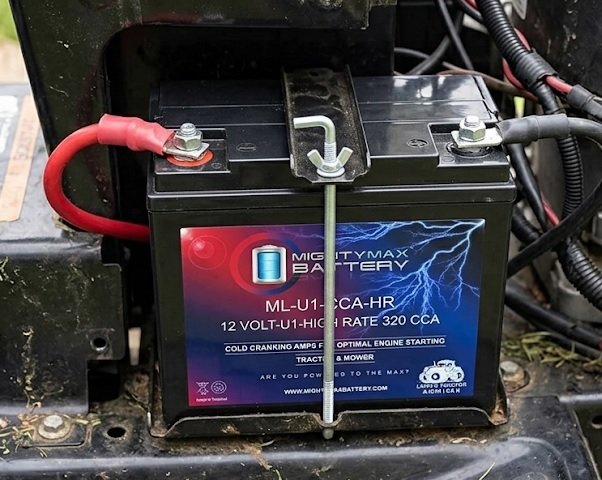
1. Mighty Max ML-U1-12 – Best Overall Choice
The Mighty Max ML-U1-12 is a 12V 35Ah sealed AGM battery recommended for most ride-on mowers. Its maintenance-free design resists vibration and spillage, delivering consistent 12.6V resting voltage. Ideal for Briggs & Stratton and Kohler engines, it holds charge longer between cuts.
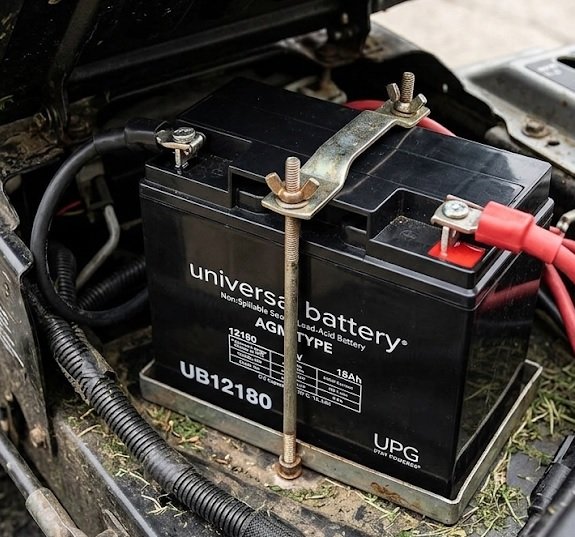
2. UPG UB12180 – Best Value Option
The UPG UB12180 offers a 12V 18Ah AGM build at a budget-friendly price. This reliable, leak-proof battery is ideal for smaller mowers and seasonal use. It recharges quickly and maintains steady voltage, making it the best option for cost-conscious owners replacing an older unit.
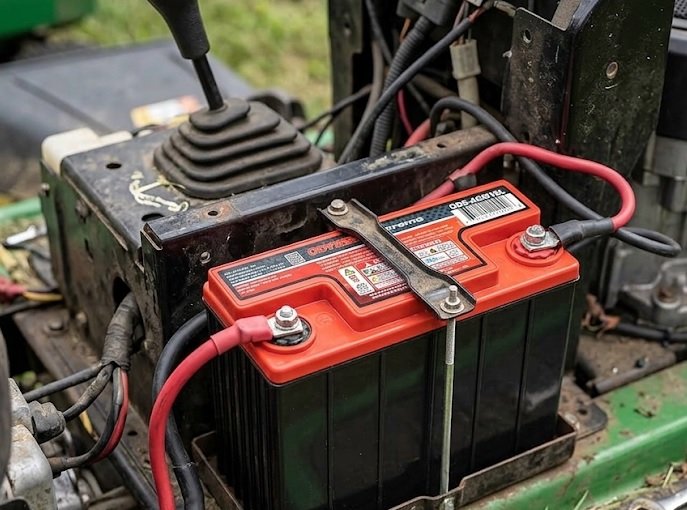
3. Odyssey PC680 – Best Premium Choice
The Odyssey PC680 is a 12V 16Ah pure lead AGM battery built for extreme durability. Its high cranking amps handle cold starts and heavy loads effortlessly. Recommended for commercial mowers, it resists deep discharge and lasts up to twice as long as standard batteries.
Healthy Ride-On Mower Battery Voltage Chart: What Each Reading Means
Understanding your battery’s voltage is the fastest way to diagnose its health. Use this chart to interpret readings from a multimeter test.
| Voltage Reading | Battery State |
|---|---|
| 12.6V – 12.7V | Fully charged, healthy |
| 12.4V | 75% charged |
| 12.2V | 50% charged |
| 12.0V | 25% charged |
| Below 11.9V | Discharged or failing |
Resting Voltage vs. Charging Voltage Explained
Resting voltage is measured after the mower sits idle for 12+ hours. A healthy 12V battery should hold 12.4V to 12.7V during this state.
Charging voltage is tested while the engine runs. Your alternator should push 13.5V to 14.5V to the terminals. Readings outside this range point to a charging system fault.
How to Test Your Battery Voltage (Step-by-Step)
- Charge the battery fully and let it rest overnight.
- Set your multimeter to DC voltage (20V range).
- Connect the red probe to the positive terminal.
- Connect the black probe to the negative terminal.
- Record the reading and compare it to the chart above.
Quick Tip
- Test at rest for accuracy; surface charge skews results.
- Below 11.9V after charging means replacement is near.
Signs Your Ride-On Mower Battery Is Failing (And When to Replace It)
Voltage alone doesn’t tell the full story. Physical symptoms often appear before a battery dies completely, so watch for these warning signs.
Common Symptoms of a Dying Battery
- Slow cranking: The engine turns over sluggishly, especially in cold weather.
- Clicking sounds: A single click with no start indicates insufficient cranking amps.
- Frequent jump-starts: Needing a boost after short idle periods signals poor charge retention.
- Swollen case: Bulging or cracked housing means internal damage and immediate replacement.
- Dim headlights: Weak lights while running point to low voltage output.
Load Testing: The Most Accurate Diagnosis
A load test measures voltage while the battery works under demand. Healthy batteries stay above 9.6V during a 15-second cranking test.
Readings below 9.6V confirm the battery can no longer deliver reliable starting power. Most auto parts stores offer free load testing.
How Long Should a Ride-On Mower Battery Last?
Most ride-on mower batteries last 3 to 5 years with proper care. AGM batteries often reach the upper end of that range.
Extreme temperatures, deep discharges, and infrequent use shorten lifespan significantly. Replace any battery older than five years showing weak voltage.
Key Takeaways
- Slow cranking and clicking are early failure signs.
- Load tests below 9.6V mean replacement is needed.
- Expect 3–5 years of service from a quality battery.
How to Maintain Proper Battery Voltage and Extend Battery Life
Proper maintenance keeps your ride-on mower battery within the healthy 12.4V–12.7V range. These proven methods add years of reliable service.
Best Charging Practices for Ride-On Mower Batteries
- Use a trickle charger: Maintains full charge during off-season storage.
- Avoid deep discharges: Recharge once voltage drops below 12.2V.
- Never overcharge: Stop at 12.7V to prevent water loss and plate damage.
- Charge monthly: Inactive batteries self-discharge 3–5% per month.
Seasonal Storage Tips to Prevent Voltage Loss
- Disconnect the terminals to stop parasitic drain.
- Clean corrosion with a baking soda solution.
- Store in a cool, dry place above freezing temperatures.
- Recharge every 4–6 weeks during winter storage.
Cold weather slows chemical reactions, so a stored battery may read lower. Always retest at room temperature before replacing it.
Cleaning and Terminal Care
Corroded terminals restrict current flow and cause false low-voltage readings. Scrub them with a wire brush and apply dielectric grease to block future buildup.
Check cables for fraying or looseness, since poor connections mimic a failing battery. Tighten all fittings to the manufacturer’s torque specs.
Key Takeaways
- Trickle chargers prevent self-discharge during storage.
- Clean, greased terminals ensure accurate voltage readings.
- Recharge every 4–6 weeks for longer battery life.
Why Your Battery Voltage Drops: Common Causes and Quick Fixes
Voltage problems rarely happen without reason. Identifying the root cause saves you from replacing a battery that’s actually fine.
Common Reasons for Low Battery Voltage
- Faulty alternator: Output below 13.5V means the charging system isn’t replenishing the battery.
- Parasitic drain: Accessories or wiring faults pull current while the mower sits.
- Sulfation: Left discharged too long, lead plates harden and stop accepting charge.
- Old age: Internal resistance rises over time, reducing usable capacity.
- Loose connections: Poor contact at terminals causes voltage drops under load.
How to Diagnose a Charging System Problem
- Start the engine and let it idle.
- Measure voltage at the battery terminals.
- Expect 13.5V–14.5V from a working alternator.
- Rev the engine and confirm voltage rises slightly.
- Check the regulator if readings stay low.
A healthy charging system keeps voltage steady. Readings that climb past 15V indicate an overcharging fault that boils the electrolyte.
When a Voltage Drop Means Replacement
Some failures can’t be repaired. Replace the battery if it shows these signs:
- Won’t hold charge above 12.0V after full charging.
- Drops below 9.6V during a load test.
- Has a swollen, cracked, or leaking case.
Key Takeaways
- Alternator faults and parasitic drains cause low voltage.
- Charging systems should output 13.5V–14.5V.
- Swollen cases and failed load tests require replacement.
Choosing the Right Replacement Battery for Your Ride-On Mower
When replacement is unavoidable, matching the correct specifications ensures reliable starting power. The wrong battery drains fast or fails to fit securely.
Key Specs to Match Before Buying
| Specification | What to Check |
|---|---|
| Voltage | Almost always 12V for ride-on mowers |
| Amp-Hours (Ah) | Match or slightly exceed OEM rating |
| Cranking Amps (CCA) | Higher CCA aids cold-weather starts |
| Terminal Type | Confirm post style and orientation |
| Dimensions | Verify it fits the battery compartment |
AGM vs. Flooded Lead-Acid: Which Is Better?
- AGM batteries: Maintenance-free, vibration-resistant, and ideal for rough terrain.
- Flooded lead-acid: Cheaper upfront but require water checks and careful leveling.
- Gel batteries: Deep-cycle friendly but sensitive to overcharging.
For most homeowners, AGM is the best option. It handles bumps, resists spills, and holds voltage longer between charges.
Installation Tips for a New Battery
- Disconnect the negative cable first to prevent sparks.
- Remove the old battery and clean the tray.
- Place the new battery in the same orientation.
- Connect positive, then negative and tighten securely.
- Apply dielectric grease to prevent corrosion.
Key Takeaways
- Match voltage, Ah, CCA, and terminal type before buying.
- AGM batteries suit mowers best for durability.
- Always disconnect the negative cable first.
Frequently Asked Voltage Questions About Ride-On Mower Batteries
Owners often hit the same confusing scenarios during testing. These quick answers resolve the most common voltage dilemmas.
What Voltage Is Too Low for a Ride-On Mower Battery?
Anything below 12.0V at rest signals a problem. A reading under 11.9V means the battery is deeply discharged or failing.
If it stays low after a full charge, replacement is the practical fix. Never crank the engine repeatedly at low voltage, as this damages the starter.
Why Does My Battery Read 12V But Won’t Start the Mower?
A 12V reading looks fine but hides weak cranking amps. The battery may hold surface voltage yet collapse under starting load.
- Perform a load test: Confirm voltage stays above 9.6V while cranking.
- Check connections: Corroded terminals cause voltage drops under demand.
- Inspect the starter: A failing starter draws excessive current.
Should a Ride-On Mower Battery Read 13V or Higher?
Yes, but only while the engine runs. A running mower should show 13.5V to 14.5V at the terminals.
At rest, 13V+ indicates a surface charge that fades within hours. Let the battery sit overnight and retest for an accurate reading.
Key Takeaways
- Below 12.0V at rest means trouble; under 11.9V means replace.
- 12V with no start points to weak cranking amps.
- 13V+ is normal only while the engine runs.
Expert Tips for Accurate Ride-On Mower Battery Voltage Testing
Even a good multimeter gives misleading results if you test incorrectly. These expert tips ensure your readings reflect true battery health.
Common Testing Mistakes to Avoid
- Testing right after charging: Surface charge inflates readings for hours.
- Using a dirty multimeter: Worn probes add resistance and skew results.
- Skipping the load test: Resting voltage alone misses weak cranking amps.
- Testing in freezing weather: Cold lowers voltage readings artificially.
- Ignoring the charging system: A bad alternator mimics a dead battery.
How to Get a True Resting Voltage Reading
- Charge the battery fully using a smart charger.
- Disconnect the charger and wait 12–24 hours.
- Remove surface charge by running headlights briefly.
- Set the multimeter to the 20V DC range.
- Touch probes to terminals and record the stable reading.
A true resting reading between 12.4V and 12.7V confirms a healthy battery. Anything lower suggests sulfation or an aging cell.
Tools That Make Voltage Testing Easier
- Digital multimeter: Essential for precise voltage checks.
- Smart battery charger: Maintains optimal charge automatically.
- Load tester: Confirms cranking performance under demand.
- Battery terminal brush: Removes corrosion for clean contact.
Key Takeaways
- Wait 12–24 hours after charging for accurate resting voltage.
- Remove surface charge before testing for true results.
- A multimeter, load tester, and smart charger are key tools.
Conclusion: Mastering Ride-On Mower Battery Voltage Checks
Knowing what voltage your ride-on mower battery should show makes diagnosis simple. A healthy battery reads 12.4V–12.7V at rest and 13.5V–14.5V while charging.
Test after resting, load test under demand, and watch for slow cranking or swelling. These habits catch failures early.
Grab your multimeter today and check your battery before mowing season starts. A few minutes now prevents a dead mower later.
With proper care, your battery will deliver reliable starts for years.
Frequently Asked Questions About Ride-On Mower Battery Voltage
What voltage should a fully charged 12V ride-on mower battery show?
A fully charged 12V ride-on mower battery should read 12.6V to 12.7V at rest. This reading confirms the battery holds a complete charge with all cells healthy.
Readings between 12.4V and 12.6V indicate roughly 75% charge. Anything below 12.4V means the battery needs recharging before reliable use.
How do I test my ride-on mower battery with a multimeter?
Set your multimeter to the 20V DC range, then touch the red probe to the positive terminal and the black probe to the negative. Record the stable reading displayed.
For accuracy, test 12–24 hours after charging to eliminate surface charge. A load test while cranking reveals true cranking amps beyond resting voltage.
Why does my mower battery read 12.6V but still won’t start the engine?
Healthy resting voltage doesn’t guarantee strong cranking amps. The battery may hold surface charge yet collapse under the heavy load of starting.
Perform a load test to confirm voltage stays above 9.6V while cranking. Also check for corroded terminals, loose cables, or a failing starter drawing excess current.
What voltage is too low and requires battery replacement?
Readings below 11.9V after a full charge indicate a failing battery. This level signals sulfation or internal damage that recharging cannot reverse.
If voltage also drops below 9.6V during a load test, replacement is the practical solution. Swollen or leaking cases demand immediate replacement regardless of voltage.
Should my ride-on mower battery read 13V or higher?
Yes, but only while the engine runs. A running mower’s charging system should output 13.5V to 14.5V at the battery terminals.
At rest, a 13V+ reading is just surface charge that fades within hours. Let the battery sit overnight and retest for a true resting value.
How long should a ride-on mower battery last?
Most ride-on mower batteries last 3 to 5 years with proper maintenance. AGM batteries typically reach the upper end of that range.
Extreme temperatures, frequent deep discharges, and long storage periods shorten lifespan. Replace any battery older than five years showing weak voltage.
What is the best way to maintain proper battery voltage?
Use a trickle charger during off-season storage to prevent self-discharge. Recharge whenever voltage drops below 12.2V to avoid harmful sulfation.
Clean corroded terminals, apply dielectric grease, and store the battery in a cool, dry place. Recharge every 4–6 weeks during winter for maximum lifespan.
Can a bad alternator cause low battery voltage?
Absolutely. A faulty alternator fails to replenish the battery, causing voltage to drop steadily. Test the charging system while the engine idles.
Healthy output measures 13.5V–14.5V. Readings below 13.5V point to a failing alternator, voltage regulator, or worn drive belt needing repair.